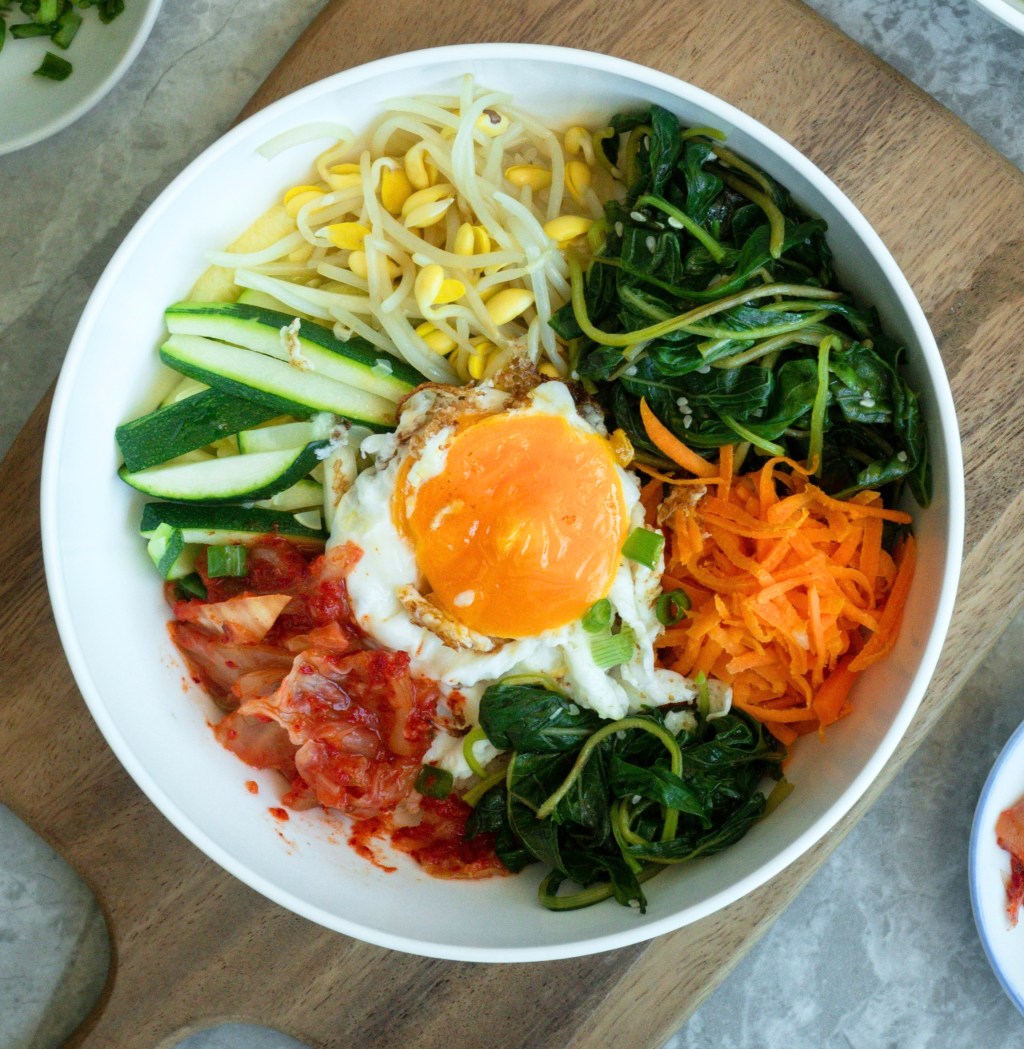
If you’ve seen a bowl of colorful rice topped with vegetables, a fried egg, and a red sauce on a Korean menu or in a K-drama, you’ve probably seen bibimbap. It looks a little intimidating at first, but this easy bibimbap recipe breaks it down into simple steps, with no special equipment needed. Below, you’ll also find what bibimbap actually is, whether it’s spicy, and how Koreans eat it.
What Is Bibimbap?
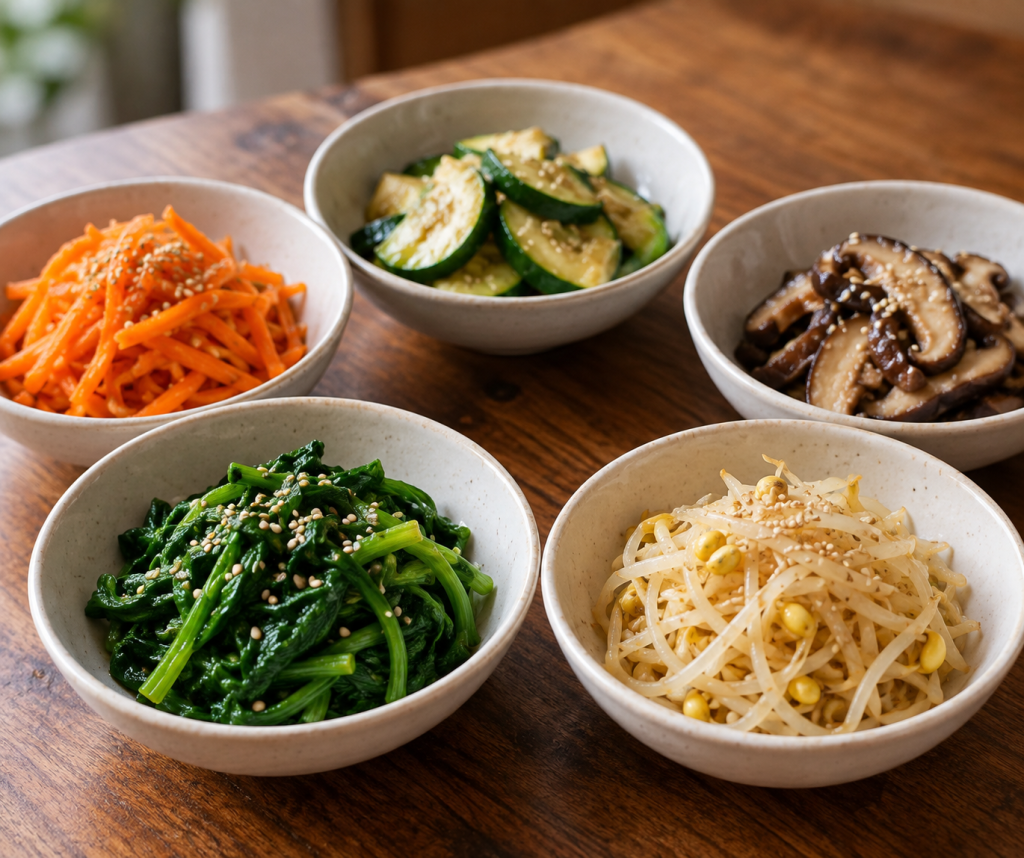
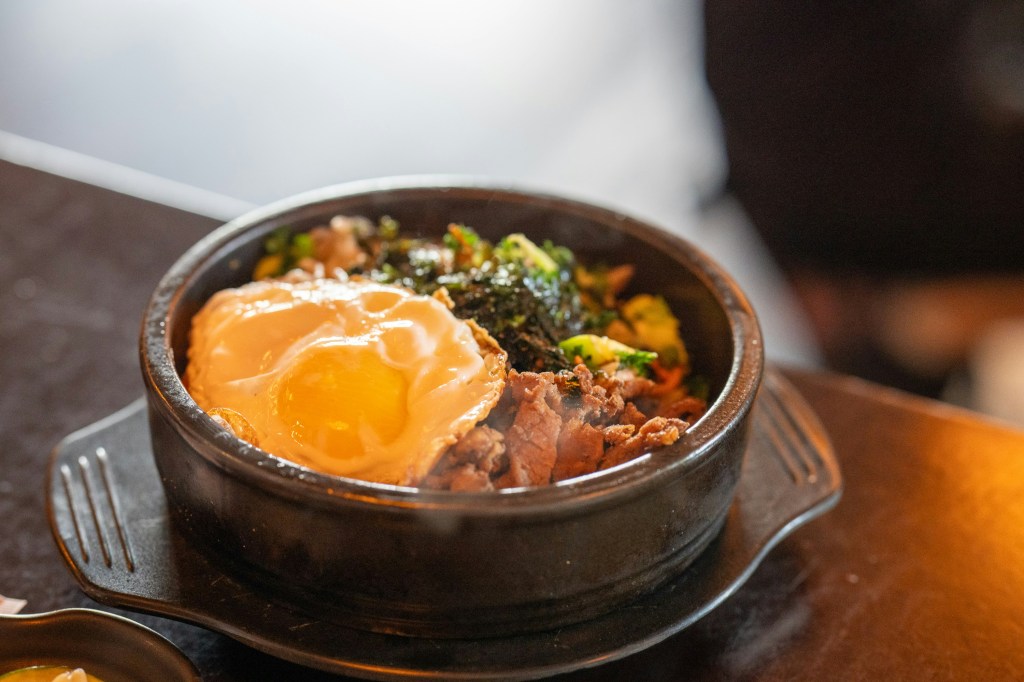
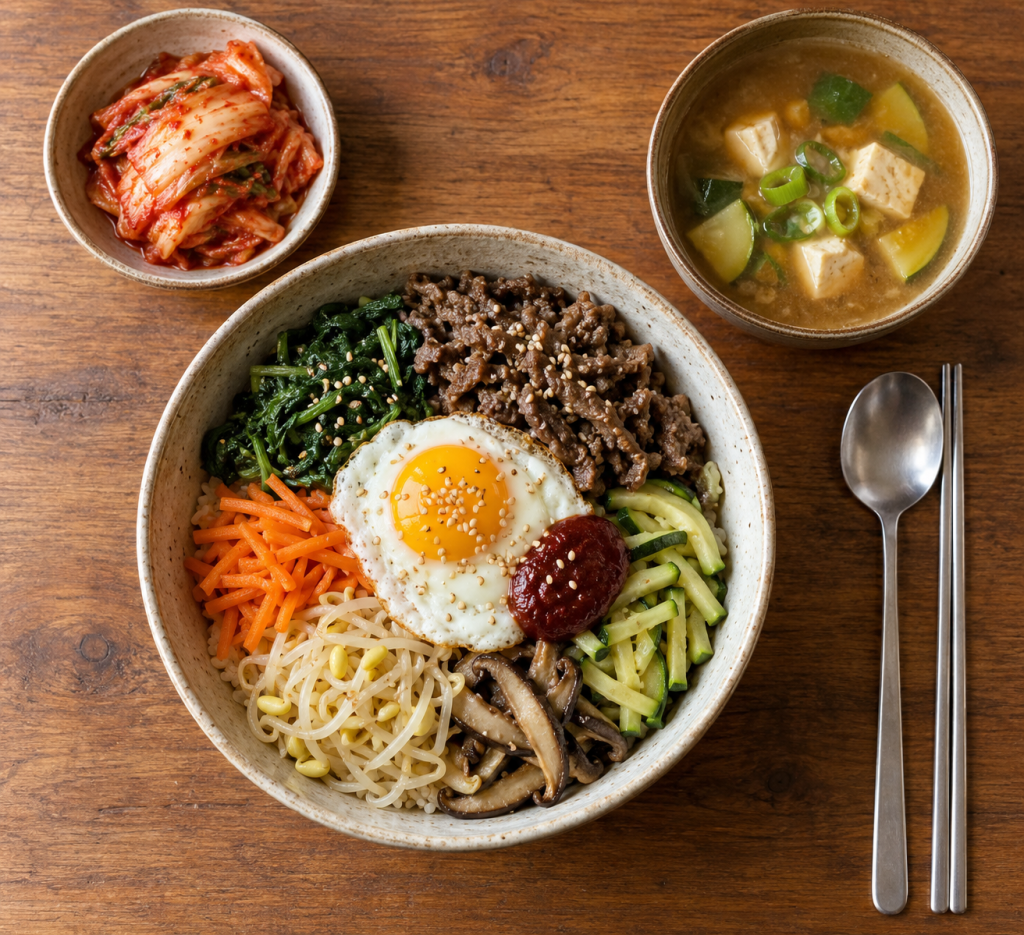
Bibimbap (비빔밥, romanized as bi-bim-bap) literally means “mixed rice.” The name comes from bibim (“mixing”) and bap (“cooked rice”). At its core, it’s a bowl of warm rice topped with several kinds of seasoned vegetables (called namul, 나물), plus usually a protein like beef or egg, and a spoonful of chili paste. Everything gets mixed together right before eating.
In Korea, bibimbap is an everyday home-cooked meal, often made specifically to use up leftover vegetables and rice, rather than a rare or fancy dish. So there’s no single “correct” version. This guide covers a classic, approachable version, along with the most common regional variations.
What Does Bibimbap Taste Like?
Bibimbap combines several flavors in one bowl rather than sticking to just one. The rice is mild and slightly sweet, the vegetables are lightly seasoned with sesame oil, garlic, and salt, so each one tastes a little different, and the gochujang (고추장, Korean fermented chili paste) sauce ties everything together with heat, sweetness, and a deep, slightly fermented savoriness. If there’s egg, the yolk adds richness once it’s broken and mixed in. Texture-wise, expect soft rice, tender-crisp vegetables, and a bit of chew from the protein, so every bite turns out a little different depending on what you scoop up.
Is Bibimbap Spicy?
Bibimbap can range from mild to fairly spicy, and the heat level is easy to control because it comes almost entirely from how much gochujang you add. If you’re sensitive to spice, start with a small spoonful, taste, and add more gradually (more on this below). There are also non-spicy versions: some regional styles use a soy-sauce-based seasoning instead of gochujang (see “Types of Bibimbap” below), so bibimbap doesn’t have to be spicy at all if that’s not your thing.
How to Eat Bibimbap
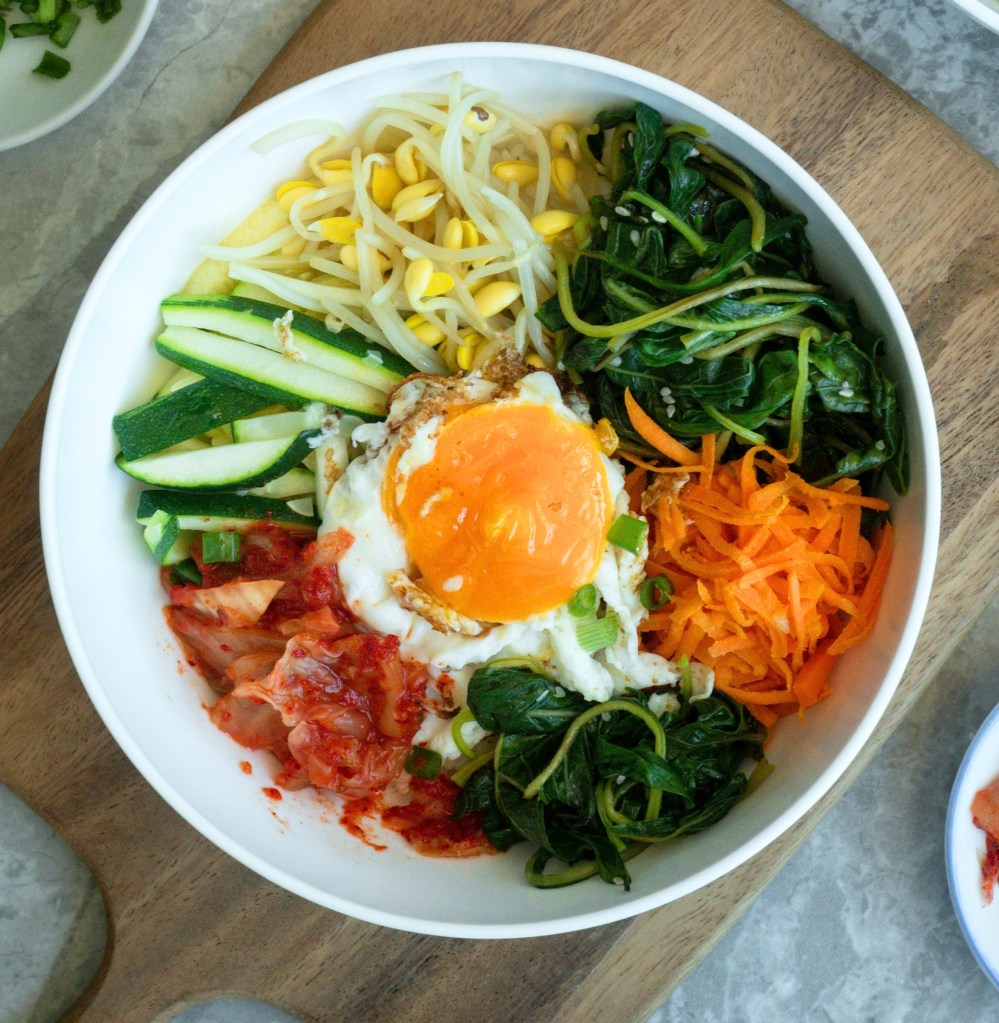
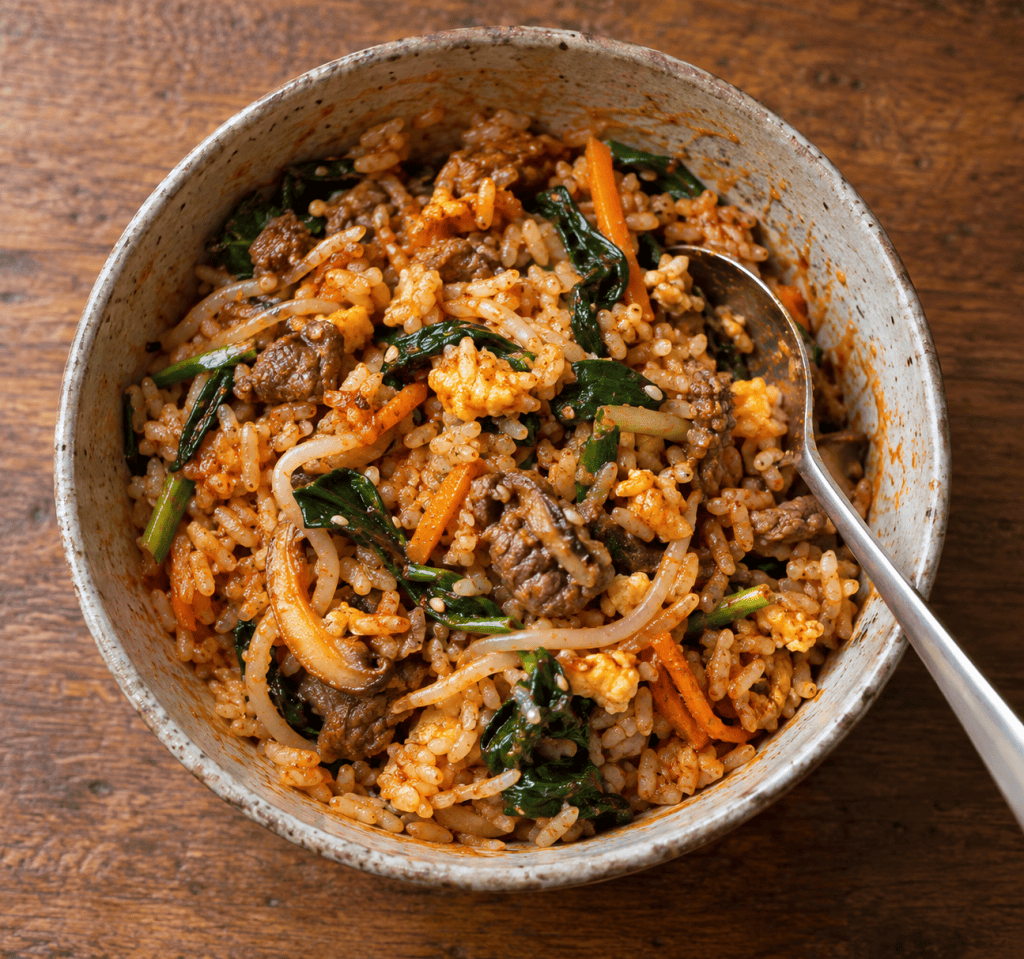
A lot of first-timers aren’t sure what to do with all those separate toppings: you mix them. The name itself means “mixed rice,” and traditionally, everything in the bowl (rice, vegetables, protein, egg yolk, and sauce) gets stirred together with a spoon or chopsticks right before eating, instead of being eaten as separate components. This is the traditional and most common way to enjoy it, though not a strict rule. Some people taste a bite or two of the individual toppings first before mixing, and at a restaurant, you can usually ask for the sauce on the side if you’d rather control how much goes in.
One tip that helps a lot if you’re not used to Korean spice levels: don’t add all the gochujang at once. Add a spoonful, mix it partway through, taste it, and add more only if you want it spicier. Gochujang is concentrated, so it’s much easier to add more than to fix a bowl that’s already too spicy.
Types of Bibimbap
Bibimbap looks different depending on the region and the restaurant. Here are the versions you’re most likely to come across:
- Dolsot bibimbap (돌솥비빔밥): Served in a very hot stone bowl (dolsot). The rice touching the bottom of the bowl crisps into a golden, crunchy layer as it sits, which many people consider the best part.
- Jeonju bibimbap (전주비빔밥): Named after the city of Jeonju, which is well known for its bibimbap. This version is often served with many small, individually seasoned vegetables and sometimes a raw egg yolk. Its exact origins are debated: some say it developed from a royal court dish, others say it came from leftovers after ancestral rites. Treat specific origin stories as folklore rather than confirmed history.
- Jinju bibimbap (진주비빔밥): Associated with the city of Jinju, traditionally topped with yukhoe (육회), a seasoned raw beef preparation.
- Tongyeong/Haemul bibimbap (통영/해물비빔밥): A coastal version made with seafood like squid, shrimp, or shellfish instead of beef.
- Andong-style bibimbap (안동식비빔밥): Seasoned with soy sauce instead of gochujang, so it’s savory rather than spicy.
A quick food-safety note: versions that include raw egg yolk or raw beef (yukhoe) should be made with very fresh, properly handled ingredients, and are generally not recommended for pregnant people, young children, older adults, or anyone with a weakened immune system. The recipe later in this article uses a fully cooked egg and cooked beef, so it avoids this concern entirely.
Bibimbap Sauce
Most bibimbap sauce starts with gochujang, a thick, fermented red chili paste made from chili powder, glutinous rice, and fermented soybeans. On its own, gochujang is quite concentrated, so many recipes (including this one) mix it with a little sesame oil, sugar or honey, and sometimes rice vinegar or garlic to round it out. Some restaurants and home cooks skip the extra mixing and simply add gochujang straight from the container, and that works fine too.
Not every version uses gochujang, though. Some regional and home versions use a soy-sauce-based sauce instead, often with sesame oil and a little sugar, for a savory flavor without any heat. Doenjang (된장), a fermented soybean paste, sometimes shows up as a secondary seasoning too, though it plays a bigger role in other Korean dishes like doenjang-jjigae (soybean paste stew).
Is Bibimbap Vegan or Vegetarian?
Bibimbap is easy to adapt, but this deserves a precise answer rather than a quick yes or no. Leave out the beef and the fried egg, and the base of the dish (rice and seasoned vegetables) is naturally plant-based. But “vegan” depends on more than just the obvious protein:
- Some store-bought gochujang and other Korean sauces contain fish sauce, oyster sauce, or honey, none of which are vegan. Check the ingredient label, or look for a product labeled vegan or plant-based.
- Some traditional namul recipes and broths (for example, rice cooked in bean-sprout or beef broth in certain regional styles) use animal-based stock, so a bibimbap you order at a restaurant isn’t automatically vegan just because it “looks” vegetarian.
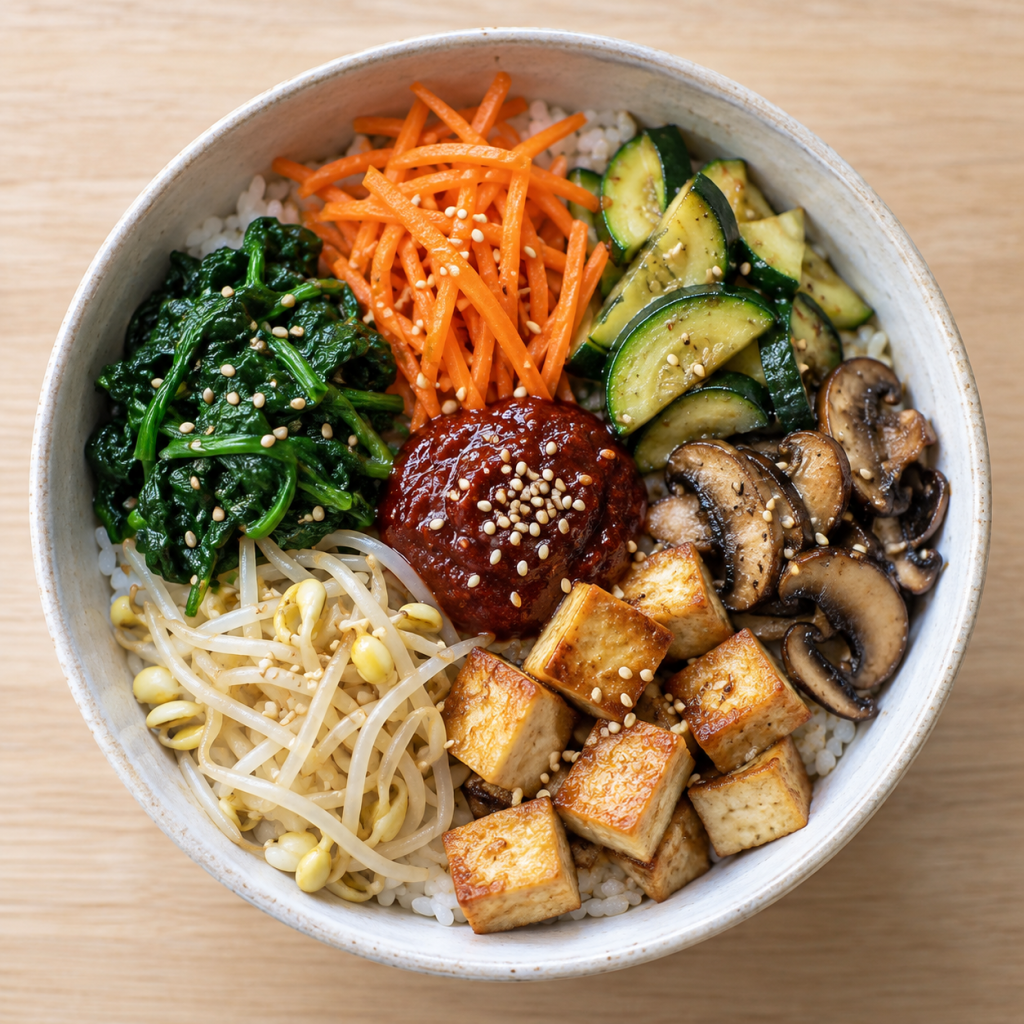
- If you’re cooking at home using this recipe, you’re in full control of every ingredient, so making it fully vegan is straightforward: just choose a vegan gochujang and skip the egg, beef, and any fish-sauce-based seasonings.
For a vegetarian (not vegan) version, keeping the egg but skipping the beef, or replacing it with tofu or extra mushrooms, works well.
Shortcut Version: 5-Minute Microwave Bibimbap
Short on time, or just want to try a bibimbap-style bowl tonight without a full grocery run? Start here. This skips the step of seasoning each vegetable separately, which is part of what gives the full version its layered flavor, but it’s a fast, practical way to use up vegetables you already have.
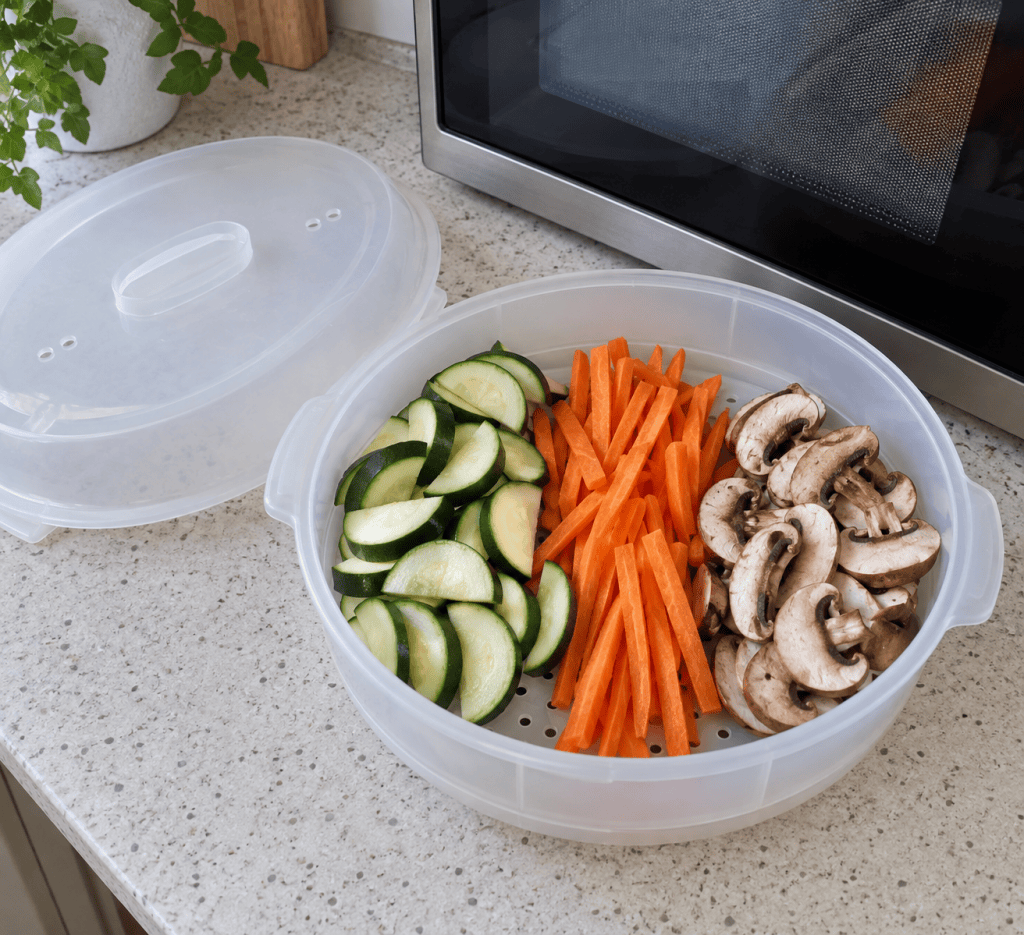
- Wash and julienne or thinly slice whatever vegetables you have on hand (carrots, zucchini, spinach, cabbage, mushrooms, etc.).
- Put them in a microwave-safe bowl with a tablespoon of water, cover loosely, and microwave in 1-minute intervals until just tender (usually 1–3 minutes depending on the vegetables and your microwave).
- Drain any excess liquid, then add warm rice, a spoonful of gochujang, and a drizzle of sesame oil directly to the same bowl.
- Mix everything together and taste, adding more gochujang or sesame oil as needed.
The texture and flavor will be simpler than the full recipe below, since each vegetable won’t have its own individual seasoning, but it gets a bibimbap-style bowl on the table fast.
Want the fuller, more traditional version, with each vegetable seasoned individually? Here’s the complete recipe.
Easy Bibimbap Recipe
- Prep time: 40 minutes
- Cook time: 20 minutes
- Total time: about 1 hour
- Servings: 4
This version is a realistic, weeknight-friendly take on bibimbap rather than the definitive traditional recipe, since traditional versions can include a dozen or more individually prepared vegetables. It keeps the core technique, though: seasoning each vegetable separately, which is what gives bibimbap its layered flavor.
Ingredients
Essential:
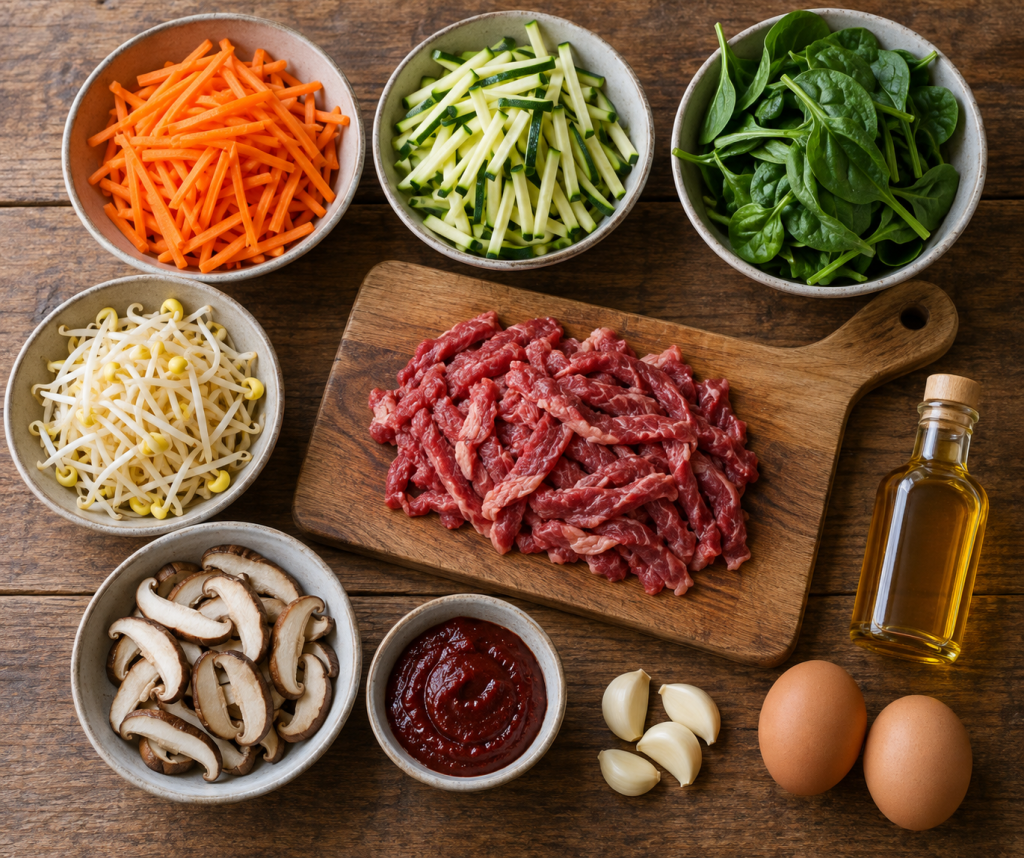
- 4 cups (about 800 g) cooked short-grain white rice
- 6 oz (170 g) fresh spinach
- 2 cups (200 g) bean sprouts (soybean or mung bean)
- 1 medium carrot (about 100 g), julienned
- 1 medium zucchini (about 200 g), julienned
- 4–5 fresh shiitake mushrooms, sliced (or dried shiitake, soaked and sliced)
- 3 cloves garlic, minced, divided
- 2–3 tbsp (30–45 ml) toasted sesame oil, divided
- 2 tbsp (30 ml) soy sauce, divided
- 1–2 tbsp neutral oil (vegetable or canola), for sautéing
- Salt, to taste
- 4 tbsp (about 60 g) gochujang
- 1 tbsp toasted sesame seeds, for garnish
Optional:
- 8 oz (225 g) beef (ribeye or sirloin, thinly sliced, or ground beef) — omit for a vegetarian/vegan version, or substitute tofu or extra mushrooms
- 4 large eggs, fried sunny-side up — omit for a vegan version
- 1 tsp sugar or honey and 1 tsp rice vinegar, for a slightly rounder gochujang sauce
- Sliced green onion, kimchi, or roasted seaweed (gim) strips, for serving
Ingredient Substitutions
- Bean sprouts → if unavailable, extra spinach or shredded cabbage works, though the flavor and texture will be a little different.
- Shiitake mushrooms → cremini or button mushrooms are a fine substitute; the flavor will be slightly less savory but still good.
- Gochujang → there isn’t a substitute that tastes truly the same, since it’s fermented and has a distinct flavor. In a pinch, mixing sriracha or another chili paste with a little brown sugar and soy sauce gets you something in the same direction, but the flavor will be noticeably different from real gochujang. Think of it as a stand-in, not a match.
- Beef → thinly sliced chicken, tofu, or just more mushrooms all work well for a vegetarian version.
- Toasted sesame oil → this has a distinct nutty aroma that’s hard to replace. Regular (untoasted) sesame oil or another neutral oil can be used if that’s what you have, but the flavor won’t be quite the same.
Allergens to note: soy (soy sauce, gochujang, tofu), sesame (oil and seeds), egg, and gluten (soy sauce and many gochujang brands contain wheat, so look for tamari and a certified gluten-free gochujang if needed).
Where to find these ingredients: gochujang, toasted sesame oil, and soy sauce are increasingly available in the international aisle of larger U.S. grocery stores, and reliably at Korean or Asian grocery stores, in person or online. If there’s no Korean grocery store nearby, gochujang in particular is widely sold online.
Step-by-Step Instructions
- Cook the rice according to your rice or package instructions, and keep it warm.
- Blanch the spinach: Boil water, add spinach, and cook for about 30 seconds until wilted and bright green. Drain, rinse briefly in cold water, and squeeze out excess water. Toss with a pinch of salt, a little minced garlic, and ½ tsp sesame oil.
- Blanch the bean sprouts: In the same pot of boiling water, cook the bean sprouts for about 1 minute until slightly translucent but still a little crisp. Drain, squeeze out excess water, and season the same way as the spinach.
- Sauté the carrot: Heat a little neutral oil in a pan over medium heat. Sauté the julienned carrot for 2–3 minutes until slightly softened but still a bit crisp. Season with a pinch of salt.
- Sauté the zucchini: Using the same pan, sauté the zucchini for 2–3 minutes until just softened. Season with a pinch of salt.
- Sauté the mushrooms: Sauté the sliced mushrooms with a little garlic and 1 tsp soy sauce for 3–4 minutes, until tender and no longer releasing much liquid.
- Cook the beef (if using): Season thinly sliced or ground beef with the remaining soy sauce and a little sesame oil. Cook in the same pan over medium-high heat until fully browned with no pink remaining, about 4–5 minutes.
- Fry the eggs (if using): In a separate pan, fry the eggs sunny-side up until the whites are fully set and the yolks are still soft (or cooked through, if you prefer).
- Make the sauce: Stir together the gochujang with the remaining sesame oil, and the sugar/honey and rice vinegar if using.
- Assemble the bowl: Divide the warm rice among 4 bowls. Arrange the vegetables, beef, and egg on top in sections. Add a spoonful of gochujang sauce, sesame seeds, and any optional garnishes.
- Mix and eat: Just before eating, add a little more sauce if you like, then mix everything together thoroughly with a spoon, tasting and adjusting the sauce as you go.
Common Mistakes and Troubleshooting
- Tastes bland: This usually means the vegetables weren’t seasoned individually before assembling. Each namul should have its own small amount of salt, garlic, or sesame oil; don’t rely on the sauce to season everything.
- Vegetables are watery: Make sure to squeeze out excess water after blanching spinach and bean sprouts, or the bowl will end up soggy.
- Too spicy: Add more rice or vegetables to balance it out, or serve extra sauce on the side next time instead of mixing it all in.
- Rice is hard to mix or clumpy: Freshly cooked, warm rice mixes much more easily than cold, day-old rice. If using leftover rice, reheat it with a splash of water first.
- Shortcut version turned mushy: Microwave in shorter intervals (30–60 seconds) and check often; vegetables can go from crisp to overcooked quickly in the microwave.
What to Serve With Bibimbap
Bibimbap is often served with a side of soup, such as a light soybean sprout soup or doenjang-based soup, and kimchi on the side. Since bibimbap already includes vegetables, rice, and protein in one bowl, additional side dishes (banchan, 반찬, the small side dishes served with most Korean meals) are optional rather than necessary.
Storage and Reheating
Store the rice, vegetables, sauce, and any cooked protein in separate airtight containers in the refrigerator for up to 3 days. When ready to eat, reheat the rice (microwave or stovetop) until hot, then add the vegetables and protein; these don’t need to be piping hot, since the warm rice will bring the bowl up to a pleasant temperature once mixed. This dish doesn’t freeze well, since the vegetables and rice both change texture noticeably after thawing.
Frequently Asked Questions
Is bibimbap always spicy?
No. The heat comes mainly from the gochujang, so it’s easy to make it mild by using less, and some regional versions use a non-spicy, soy-based sauce instead.
Do I have to mix everything together?
Traditionally, yes: that’s what “bibimbap” means, and it’s the standard way to eat it. It isn’t an unbreakable rule, though, and some people taste the components separately first before mixing.
Is bibimbap vegan?
It can be, if you skip the meat and egg and choose a gochujang (and any other sauce) that doesn’t contain fish sauce, oyster sauce, or honey. Always check labels if strict veganism matters to you.
Is bibimbap gluten-free?
Not automatically: soy sauce and many gochujang brands contain wheat. Use tamari and a certified gluten-free gochujang if you need this dish to be gluten-free.
Can I meal-prep bibimbap?
Yes. Prepare the rice, vegetables, and protein ahead of time and store them separately, then assemble and mix just before eating.
Conclusion
Once you understand the basic idea (seasoned vegetables, rice, a protein of your choice, and a sauce, all mixed together right before eating) bibimbap is a flexible, forgiving dish to cook on repeat. This easy bibimbap recipe works whether you have a full hour for the traditional method or five minutes for the microwave shortcut, and either way, you end up with a warm, colorful, customizable bowl that’s a great entry point into Korean home cooking.

 Welcome to Curious Daybook
Leave a comment