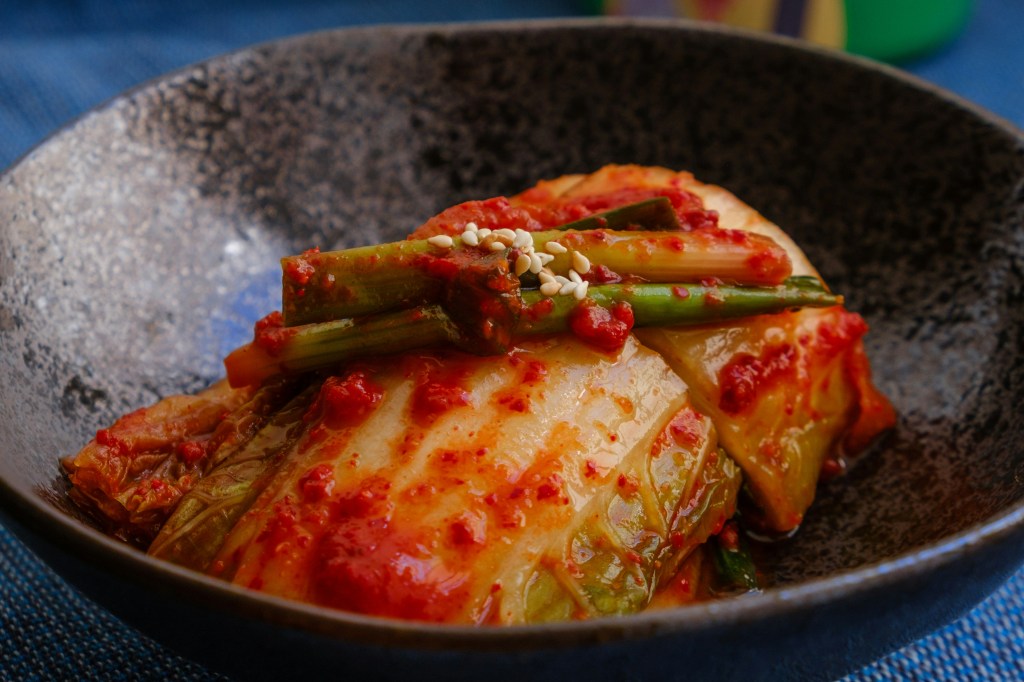
If you’ve looked into Korean food at all, you’ve probably seen kimchi. It shows up in almost every photo of a Korean meal, usually as a small red side dish. What a photo doesn’t show is that kimchi isn’t one dish. It’s a whole category of fermented vegetables, and the version most people outside Korea have tried is just one of dozens.
This guide covers what kimchi actually is, how it tastes, how spicy it gets, and how Koreans eat it day to day. It also includes an easy recipe you can make at home, plus honest advice on buying it instead.
What Is Kimchi?
Kimchi (김치, pronounced roughly “gim-chee”) is the general name for Korean vegetables that have been salted and fermented, usually with garlic, ginger, and chili. It’s not one recipe. It’s a whole cooking tradition, similar to how “pickles” covers many different foods in English, not just one.
There’s no official count, but Korean cooks have developed well over 100 kimchi variations. Three are worth knowing early on:
- Baechu-kimchi: made with napa cabbage. This is what most people mean when they just say “kimchi.”
- Kkakdugi (깍두기): cubed radish kimchi, crunchier and a little sweeter than cabbage kimchi.
- Oi-sobagi (오이소박이): cucumber kimchi, lighter and less fermented, often made in summer.
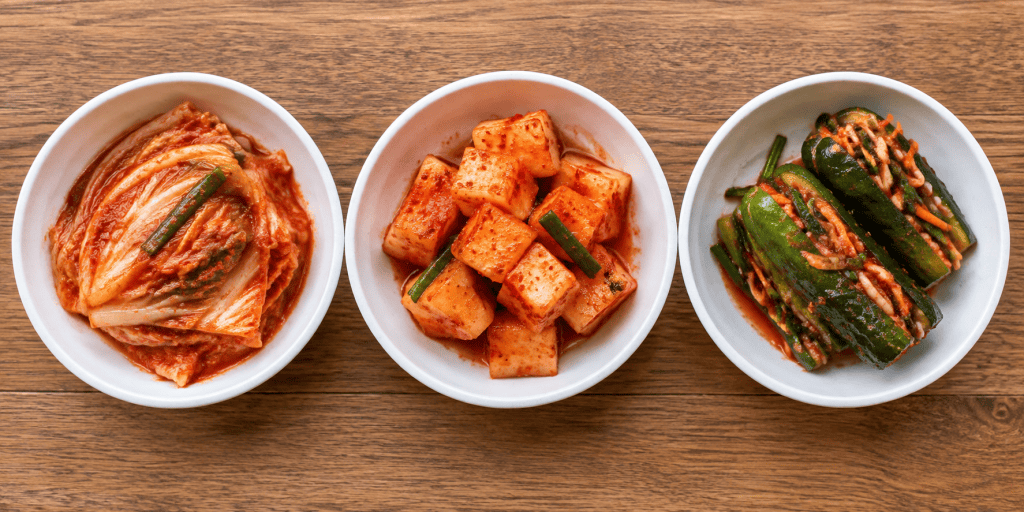
This guide focuses on baechu-kimchi, since it’s the type you’re most likely to see, eat, or want to make first.
The Most Common Kimchi: Baechu-Kimchi
Baechu-kimchi is napa cabbage that’s salted, seasoned with a chili-based paste, and left to ferment. It comes in a few forms depending on how it’s cut and made.
Pogi-kimchi (포기김치) and mak-kimchi (막김치) are the same basic kimchi. They’re just cut differently. Pogi-kimchi keeps the cabbage in whole or halved heads, seasoned leaf by leaf. It’s the more traditional, presentation-focused style, often served at a nicer meal or given as a gift. Mak-kimchi is cut into bite-sized pieces before seasoning. “Mak” roughly means “rough” or “casual,” and it’s the everyday version many households make, since it’s faster and easier to eat straight from the container. Neither one is more authentic. They’re just suited to different occasions.
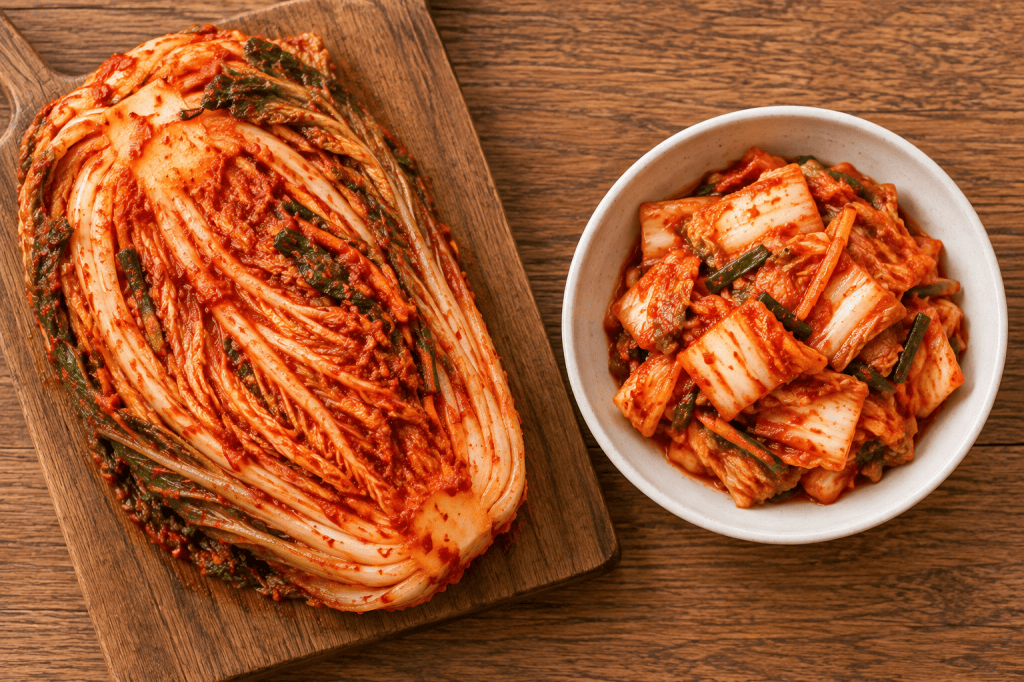
Baechu-kimchi also varies by region. Kimchi from colder northern regions tends to be milder and less salty. Kimchi from the southern coast tends to be saltier, with more salted seafood and a stronger flavor. These are general tendencies, not strict rules. The exact balance comes down to the individual cook.
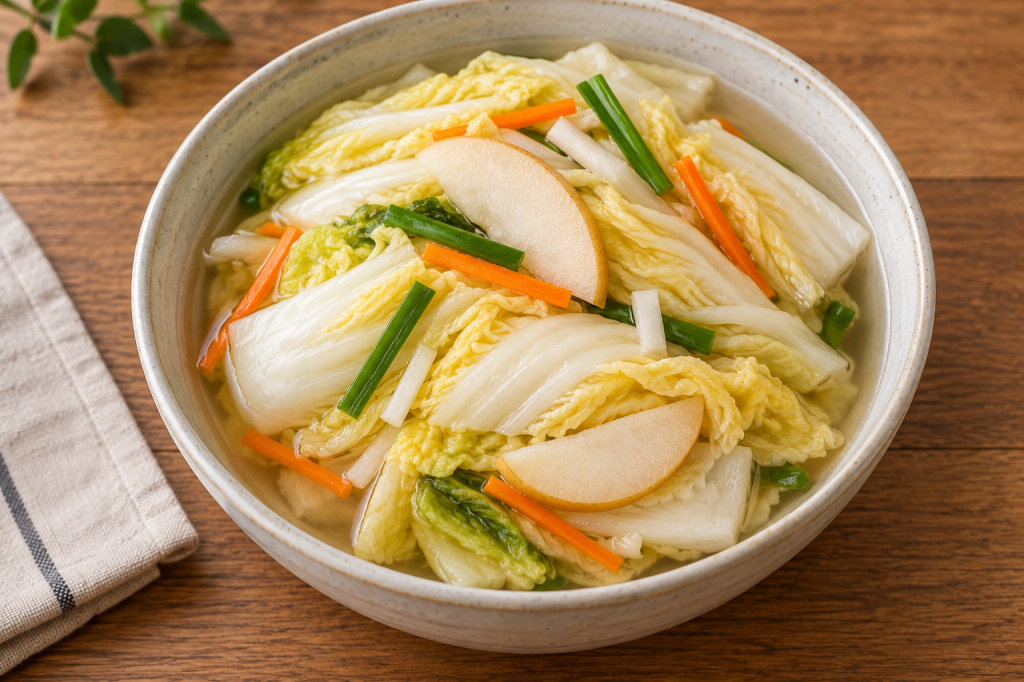
If you’re cooking for someone who can’t handle spice, baek-kimchi (백김치, “white kimchi”) is a good option. It’s made the same basic way, with salted cabbage, garlic, ginger, and scallion, but without gochugaru, the red chili flakes that give most kimchi its color and heat. Baek-kimchi is pale, mild, and slightly sweet and tangy, often with pear added to the brine.
What Does Kimchi Taste Like? Is It Spicy?
Fresh baechu-kimchi tastes salty, garlicky, and mildly spicy, with a crunchy texture. As it ferments, whether at room temperature for a day or two or slowly in the fridge over weeks, it turns more sour and savory, and the cabbage softens. The smell also gets stronger and more pungent with age. That’s normal, and it’s part of what makes kimchi taste like kimchi rather than a fresh salad.
How spicy it is depends on the recipe:
| Spice level | What to expect |
|---|---|
| None | Baek-kimchi (white kimchi) |
| Mild | Homemade kimchi made with less gochugaru |
| Medium | Most standard store-bought and homemade baechu-kimchi, similar to a mild salsa |
| Hot | Kimchi made with extra gochugaru or a spicier chili blend |
How Do Koreans Eat Kimchi?
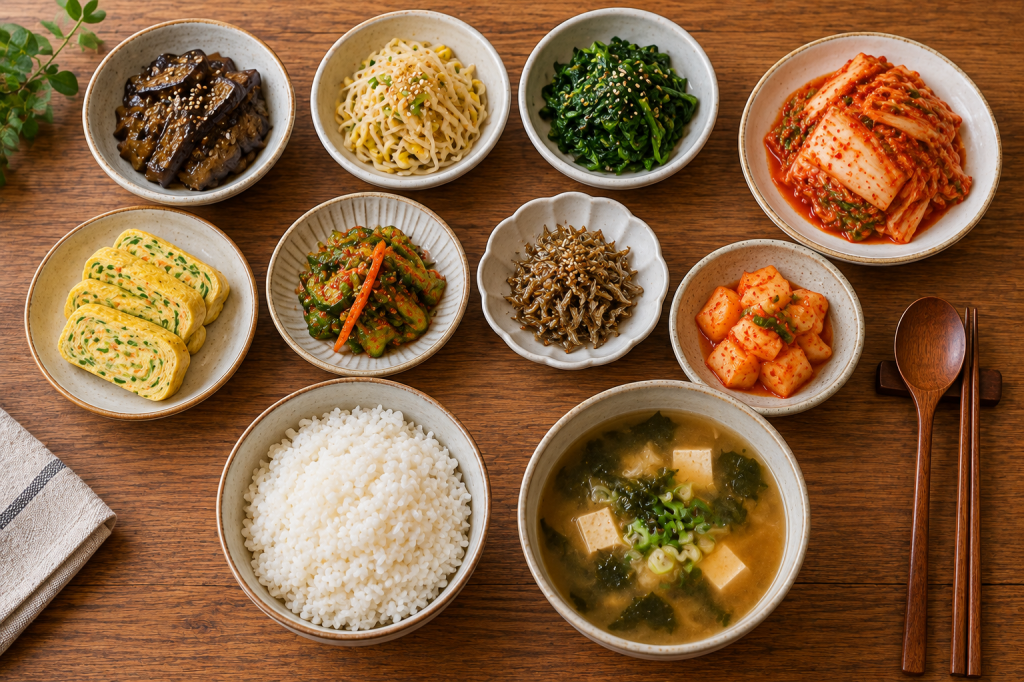
In Korea, kimchi is a banchan (반찬), a side dish. A Korean meal is usually built around rice and soup or stew, with several banchan set out alongside, and kimchi is one of the most common. It’s rarely the main event. It’s there to add crunch, acidity, and spice that balances the rest of the meal.
Kimchi shows up alongside most Korean meals, especially rice-and-soup meals, grilled meats, noodle dishes, and fried foods. It’s less common with sweeter dishes or desserts, so it’s more accurate to call it a near-universal side dish than something paired with everything.
Older, more fermented kimchi gets used as an ingredient too, in kimchi jjigae (kimchi stew), kimchi fried rice, or kimchi pancakes. If your kimchi turns more sour than you want to eat on its own, cooking with it is the standard move, not a sign it’s gone bad.
Kimchi Ingredients and Where to Find Them
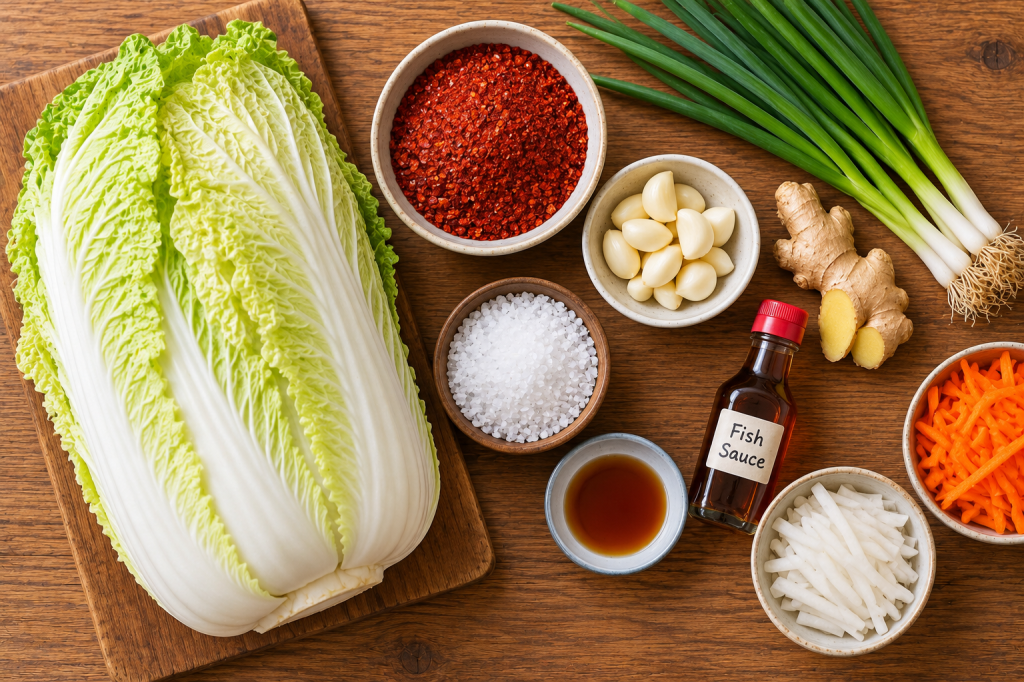
Most baechu-kimchi recipes use the same core group: napa cabbage, coarse salt, gochugaru (Korean chili flakes), garlic, ginger, scallion, and a salty ingredient like fish sauce or salted shrimp that drives fermentation. That salty ingredient is also the main reason most kimchi isn’t vegan. Sugar and a thin rice-flour paste are common additions too, but not universal.
Napa cabbage, garlic, ginger, and scallion are at any regular grocery store. Gochugaru and fish sauce are the two ingredients most people haven’t used before. A Korean or pan-Asian grocery store is the most reliable source, and both are showing up more often in the international aisle of larger supermarkets and from online Korean grocers. No gochugaru? A mix of sweet paprika and a little cayenne gets close to the color and mild heat, though the flavor will be noticeably different.
An Easy Kimchi Recipe You Can Make at Home
This isn’t a traditional, from-scratch version. It’s a simplified way to make baechu-kimchi that skips a few ingredients many traditional recipes include, like rice paste and salted shrimp. It makes about 1.5 lb (700 g) of kimchi, roughly 6 side-dish servings. Plan for about 20 minutes of hands-on work, plus 1 to 2 hours of salting and at least a day to ferment.
What you’ll need:
- 1 medium napa cabbage (about 2 lb / 900 g), cut into bite-sized pieces
- 3 tablespoons coarse salt
- 3 tablespoons gochugaru (start here and add more to taste)
- 3 cloves garlic, minced
- 2 scallions, chopped
- 1 to 2 tablespoons fish sauce (aekjeot), to taste
Basic steps:
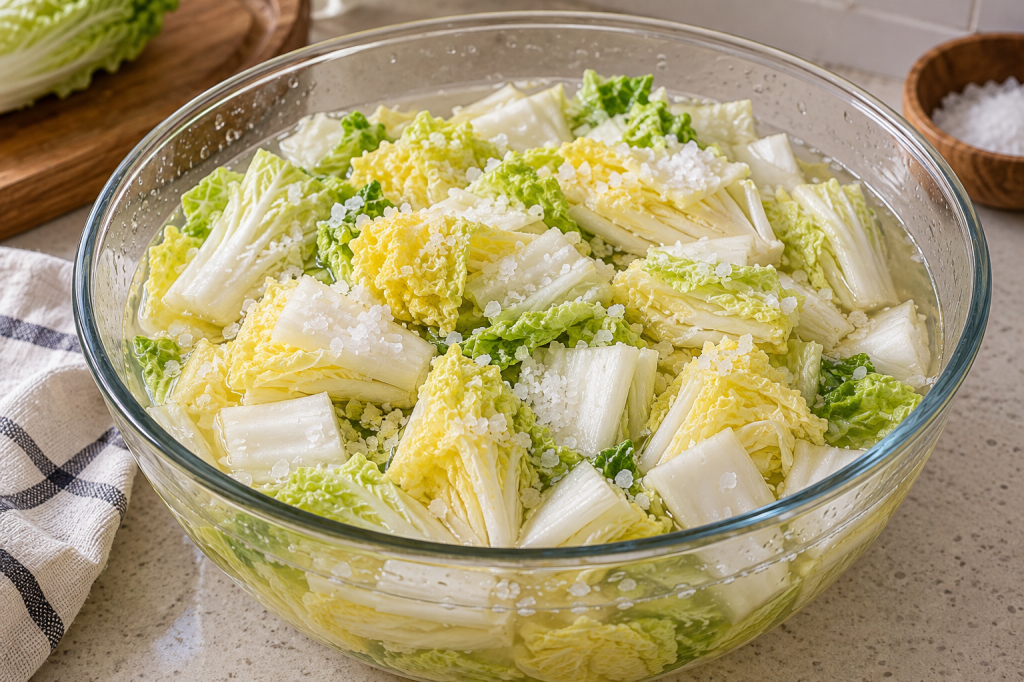
- Toss the cut cabbage with the salt in a large bowl and let it sit for 1 to 2 hours, tossing once or twice. It’s ready when the pieces have visibly wilted and bend easily instead of snapping.
- Rinse briefly under cold water to remove excess salt. Taste a piece; it should be pleasantly salty, not overwhelming. Then drain well for about 15 minutes.
- Add the gochugaru, garlic, scallions, and fish sauce directly to the drained cabbage. Toss well with your hands (gloves recommended) until every piece is coated.
- Taste and adjust the fish sauce or gochugaru until it’s seasoned the way you like.
- Pack into a clean, airtight container, pressing down so the cabbage is covered by its own liquid.
- Leave at room temperature for 1 day, then refrigerate. It’s ready to eat right away, and the flavor keeps developing over the next few days.
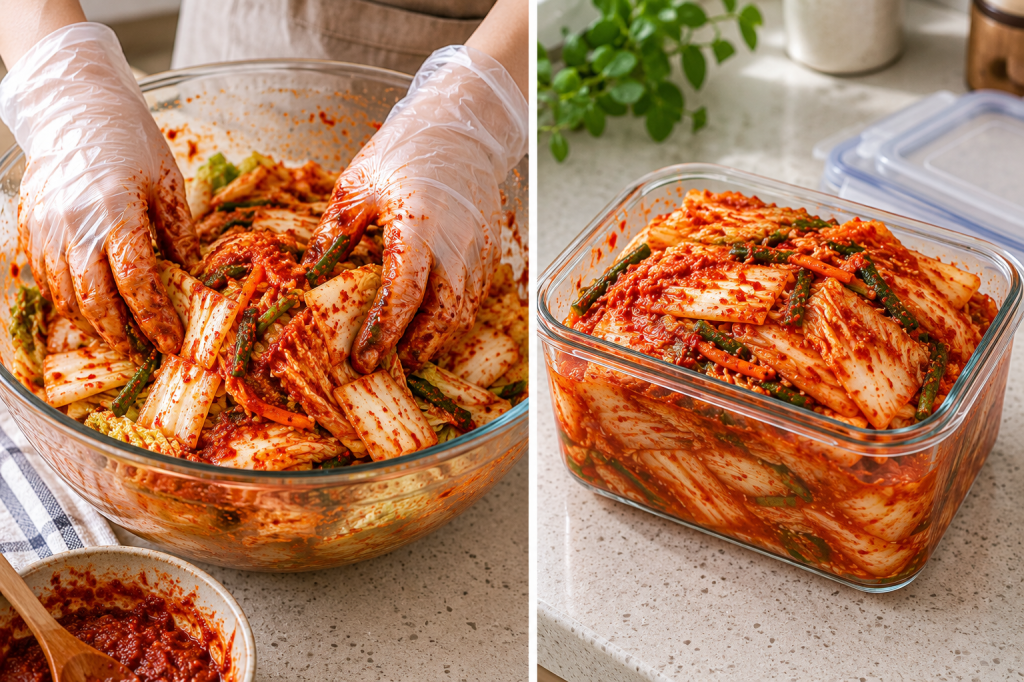
Want to try the more traditional whole-cabbage method (pogi-kimchi) instead? The process is similar, but the cabbage is halved or quartered and salted whole in a saltwater brine for 2 to 3 hours instead of being cut and dry-salted. Then the seasoning paste is spread by hand between each leaf rather than tossed through cut pieces. It takes longer and looks nicer, but the flavor principle is the same.
A First-Timer’s Guide to Gochugaru
Gochugaru (고추가루) is coarse, dried Korean chili flakes. It’s generally less sharply hot than many Western chili flakes, with a fruitier flavor, and it’s what gives most kimchi its red color and heat.
If you’ve never cooked with it, start with less than a recipe calls for. It’s much easier to add more than to fix a batch that’s too spicy. Cutting the amount by a third to a half makes a noticeable difference in heat without changing the rest of the flavor much.
Common Kimchi Mistakes and Troubleshooting
- Tastes bland or watery. Usually under-salted, or rinsed too much after salting. Use the full salt amount and rinse more briefly next time.
- Tastes too salty. Rinse more thoroughly, or soak briefly in plain water before seasoning.
- Doesn’t taste sour after a week. Kept too cold, or the container isn’t airtight. Leave it at room temperature for the first day or two before refrigerating.
- Container looks fizzy or bulges. That’s normal fermentation gas. Open the lid briefly once a day for the first few days to let it out.
- White, powdery film on the surface. This is kahm yeast, a harmless film that’s different from mold. Skim it off and keep the kimchi fully submerged in its liquid to stop it from forming.
- Fuzzy, colored mold (black, green, pink). Not safe to eat. Discard the batch. This usually means the kimchi wasn’t kept submerged or the container wasn’t clean.
How to Store Kimchi
Kimchi keeps changing the whole time it’s in your fridge, which is expected rather than a sign it’s going bad. Fresh kimchi (a few days old) is mild and crunchy. Well-fermented kimchi (1 to 4 weeks) is sourer and softer, which is what most people mean by “good kimchi.” Older kimchi (a month or more) turns quite sour and soft and is best used in cooking rather than eaten raw.
Store it in an airtight container in the refrigerator, always keeping it submerged under its own liquid. It doesn’t need reheating on its own, since it’s eaten cold or at room temperature. It only gets “heated” when used as an ingredient in a cooked dish.
Kimchi Allergens and Vegan Substitutes
Traditional kimchi contains fish (fish sauce) and often shellfish (salted shrimp). For a vegan version, leave both out and substitute soy sauce or a plant-based fish sauce alternative. This will change the traditional flavor somewhat, but the kimchi will still ferment and taste good.
Where to Buy Kimchi: Korean Market vs. Supermarket
If you’d rather not make kimchi yourself, buying it is completely normal. Plenty of Korean households buy at least some of their kimchi too. A Korean grocery store will typically stock several kinds side by side, baechu-kimchi, kkakdugi, oi-sobagi, baek-kimchi, along with different fermentation levels, so you can pick based on how tangy you want it.
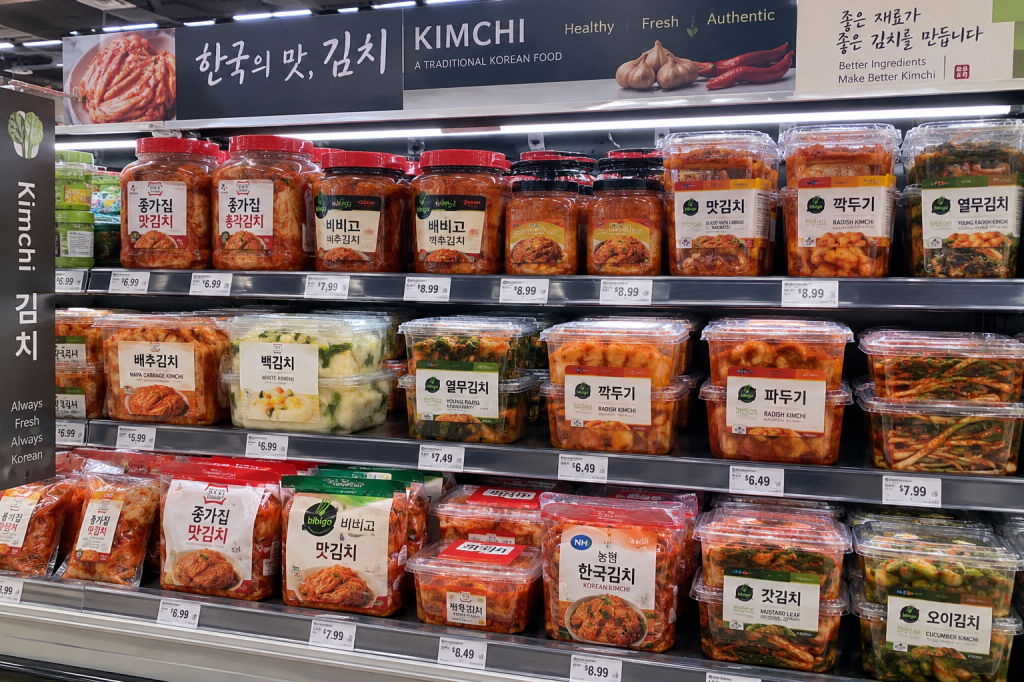
One thing worth knowing before you judge kimchi by your first taste: small-packaged kimchi at mainstream U.S. grocery stores, including chains like Whole Foods, is often made with a broader, less spice-tolerant customer in mind. Many of these products are milder, sweeter, and less fermented than what’s typically sold at Korean markets. That’s not true across the board, though. Some brands sold in mainstream stores, including a few made by Korean-owned companies, are closer to what you’d find at a Korean market. It depends on the specific brand, so checking the ingredient list is more reliable than assuming based on where it’s sold.
If you’re curious what kimchi actually tastes like to most Koreans, a trip to a Korean market is worth making at least once to compare, even if it ends up being an occasional special-trip purchase rather than your everyday kimchi.
Kimchi FAQ
Is kimchi vegan or vegetarian?
Usually not. Most traditional recipes include fish sauce and/or salted shrimp. Vegan versions exist and swap in soy sauce or a plant-based substitute instead.
Is pogi-kimchi different from mak-kimchi?
They’re the same basic kimchi, just cut differently. Pogi-kimchi keeps whole or halved cabbage heads, while mak-kimchi is cut into bite-sized pieces first.
How long does kimchi last?
Properly refrigerated and kept submerged in its liquid, it typically lasts several weeks to a few months, growing more sour over time rather than spoiling outright.
Do I need to cook kimchi before eating it?
No. It’s designed to be eaten as-is, straight from the container.
Baechu-kimchi alone covers pogi- and mak-style, spicy and non-spicy, mild and sharply fermented, and that’s before getting into radish, cucumber, or the dozens of other types Korean cooks make. The easiest way to get a feel for it is to try a few kinds side by side, whether that’s a batch of quick homemade kimchi or a small container from a Korean market, and see what balance of sour, spicy, and salty you like best.

 Welcome to Curious Daybook
Leave a comment