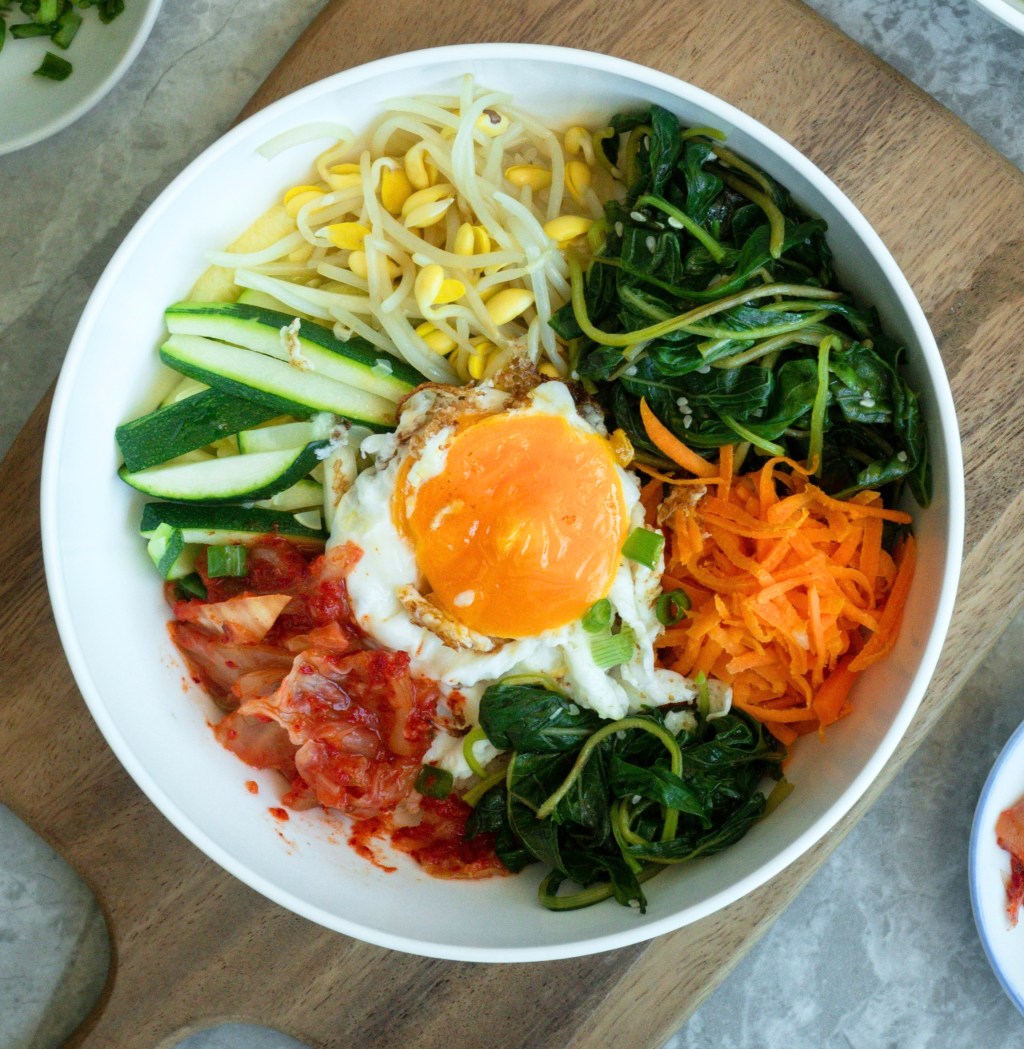
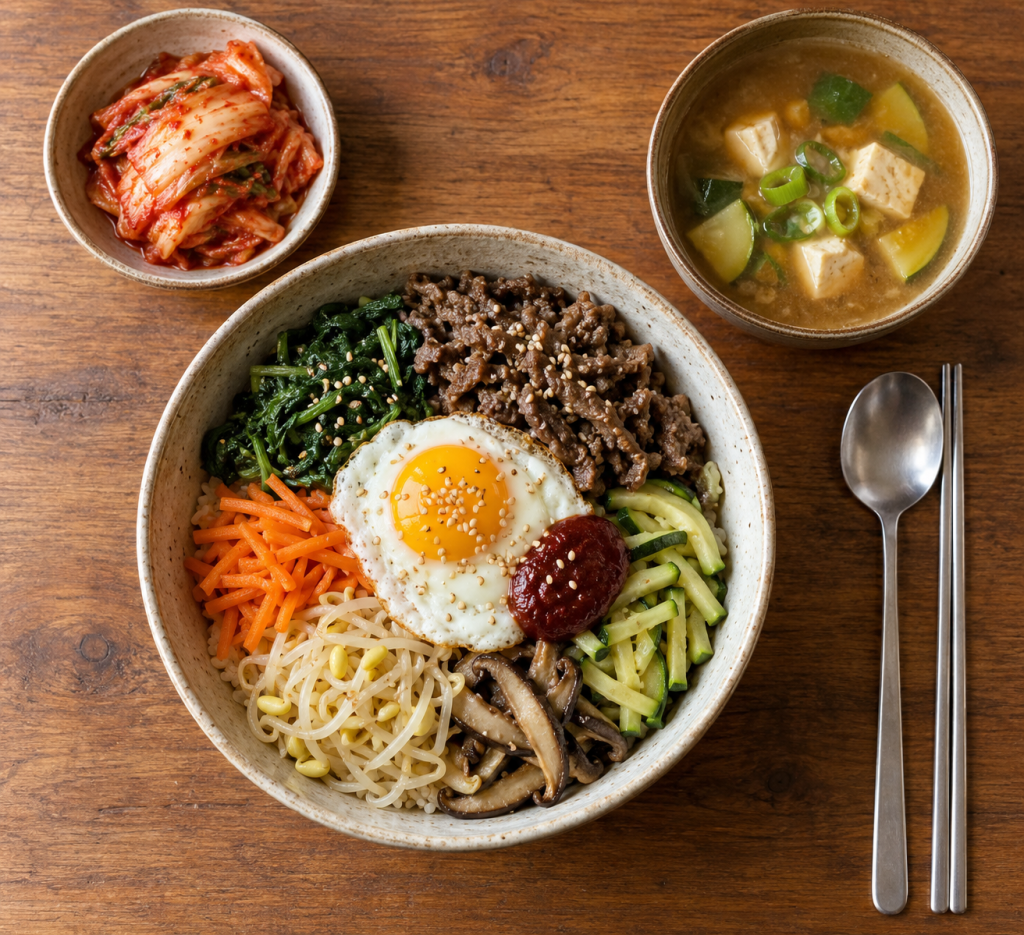
Bibimbap (비빔밥, pronounced bee-bim-bahp) is often the first Korean dish that wins people over. The name means “mixed rice,” and that’s the whole idea: warm rice topped with seasoned vegetables, a protein like beef or a fried egg, and a spoonful of sauce. You mix it all together right before you eat.
At first glance it looks like a rice bowl with salad on top. What makes it Korean is how it’s built and how it’s eaten. It’s also one of the most flexible Korean dishes out there. You can make it vegetarian, vegan, or as mild or spicy as you like. That’s what this guide walks through.
What’s Actually in Bibimbap Sauce
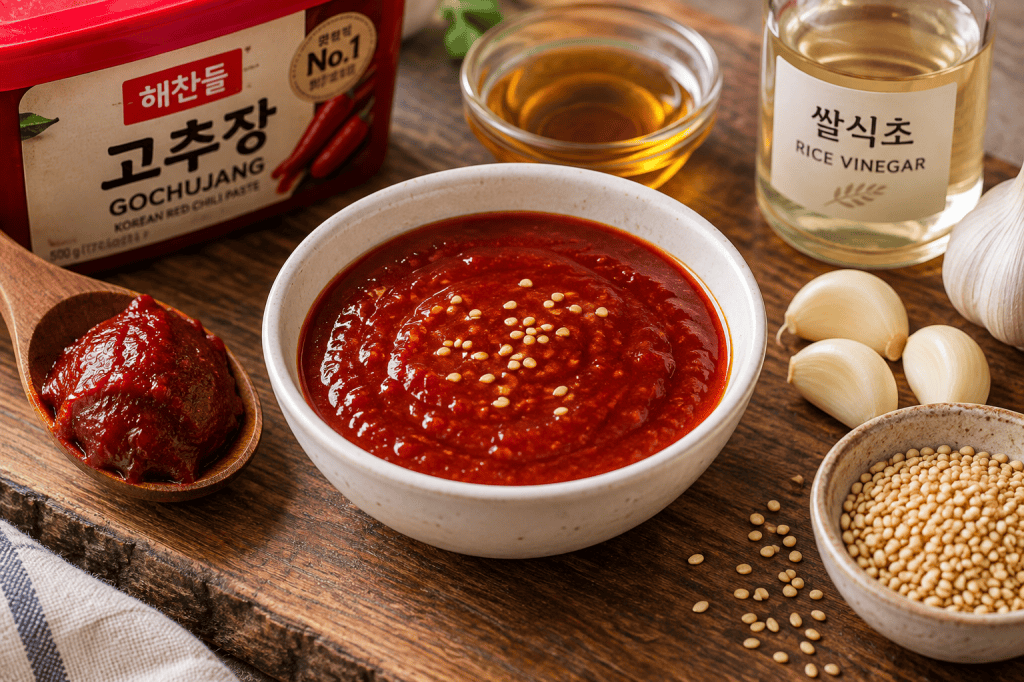
The sauce ties the whole bowl together, so it’s worth knowing what’s in it before you make or order bibimbap. The traditional sauce is called yangnyeomjang (양념장). The standard version includes:
- Gochujang (Korean fermented chili paste), the base
- Sesame oil, for aroma
- Sugar (or honey, or corn syrup), to balance the heat
- Rice vinegar, for a little tang
- Minced garlic and sesame seeds
- Sometimes a splash of soy sauce or water, to thin it out
Some restaurants use ssamjang instead. That’s the fermented soybean-and-chili paste used for Korean BBQ wraps, and it makes the bowl saltier and more savory. Others skip gochujang entirely and use a soy-sauce-based sauce with no heat at all. That version is common for kids, or for anyone who wants to skip the spice.
How Spicy Is Bibimbap?
How spicy your bowl turns out is mostly up to you, since you control how much sauce goes in. Here’s a rough scale:
- Level 1, not spicy: the soy-sauce-based sauce, no gochujang at all.
- Level 2, mild: standard yangnyeomjang, but half the usual amount.
- Level 3, medium: the full standard recipe. This is what most restaurants serve by default.
- Level 4 to 5, spicy: straight gochujang, or extra gochu-garu (Korean chili flakes) mixed in.
If you’re not sure how much heat you can handle, start light. Add sauce a little at a time and taste as you go. You can always add more, but you can’t take it back out.
Yes, Bibimbap Is Naturally Vegetarian
Take out the beef and the egg, and you won’t lose much. The flavor in bibimbap comes mostly from the namul (나물, seasoned vegetables) and the sauce, not the protein. Each vegetable is usually blanched or sautéed on its own with sesame oil, garlic, and salt, so it already tastes good before the sauce gets involved. Beef and egg add heartiness, but they’re really more of a topping than the core of the dish.
How to Make Vegan Bibimbap
Going from vegetarian to vegan takes a little more care, but it’s simple:
- Check the gochujang label. Some brands add a small amount of fish sauce or anchovy extract. Look for one marked vegan or plant-based, and check again next time you buy it, since recipes can change.
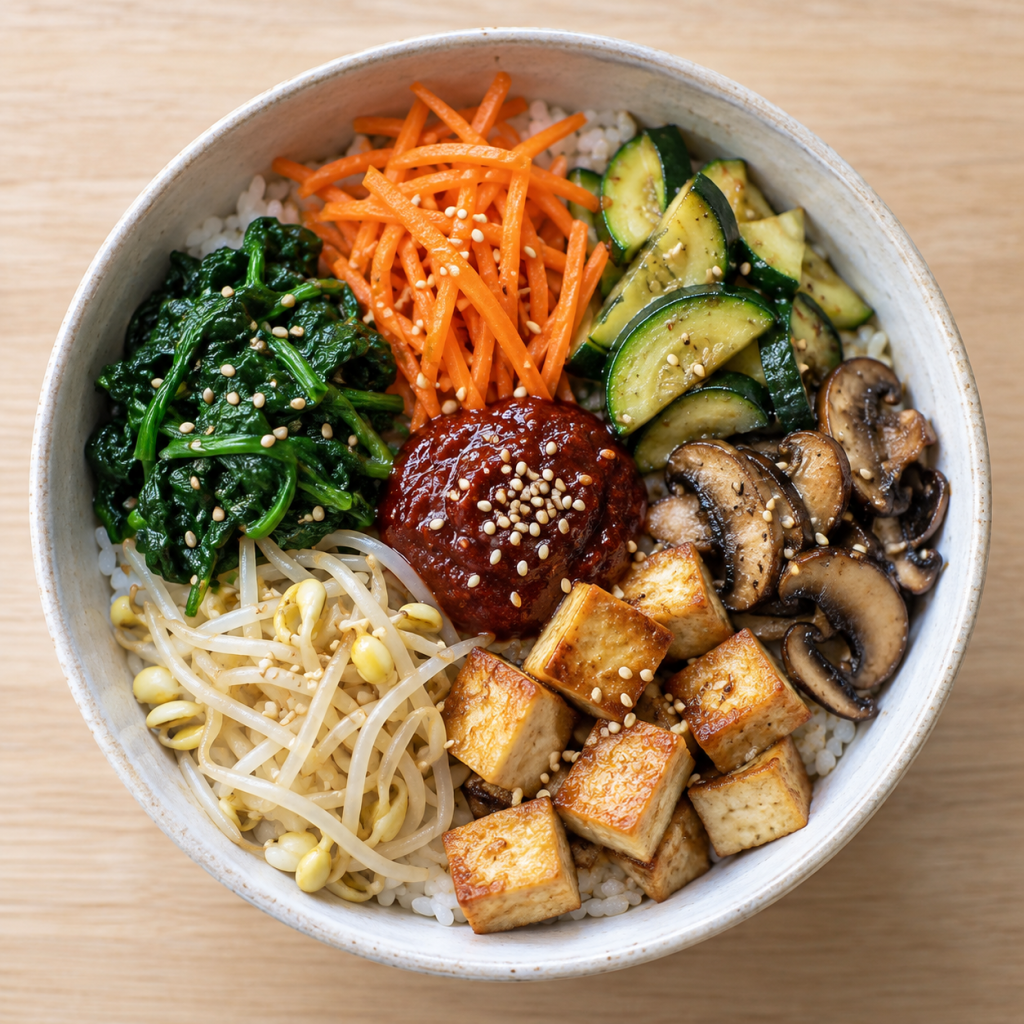
- Swap in tofu. Pan-fried or air-fried tofu with a bit of soy sauce and sesame oil works well in place of egg or beef.
- Watch the side dishes. Some pre-made banchan use fish sauce or shrimp paste, even when the vegetables themselves are plant-based.
Once you’ve checked those three things, a bowl of rice, namul, gochujang sauce, and a little sesame oil is a full vegan meal on its own.
Where to Buy Bibimbap Ingredients Outside Korea
Gochujang is now sold in most Asian grocery stores and on Amazon. It’s worth buying the real thing, since nothing else tastes quite like it.
Toasted sesame oil is usually in the Asian aisle of regular supermarkets too. Look for “toasted” or “dark” on the label, not the light, untoasted kind. The vegetables, carrot, zucchini, mushroom, spinach, bean sprouts, are easy to find anywhere. No rice vinegar on hand? White vinegar with a pinch of extra sugar works as a stand-in.
If you only buy one specialty item for this recipe, make it the gochujang.
How to Eat Bibimbap the Right Way
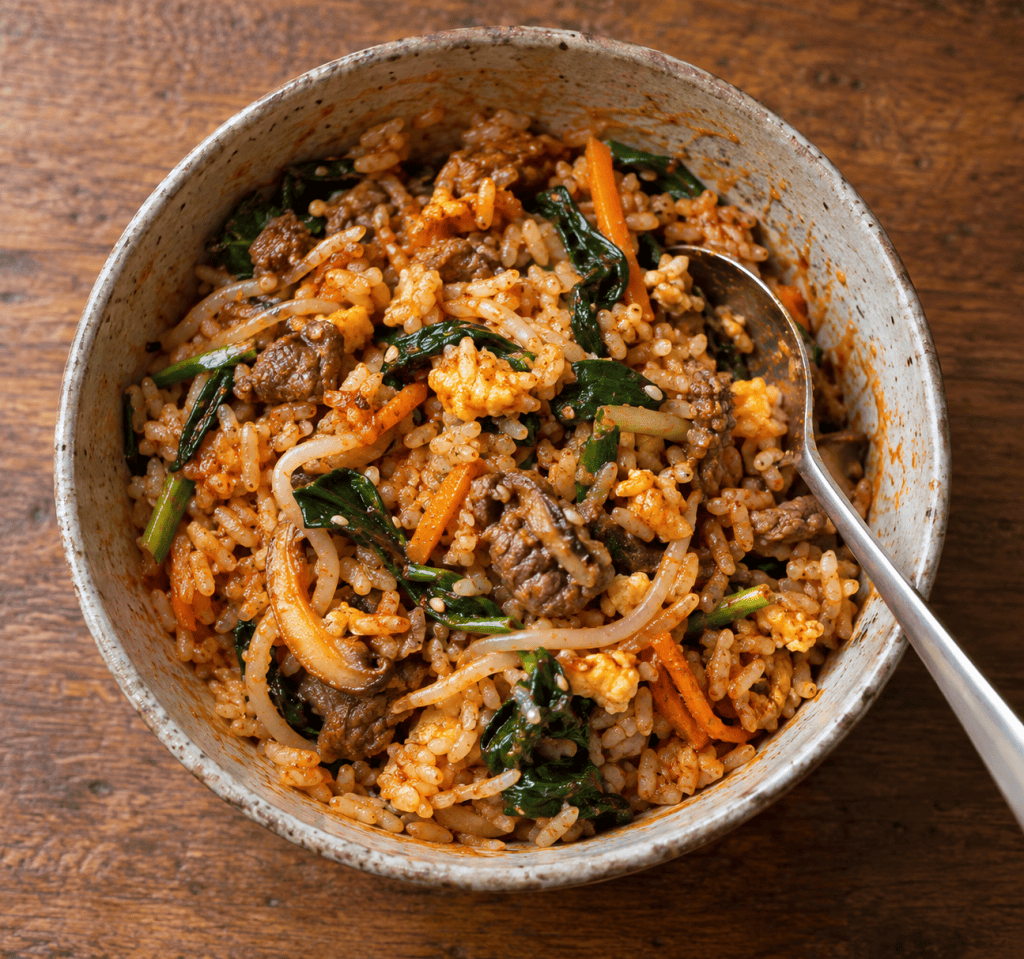
Here’s what trips people up: bibimbap isn’t meant to be eaten piece by piece. You mix everything together first, rice, vegetables, and sauce, before taking a bite. That’s literally what the name means.
Add the sauce slowly. Start with about half of what you think you need, mix it in, and taste. Add more gradually until it feels balanced. Every bite should have a little of everything once you’re done mixing.
If you get the sizzling stone bowl version (dolsot bibimbap, 들솙비뷔밭), mix it quickly after it arrives. The rice touching the hot stone forms a crispy layer called nurungji, and scraping that up into your bite is one of the best parts.
Easy Bibimbap Recipe You Can Make Tonight
You don’t need to prep and season half a dozen namul separately to enjoy bibimbap on a weeknight. Here’s a shortcut:
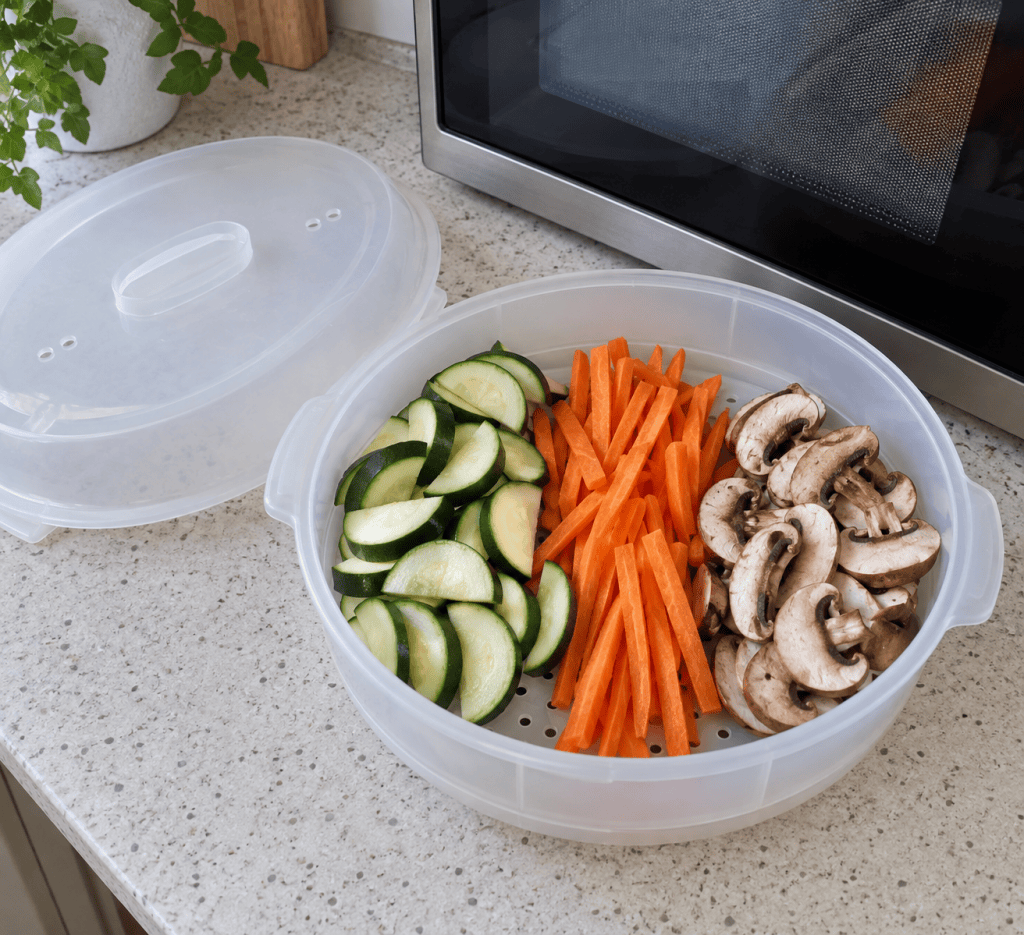
- Chop your vegetables. Carrot, zucchini, and mushroom are the easiest to start with. Add spinach, bean sprouts, or bell pepper if you have them.
- Steam them together in a microwave-safe container until just tender, usually just a few minutes.
- Spoon them over a bowl of warm rice.
- Add a spoonful of gochujang straight from the jar. No need to make the full sauce from scratch. A drizzle of sesame oil helps.
- Mix well, adding gochujang gradually and tasting as you go.
It won’t taste quite as layered as the traditional version, but it captures the idea, rice, vegetables, and spicy sauce mixed together, in about ten minutes.
A Simple Bibimbap Bowl to Start With
- Steamed or sautéed carrot, zucchini, mushroom, and spinach
- A fried egg on top (skip it for vegetarian, or use tofu for vegan)
- A spoonful of sauce, added a little at a time
- Sesame oil and sesame seeds on top
Common Bibimbap Mistakes to Avoid
- Eating each part separately instead of mixing everything first.
- Adding all the sauce at once. You can always add more, but you can’t take it out.
- Skipping the sesame oil. It does more work than you’d think.
- Assuming you need meat for the dish to feel complete.
- Not thinking about spice level ahead of time, if you know you’re sensitive to heat.
How to Store and Reheat Bibimbap
- Fridge: keep rice, namul, and sauce in separate airtight containers. They’ll keep for 3 to 4 days.
- Reheating: warm the rice and vegetables together, then add sauce right before eating. Don’t store it already mixed, the vegetables get soggy.
- Egg: cook a fresh one each time rather than reheating.
Bibimbap FAQ
Is bibimbap vegan?
Not automatically. It usually comes with egg and sometimes beef. Leave those out, add tofu, and use a gochujang without fish ingredients, and it’s vegan.
Is bibimbap gluten-free?
It depends on the brand. Some gochujang and soy sauce contain wheat. Check for a gluten-free label if that matters to you.
Can I make bibimbap without spice?
Yes. Use the soy-sauce-based sauce instead of gochujang. It’s a real variation, not a shortcut.
Do I need a stone bowl to make bibimbap at home?
No. The stone bowl (dolsot) just adds a crispy rice layer at the bottom. A regular bowl works fine without it.
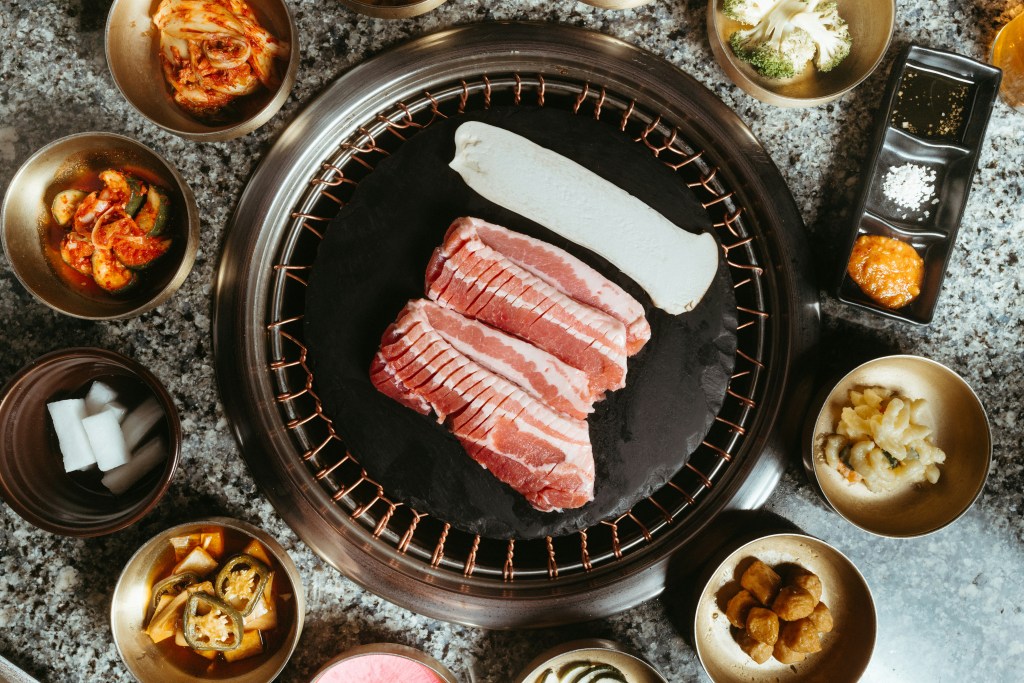
Bibimbap rewards a bit of patience with the mixing, the same way Korean BBQ rewards good wrapping technique. Once you’ve made a bowl or two, at whatever spice level suits you, you’ll get a feel for how much sauce you like. After that, it’s one of the easiest Korean meals to keep in your weekly rotation.



Leave a comment