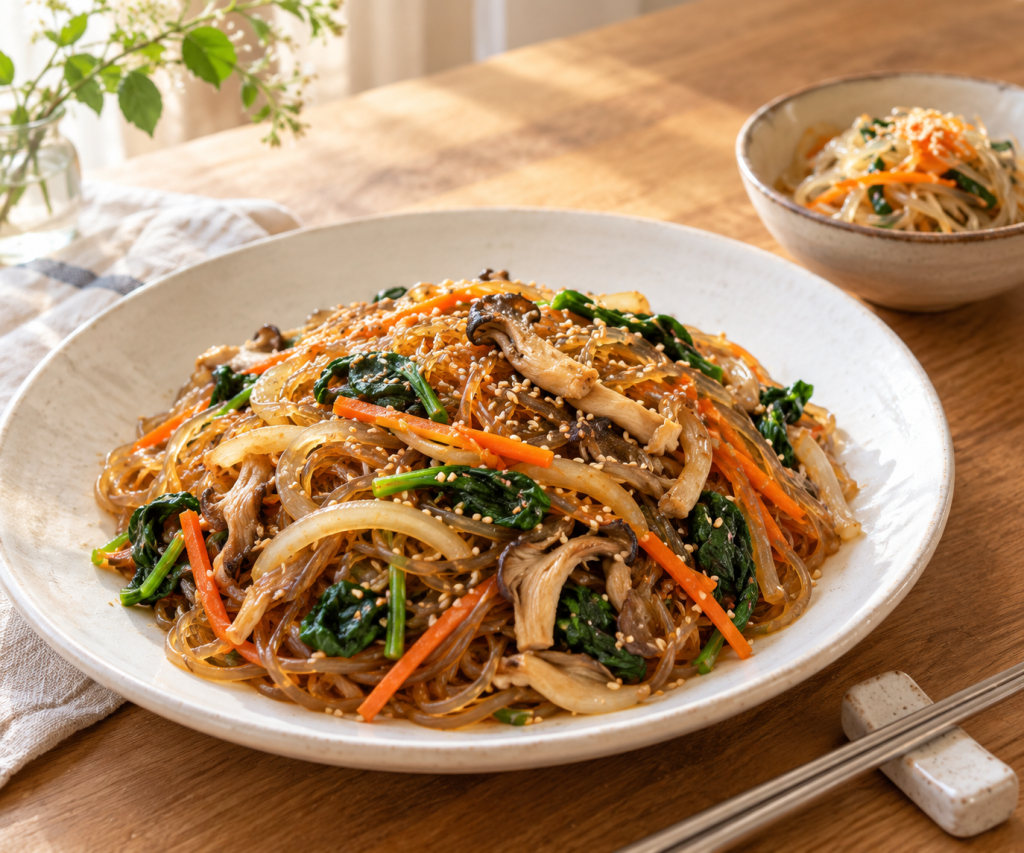
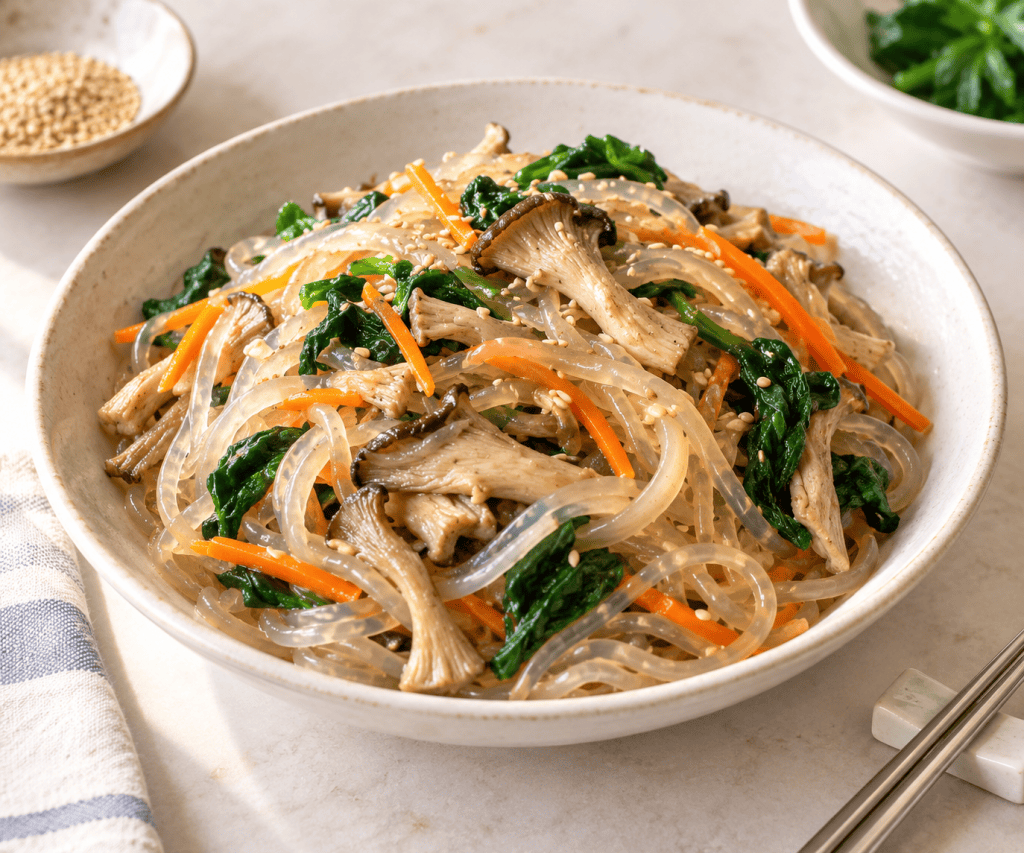
Japchae is Korean glass noodles tossed with vegetables, soy sauce, and sesame oil. It’s savory, a little sweet, and not spicy at all.
Most recipes add beef. Mine doesn’t. I make mushroom japchae with a big pile of oyster mushrooms, and you’ll find that recipe below. On lighter days, I swap the glass noodles for kelp noodles, so that version is here too.
What Is Japchae?
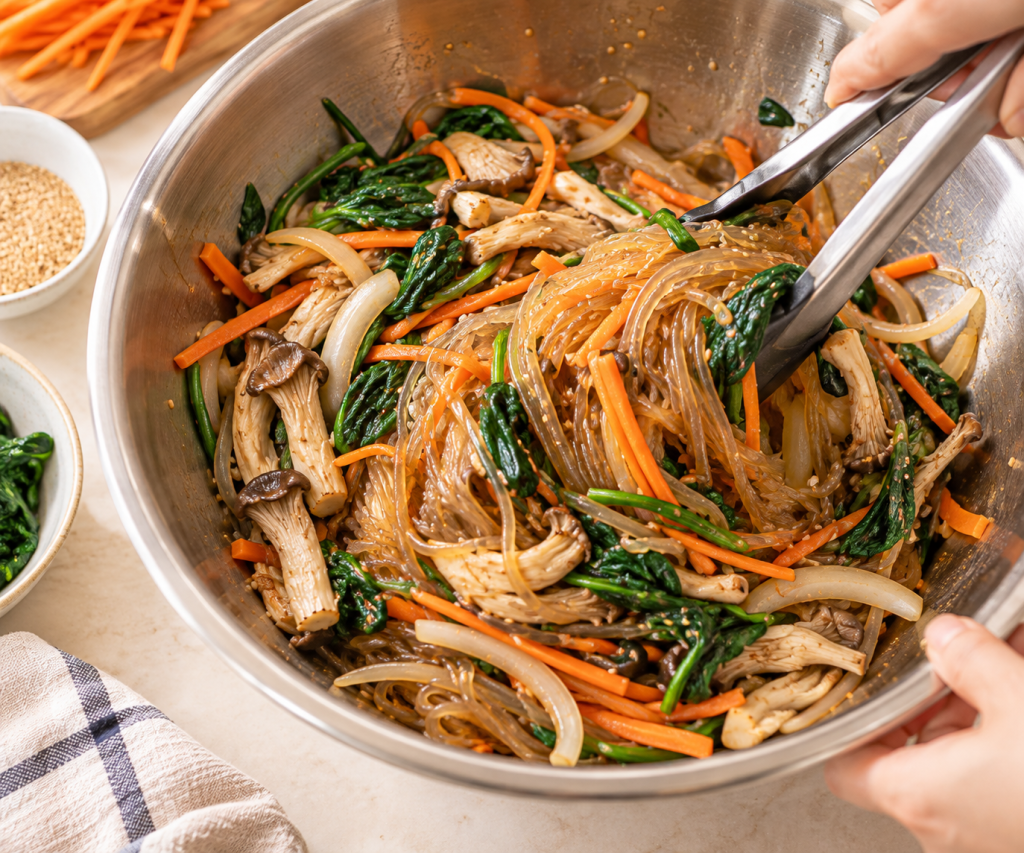
Japchae (잡채, “JAHP-chae”) is a Korean dish of stir-fried noodles and vegetables. The noodles are made from sweet potato starch. They look gray and stiff in the bag, then turn clear and shiny when cooked.
Each vegetable is cooked on its own. At the end, everything goes into one big bowl and gets mixed with the sauce. Spinach, carrot, onion, and mushrooms are the usual mix, and many cooks add thin strips of beef.
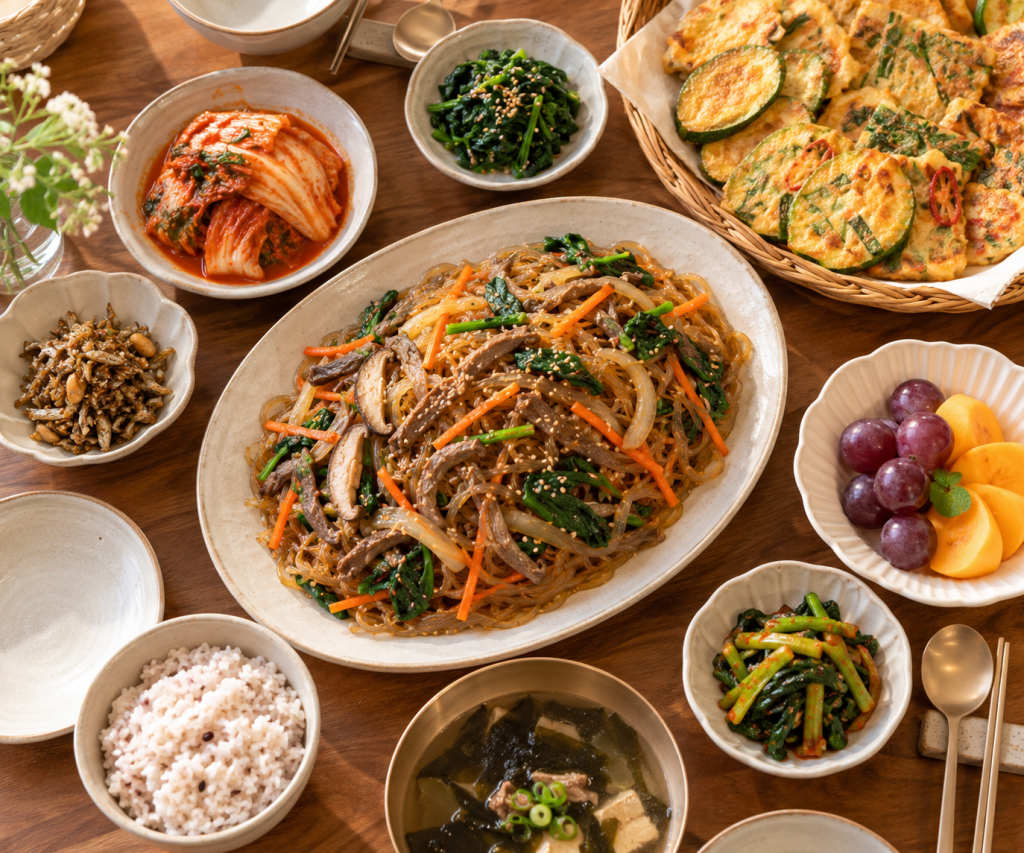
It can be a main dish or a side dish. In a Korean meal, it’s often one of the banchan (반찬), the small shared plates served with rice.
What Does Japchae Taste Like?
Soy sauce gives it a salty base, and a little sugar balances the salt. Toasted sesame oil adds a nutty, roasted smell you’ll notice before the first bite.
The noodles are slippery and springy. If you’ve had glass noodles in Chinese or Thai food, these are thicker and chewier. The carrots add crunch. In my version, the oyster mushrooms bring a meaty, earthy flavor, so you don’t miss the beef.
Is Japchae Spicy?
No. Classic japchae has no chili, so it’s a 0 on the 0 to 3 scale I use on this blog. If you’d like a little heat, sprinkle ½ teaspoon of gochugaru (Korean chili flakes) on top and taste before adding more.
How Koreans Eat Japchae
Japchae is party food in Korea. Families make big batches for Lunar New Year, the fall harvest holiday Chuseok, birthdays, and weddings. It takes a lot of chopping, so it feels like a special effort.
You’ll also see it as a side dish on ordinary days, and in lunch boxes. People pick it from a shared plate with chopsticks, along with rice and kimchi. Some restaurants serve it over rice as a meal called japchae-bap.
Japchae tastes good warm or at room temperature. That makes it easy to bring to a potluck.
Japchae Ingredients and Where to Buy Them
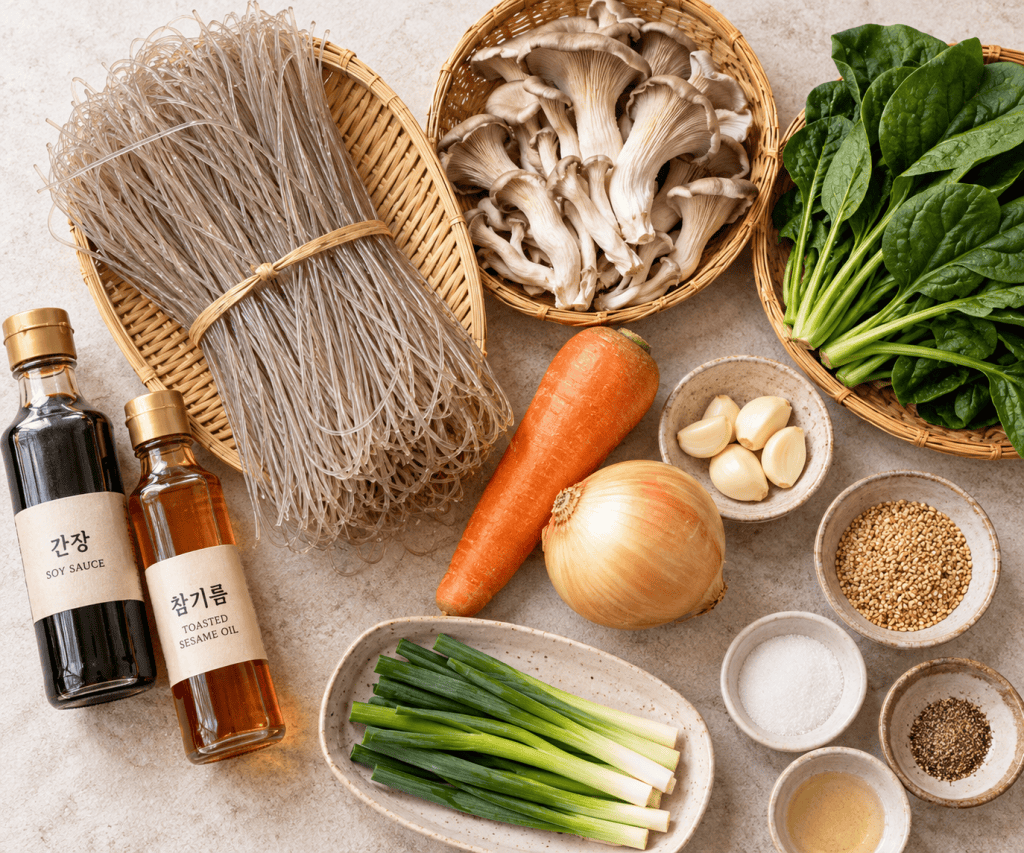
Only one ingredient needs a trip to a Korean or Asian grocery store: the noodles. In Korean, they’re called dangmyeon (당면, “DAHNG-myun”). Look in the dry noodle aisle for a bag labeled “sweet potato starch noodles” or “glass noodles.” Sweet potato starch should be the first ingredient. The dry noodles keep for months, and online shops sell them too.
The rest is easy to find in a regular supermarket:
- Oyster mushrooms: soft, frilly, fan-shaped mushrooms, usually near the shiitakes
- Soy sauce: any regular kind works
- Toasted sesame oil: the dark brown kind with a strong smell, not light sesame oil
- Spinach, carrot, onion, and garlic
| If you can’t find | Use | What changes |
|---|---|---|
| Sweet potato noodles | Mung bean glass noodles (bean threads) | Thinner and softer. Cook them for less time. |
| Oyster mushrooms | Shiitake, king oyster, or cremini, sliced | Shiitake tastes stronger. Cremini is milder. |
| Spinach | Baby spinach, or skip it | Baby spinach needs only 10 to 15 seconds in boiling water. |
| Toasted sesame oil | Nothing close | Japchae loses its main aroma without it. Buy a small bottle. |
Skip rice vermicelli, the thin white noodles used in Vietnamese food. They break apart and don’t have the same bounce.
Easy Mushroom Japchae Recipe
This is how I make japchae at home. Traditional japchae has beef and a thin egg topping, so this isn’t the classic holiday recipe. It’s my everyday version, and it’s vegan as written.
Prep time: 20 minutes
Cook time: 20 minutes
Total time: 40 minutes
Servings: 4 as a main, 6 to 8 as a side
Spice level: 0
You’ll need
- 7 oz (200 g) dried sweet potato noodles (dangmyeon)
- 12 oz (340 g) oyster mushrooms
- 1 medium onion, thinly sliced
- 1 medium carrot, cut into thin strips
- 5 oz (140 g) spinach
- 2 cloves garlic, minced
- 2 to 3 tablespoons cooking oil with little flavor, such as canola
For the sauce
- 4 tablespoons (60 ml) soy sauce
- 2 tablespoons sugar
- 2 tablespoons toasted sesame oil
- ¼ teaspoon black pepper
Optional
- ½ red bell pepper, thinly sliced
- 2 green onions, cut into 2-inch (5 cm) pieces
- 1 tablespoon toasted sesame seeds
- 1 egg, for a thin omelet topping (not vegan)
How to Make Mushroom Japchae Step by Step
- Mix the sauce ingredients in a small bowl until the sugar dissolves. You’ll use it for the spinach, the mushrooms, and the noodles.
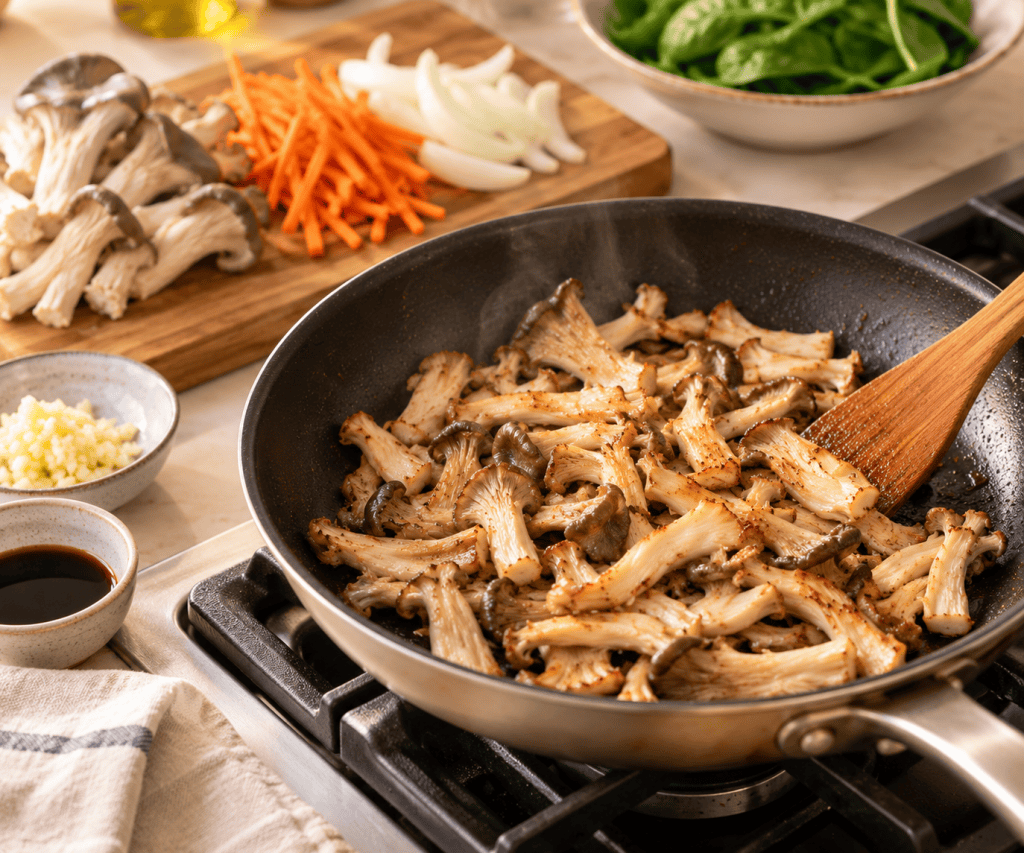
- Bring a large pot of water to a boil. Meanwhile, tear the mushrooms by hand into strips about ½ inch (1 cm) wide.
- Put the spinach in the boiling water for 20 to 30 seconds, until it turns bright green and soft. Scoop it out and rinse with cold water. Squeeze out the water and toss it with 1 teaspoon of sauce. Keep the pot boiling.
- Cook the noodles in the same pot for the time on the package, usually 6 to 8 minutes. Bite one: it should be clear and soft but still springy.
- Drain, rinse briefly with cold water, and cut the noodles a few times with kitchen scissors. Toss them with 1 tablespoon of sauce right away so they don’t stick.
- Heat 1 tablespoon of oil in a large skillet over medium-high heat. Cook the onion and carrot with a pinch of salt for 2 to 3 minutes, until the onion looks see-through. Move them to a big bowl.
- Add another tablespoon of oil and spread the mushrooms in one layer. Leave them alone for 1 minute, then stir. Cook 4 to 5 minutes, until they shrink and brown at the edges, and the pan looks dry.
- Add the garlic and 1 tablespoon of sauce to the mushrooms. Stir for 30 seconds, then add them to the bowl. If you’re using bell pepper, cook it for 1 minute next.
- Put the noodles and the rest of the sauce in the skillet. Stir over medium heat for 1 to 2 minutes, until the noodles turn light brown and glossy.
- Add the noodles, spinach, and green onion to the bowl. Mix with tongs, or with your hands in kitchen gloves. Taste, add a splash of soy sauce or sesame oil if needed, and top with sesame seeds.
For the egg topping, beat 1 egg with a pinch of salt. Pour it thin into a lightly oiled pan and cook over low heat, about 1 minute per side. Roll it up, slice it into thin strips, and scatter on top.
Kelp Noodle Japchae (Cheonsachae): A Low-Carb Swap
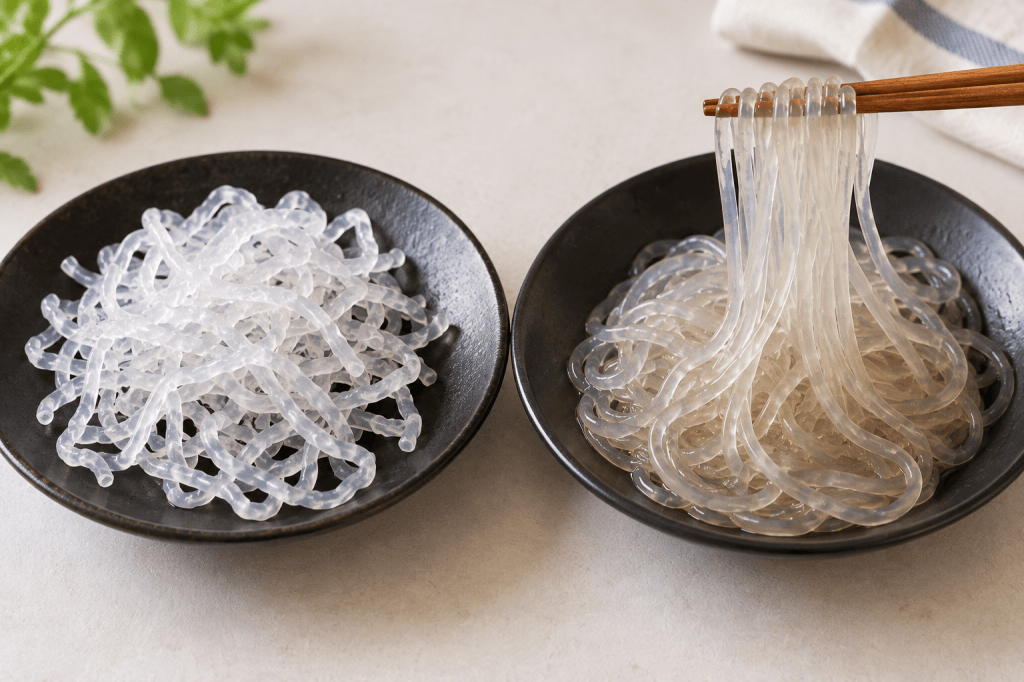
On lighter days, I make japchae with cheonsachae (천사채, “CHUHN-sah-chae”) instead of glass noodles. It’s a clear, thin noodle made from seaweed, sold in Korean markets. Outside Korea, health food stores sell a similar product called kelp noodles.
These noodles are much lower in carbs and calories than starch noodles, which is why they show up in keto and low-carb recipes. Numbers vary by brand, so check the label.
Out of the bag, they’re crunchy and curly. A soak in hot baking soda water turns them soft, almost like glass noodles. This method is based on a popular Korean home recipe, and it takes about 25 minutes, mostly waiting.
- Put 1¼ lb (550 g) of cheonsachae or kelp noodles in a large heatproof bowl. Sprinkle 2 tablespoons of baking soda evenly over the top.
- Mix about 3½ cups (800 ml) of boiling water with 3 cups (700 ml) of cold water. Pour this hot water over the noodles so they’re fully covered.
- Let them soak for about 25 minutes. Thick noodles or a cold kitchen may need a little longer. They’re ready when the curls relax and a strand feels soft and bendy, not crunchy.
- Drain, then rinse in cold water three or four times, rubbing the noodles with your hands. Keep going until they no longer feel slippery. Leftover baking soda tastes soapy.
- Squeeze or shake out as much water as you can, then cut them into shorter pieces with scissors.
Then make the mushroom japchae recipe above, with two changes. Skip boiling, because these noodles don’t need it. And start with about two-thirds of the sauce, since they soak up less of it. Add the noodles to the skillet with the cooked vegetables and stir-fry for about 2 minutes, then taste and add more sauce if you want.
The result is lighter and paler than glass noodle japchae, with a softer bite. It won’t fool anyone, but it’s a nice weeknight dish when you want noodles without the heavy feeling. A bonus: these noodles keep their texture when reheated, unlike glass noodles.
Making a big batch? Store the softened, plain noodles in a sealed container in the fridge and use them within 3 days.
Is Japchae Vegan?
Usually not, because traditional japchae has beef and often egg. Both versions on this page are vegan if you skip the egg topping.
When you buy ready-made japchae or follow other recipes, watch for oyster sauce (made from oysters) and beef or fish in deli and frozen versions. Read the full ingredient list.
Common Mistakes and Easy Fixes
The noodles turned into one big clump. They sat too long after draining. Next time, toss them with sauce right away. To save them now, warm them in the pan with a splash of water.
The mushrooms are gray and watery. The pan was too full or not hot enough. Cook them in two batches.
It tastes flat. Add ½ teaspoon of soy sauce and a few drops of sesame oil, then mix and taste again.
It’s too salty. Mix in more plain noodles or vegetables, or a pinch of sugar.
The kelp noodles taste soapy. The baking soda wasn’t fully rinsed off. Rinse them again before mixing.
What to Serve With It
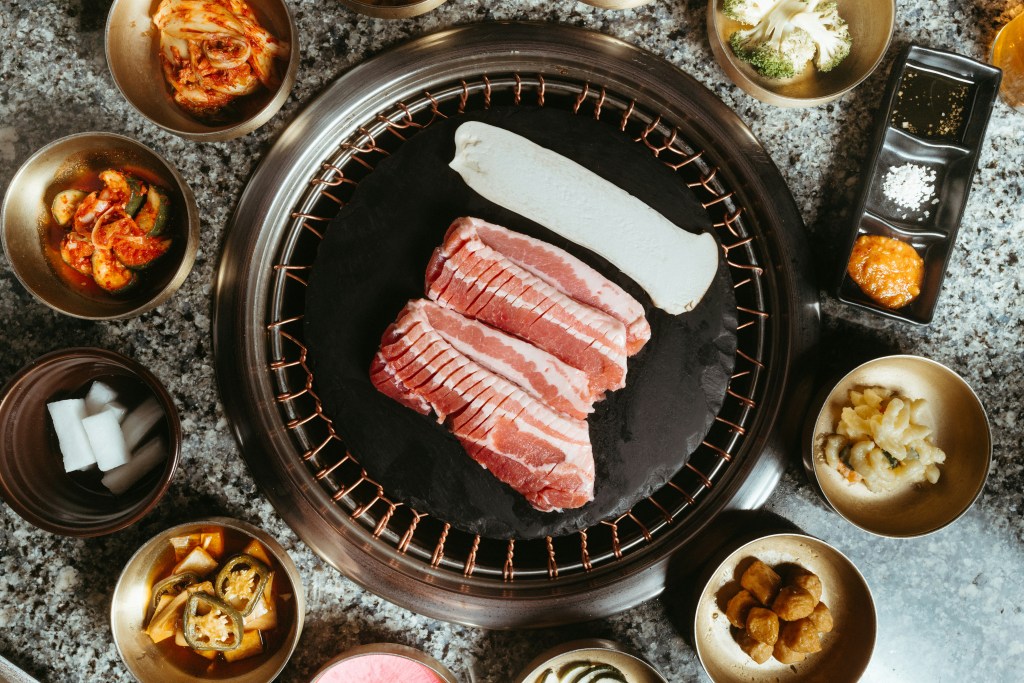
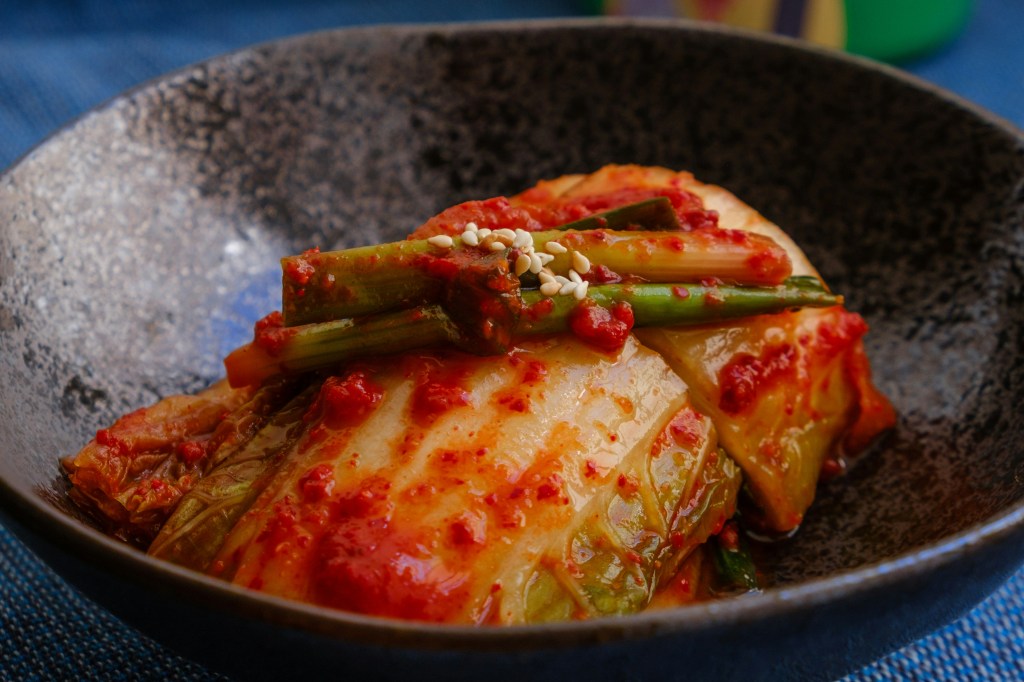
For a simple Korean meal, add a bowl of rice, kimchi, and soup. For a bigger table, serve it with Korean BBQ, savory pancakes, or tofu dishes. Japchae is mild, so it also balances spicy food like tteokbokki.
How to Store and Reheat Japchae
Put leftovers in an airtight container in the fridge within 2 hours (1 hour if it’s above 90°F / 32°C). Glass noodle japchae keeps for 3 to 4 days.
The noodles get hard in the fridge. To soften them, stir-fry over medium heat with 1 to 2 tablespoons of water. In the microwave, cover the bowl and heat in 30-second bursts, stirring in between.
Kelp noodle japchae keeps for up to 3 days and stays soft, so you can reheat it the same way. Don’t freeze it, since freezing can change the texture of kelp noodles.
Allergens: soy and wheat (in regular soy sauce), sesame, and egg if you add the topping.
Safety: the noodles are long and slippery. Cut them short for young children and older adults.
Japchae FAQ
Why are my japchae noodles hard the next day?
Sweet potato noodles firm up when cold. Reheat them in a pan with a little water and they’ll turn soft and springy again.
Is japchae gluten-free?
The noodles are, but regular soy sauce has wheat. Use tamari or a gluten-free soy sauce.
Can I make japchae ahead of time?
Yes. Make it a few hours early and keep it covered. If you make it the day before, refrigerate it and warm it in a pan before serving.
What’s the difference between japchae and chow mein?
Chow mein uses wheat noodles. Japchae uses clear sweet potato noodles, which are chewier, and the sauce is mostly soy sauce and sesame oil.
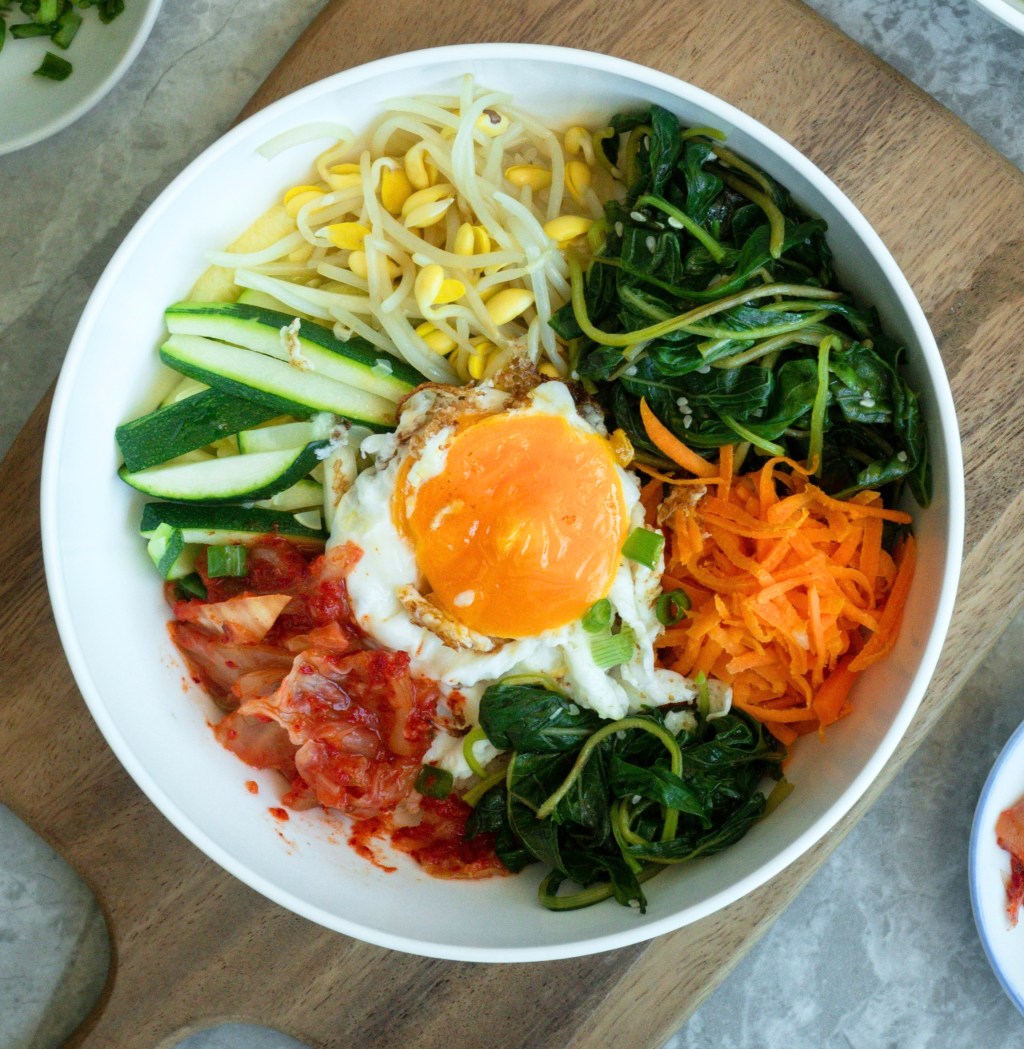
If this is your first time, start with the mushroom japchae. It’s mild and colorful, and it’s easy to share. When you want something lighter, try the kelp noodle swap on a weeknight. If you liked this, try bibimbap next. It uses the same seasoned spinach.




Leave a comment