
Bulgogi is thin-sliced beef in a sweet soy and garlic marinade, cooked quickly in a hot pan until tender and glossy. It isn’t spicy, and it’s one of the first Korean dishes many people try.
My version of beef bulgogi adds a big handful of oyster mushrooms and lets the vegetables make their own sauce in the pan. If there’s no Korean market near you, I’ll also show you where to find thin-sliced beef at a regular store and how to use a bottled bulgogi sauce on busy nights.
What Is Bulgogi?
Bulgogi (불고기, “bool-GOH-gee”) is a Korean main dish of beef sliced paper-thin. The beef soaks in a marinade of soy sauce, sugar, garlic, and sesame oil, then cooks for just a few minutes.
The name means “fire meat,” but the flavor is mild and a little sweet. (Pork bulgogi is a different dish, usually red and spicy.)
At home, most Koreans cook it in a skillet with onions and other vegetables, the way this recipe does.
What Does Bulgogi Taste Like?
The first thing you’ll notice is the balance of salty soy sauce and sugar, with garlic and toasted sesame oil in the background. The thin beef turns soft in minutes, and oyster mushrooms soak up the sauce while staying a little chewy. By the end, there’s a thin, savory sauce in the pan that tastes best spooned over rice.
If you’ve had teriyaki, the flavor will feel familiar. Bulgogi is less sticky, though, and it has more garlic and sesame.
Is Bulgogi Spicy?
No. Beef bulgogi has no chili at all, so it’s a 0 on the 0 to 3 spice scale I use on this blog. Kids and spice-shy eaters usually do fine with it.
If you want some heat, add a pinch of gochugaru (고춧가루, Korean chili flakes) at the end for a 1. For a 2, stir 1 tablespoon of gochujang (고추장, a sweet and spicy chili paste) into the marinade. You can also cook it plain and let everyone add chili flakes at the table.
How Koreans Eat Bulgogi
Bulgogi goes in the middle of the table with a bowl of white rice for each person. Everyone takes a little at a time with chopsticks, along with banchan (반찬), the small shared side dishes that come with a Korean meal. Kimchi is almost always one of them.
Many people also wrap a bite of bulgogi and rice in a lettuce leaf. This wrap is called ssam (쌈), and the fresh lettuce is a nice contrast to the sweet, warm beef.
It’s everyday family food, and leftovers often end up in lunch boxes or rolled into kimbap.

Bulgogi Ingredients and Where to Buy Them
You can make bulgogi with groceries from a regular American supermarket. The only tricky part is the beef, because it needs to be sliced very thin.
The beef. Korean markets sell beef already sliced for bulgogi. If you don’t live near one, Trader Joe’s Shaved Beef Steak is a good option. I find it very close to the bulgogi beef sold at Korean markets, and it’s thin enough to marinate straight from the package. Some supermarkets also sell “shaved steak” for Philly cheesesteaks, which works too.
The mushrooms. Any mushroom works in bulgogi, so use what you can find. I use oyster mushrooms, the soft, fan-shaped ones often sold near the shiitakes. They tear easily by hand and soak up the sauce. Shiitake, cremini, white button, and enoki are all fine too.
The pantry items. You’ll need soy sauce, sugar, garlic, toasted sesame oil, black pepper, and mirin, a sweet rice wine used for cooking. Mirin is in the Asian aisle of most supermarkets.
| If you can’t find | Use | What changes |
|---|---|---|
| Thin-sliced beef | Ribeye or sirloin, frozen 30 to 45 minutes, then sliced thin across the grain (across the lines in the meat) | Same flavor, about 10 more minutes of work |
| Mirin | Dry sherry or rice wine, plus 1 tsp sugar for each tablespoon | Very close. You can also skip it and use a splash of water. |
| Korean green onion | 3 to 4 regular green onions, or half a small leek | Korean green onion is thicker. Leek is the closest match. |
| Toasted sesame oil | Nothing close | You’ll lose the nutty smell. A small bottle lasts a long time. |

The Shortcut: Bulgogi With Store-Bought Sauce
On busy nights, you don’t have to mix the marinade yourself. Bottled bulgogi sauce is sold at Korean markets and in the Asian aisle of many U.S. supermarkets, usually labeled “bulgogi marinade” or “Korean BBQ sauce.”
Just mix the sauce with the sliced beef, onion, and mushrooms, let it sit while you prep, and stir-fry it the same way as the recipe below.
In my experience, bottled sauces taste a little sweeter than homemade. Start with a bit less than the label says, then taste after cooking. A splash of soy sauce or some black pepper helps balance the sweetness.

Easy Beef Bulgogi Recipe With Oyster Mushrooms
This recipe follows a popular Korean home-style method. Many traditional recipes add grated Asian pear to soften the beef, but this one skips it. With thin, tender beef, you won’t miss it much.


Easy Beef Bulgogi With Oyster Mushrooms
Ingredients
Equipment
Method
- Stir the soy sauce, mirin, sugar, sesame oil, garlic, and pepper together in a bowl until the sugar dissolves. Start with 4 tablespoons of soy sauce, since you can add more later.
- Pull apart any beef slices that are stuck together. Pour the marinade over the beef, mix well, and refrigerate for at least 30 minutes.
- While the beef marinates, slice the onion thin and cut the green onion on a slant into 2-inch (5 cm) pieces. Tear the oyster mushrooms into strips by hand, and slice the bell pepper if you're using it.
- Heat the oil in a large skillet over medium-high heat. Add the onion and cook for 1 to 2 minutes, until it starts to soften.
- Add the beef along with all of its marinade. Keep stirring and pulling the slices apart so they don't cook into one big clump.
- Cook for 3 to 4 minutes, until no pink remains and the onions have released their juices. Don't add water, because those juices become your sauce.
- Add the mushrooms, green onion, and bell pepper. Stir-fry for 1 to 2 minutes, just until the mushrooms soften and look glossy.
- Taste the sauce and add a little soy sauce if it's bland. If it tastes too salty, a pinch of sugar will balance it. Sprinkle with sesame seeds and serve hot.
Notes
- Spice level: 0 on the blog’s 0 to 3 scale. For a 1, add a pinch of gochugaru at the end. For a 2, stir 1 tablespoon of gochujang into the marinade.
- Vegan version: replace the beef with about 1 lb (450 g) of oyster or king oyster mushrooms, or pressed extra-firm tofu. Marinate mushrooms for only 10 to 15 minutes.
- Allergens: soy, wheat (in regular soy sauce), and sesame. Use tamari for a gluten-free version.
- Always marinate raw beef in the fridge, never on the counter.
- Calories are an estimate per serving for the bulgogi only, without rice, calculated from USDA data. They vary with the cut of beef.
Is Bulgogi Vegetarian or Vegan?
Classic bulgogi isn’t, since beef is the main ingredient. The homemade marinade in this recipe has no animal products, though, so a vegan version is easy.
Replace the beef with about 1 lb (450 g) of oyster or king oyster mushrooms, or with thin slices of pressed extra-firm tofu. Marinate mushrooms for only 10 to 15 minutes, then cook them over high heat until the edges brown. If you use a bottled sauce, read the full ingredient list, because some contain beef extract, fish sauce, anchovy, or honey.
Common Bulgogi Mistakes and How to Fix Them
The beef came out tough. It probably cooked too long. Thin beef needs only a few minutes, so take it off the heat as soon as the pink is gone.
There’s a lot of watery liquid. A crowded pan steams the meat instead of browning it. Turn the heat up for a minute to cook some of it off, and use a bigger pan next time.
It’s too salty. Add more onion or mushrooms, or a pinch of sugar. Starting with 4 tablespoons of soy sauce helps avoid this.
The slices cooked into a clump, or the sauce burned. Separate the slices before marinating, and keep the food moving. Sugar scorches quickly, so lower the heat a little if the bottom darkens.
What to Serve With Bulgogi
A simple Korean dinner is bulgogi, white rice, and kimchi, with lettuce leaves on the side for wraps. For a bigger table, add japchae or a bowl of soup. Since bulgogi is mild, it also goes well next to something spicy like tteokbokki.
Leftovers also make an easy topping for bibimbap.
How to Store and Reheat Bulgogi
Refrigerate cooked bulgogi within 2 hours of cooking, or within 1 hour if it’s above 90°F (32°C). In an airtight container, it keeps for 3 to 4 days. Reheat it in a skillet over medium heat with 1 to 2 tablespoons of water, or cover it and microwave in 30-second bursts until steaming hot.
Raw marinated beef should be cooked within a day or two. To save it for later, freeze it flat in a freezer bag and thaw it overnight in the fridge before cooking.
Allergens: soy and wheat (in regular soy sauce) and sesame. Bottled sauces may contain other allergens, so check the label.
Food safety: marinate raw beef in the fridge, never on the counter. If you want to use leftover raw marinade as a sauce, boil it first.
Bulgogi FAQ
Can I use Trader Joe’s Shaved Beef Steak for bulgogi?
Yes. It’s thin like Korean-market bulgogi beef, so you can marinate it right out of the package.
How long should I marinate bulgogi?
Thirty minutes is enough for thin beef, and a few hours gives deeper flavor. Much longer than a day can make the texture soft and mushy.
Is bulgogi gluten-free?
Not usually. Regular soy sauce contains wheat, so swap in tamari or a gluten-free soy sauce and check the mirin label too.
What’s the difference between bulgogi and galbi?
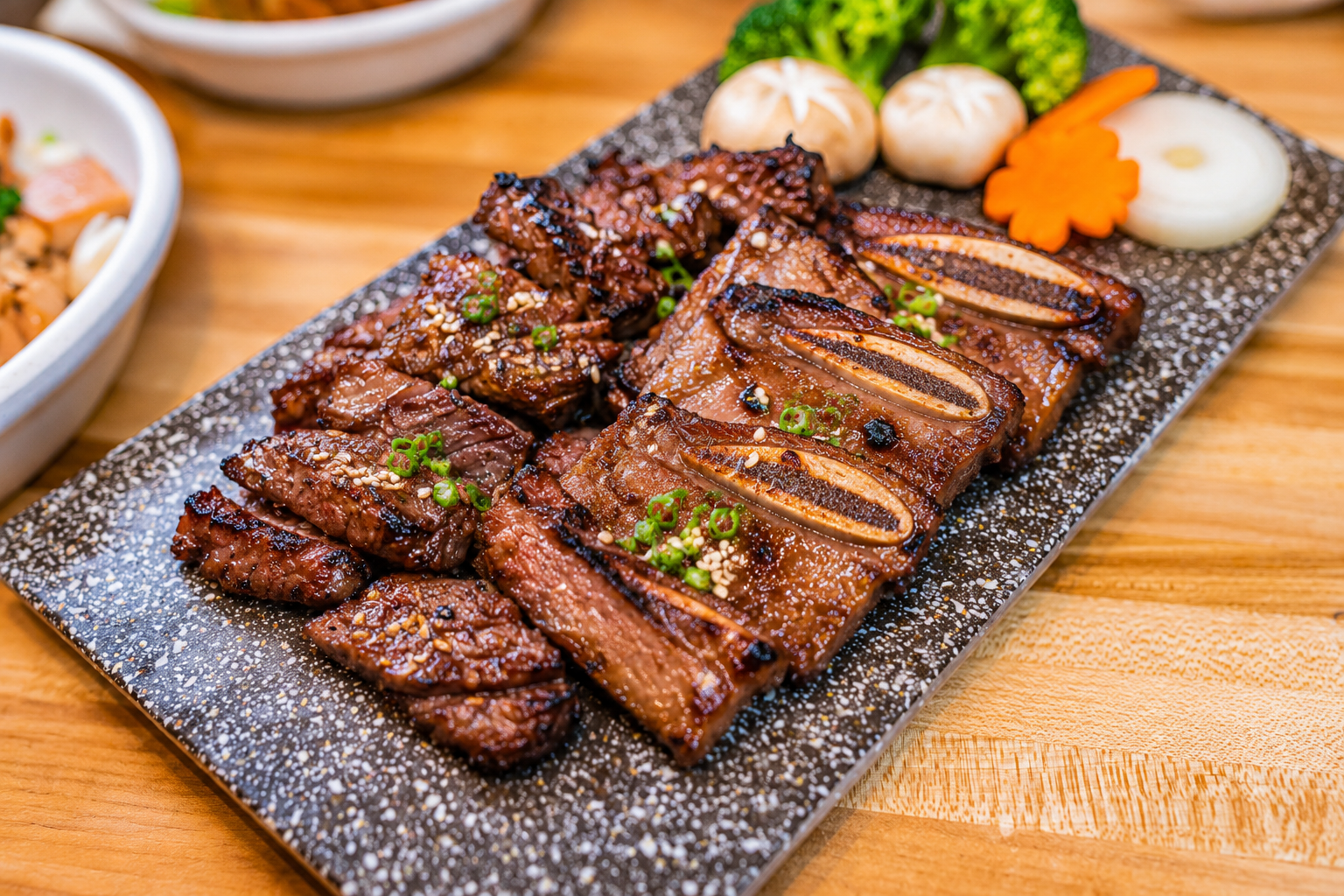
They share a similar sweet soy marinade. Bulgogi uses thin-sliced beef, while galbi (갈비) uses beef short ribs, which are chewier and usually grilled. Our LA galbi guide shows the thin-cut version, made with a bottled marinade.
Beef bulgogi with oyster mushrooms is a gentle place to start with Korean cooking. It’s quick and mild, and you can make it with beef from a Korean market or shaved beef from your regular store. Next, see how bulgogi fits into a full meal in the Korean BBQ guide.




Leave a Reply