A bag of frozen Korean dumplings is one of the easiest ways to start eating Korean food at home. They’re filling, mild, and ready in minutes.
I usually buy Bibigo dumplings, the pork and vegetable kind. This guide shows how to cook frozen mandu the way I do at home, in the microwave. You’ll also get a quick dumpling soup, my simple dipping sauce, and a few fun ideas that are popular in Korea right now.
Quick answer:
- What they are: Korean dumplings, usually filled with pork, tofu, glass noodles, and vegetables
- Spice level: 0 out of 3 for plain pork dumplings
- Easiest method: microwave in water or in a steamer for about 5 minutes, then check
- Dipping sauce: soy sauce with a splash of vinegar
- Also great in: dumpling soup (mandu-guk) and rice cake soup (tteokguk)
In this guide:
- What Are Mandu (Korean Dumplings)?
- How Koreans Eat Mandu
- Bibigo Dumplings: The Frozen Mandu I Buy
- Can You Make Mandu From Scratch?
- How to Microwave Frozen Dumplings: My Method
- Other Ways to Cook Bibigo Dumplings
- Easy Mandu-guk (Korean Dumpling Soup)
- Fun Ways to Use Frozen Dumplings
- Are Frozen Dumplings Vegetarian or Vegan?
- If Something Goes Wrong
- Storing Frozen Dumplings
- Frozen Mandu FAQ
What Are Mandu (Korean Dumplings)?
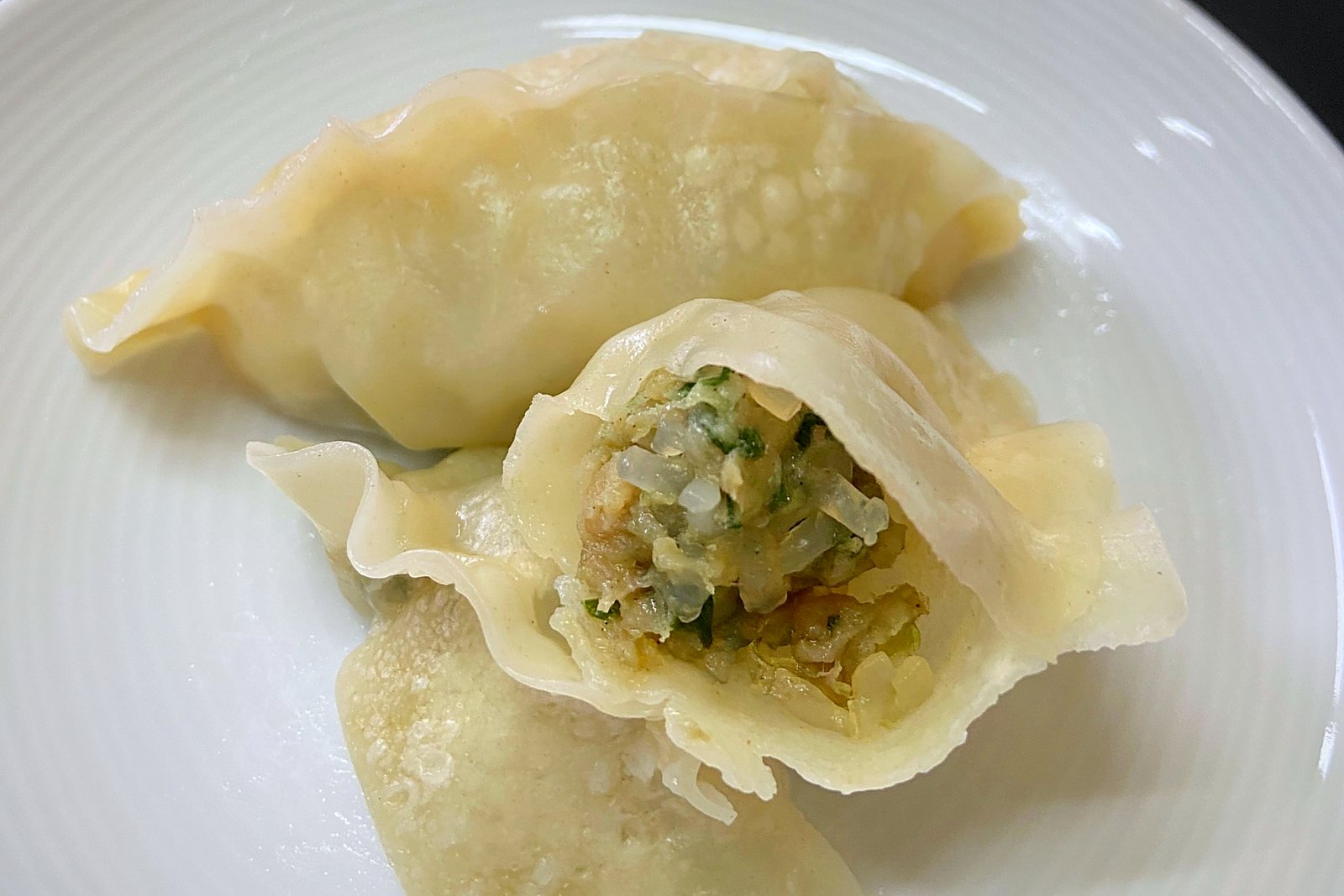
In Korean, dumplings are 만두 (“MAHN-doo”). A thin wheat wrapper is folded around a savory filling, usually ground pork, tofu, cabbage, green onion, and glass noodles. They taste juicy, garlicky, and a little sweet, with a soft, chewy wrapper.
They look a lot like Japanese gyoza or Chinese potstickers. Korean dumplings often include tofu and glass noodles, though, which keep the filling soft and moist. Koreans steam them, pan-fry them, or simmer them in soup, and eat them as a snack, a side dish, or a light meal.
Plain pork dumplings aren’t spicy at all. They’re a 0 on this blog’s 0 to 3 scale, so they’re a good pick for anyone who avoids heat. Kimchi dumplings are about a 1, and some brands sell a spicy pork version. For more mild ideas, see our Korean Spice Guide.
How Koreans Eat Mandu
At home, dumplings are a quick snack or an easy side for lunch or dinner. Most people dip each one in a little soy sauce mixed with vinegar. They also go into soups, and many people drop a few into a pot of Korean ramen or tteokbokki.
On Lunar New Year, many Korean families eat tteokguk, a soup with sliced rice cakes, and adding dumplings to it is common too. I use my frozen dumplings to make dumpling soup or rice cake soup.
Bibigo Dumplings: The Frozen Mandu I Buy
In the U.S., the bag I buy is labeled “bibigo Mandu Pork & Vegetable Dumplings.” You’ll find it in the frozen section of many regular supermarkets and Korean markets like H Mart. It comes in a few sizes, like 24 oz, 2 lb (32 oz), and a 3 lb (48 oz) bag at many Costco warehouses. On the Korean side of the bag, it’s called 왕교자 (“wahng-GYO-jah”), which roughly means “big dumplings.” I’m not paid by Bibigo. It’s just the brand I use most.
Bibigo dumplings are fully cooked before they’re frozen, so you only need to heat them until they’re hot all the way through. Other brands and flavors, like beef, chicken, or kimchi, work the same way. Read the package directions for any brand you buy.

Can You Make Mandu From Scratch?
Yes. Frozen dumplings are a shortcut, but you can make every part of mandu at home, from the wrappers to the filling. The wrappers are a simple dough of flour, water, and a little salt, rolled into thin circles. The filling is usually ground pork, tofu, glass noodles, cabbage or kimchi, green onion, and garlic.
I used to make mandu at home, too. My filling was ground pork, tofu, glass noodles, kimchi, and garlic chives, called buchu (부추). For the kimchi, I shook off the loose seasoning between the leaves and squeezed out the juice before chopping it. That keeps the filling from getting watery, so the dumplings hold together.
In Korea, many families make a big batch together for holidays like Lunar New Year, then freeze the extras. If you’d like a middle step, Korean and other Asian markets sell ready-made round dumpling wrappers in the freezer section. You make the filling and fold the dumplings yourself.
How to Microwave Frozen Dumplings: My Method
This is how I usually cook frozen dumplings. I use one of two microwave-safe containers, and both work well. There’s no need to thaw the dumplings first. Korean markets and online stores sell silicone containers and steamers made for the microwave.
In a container with water:
- Add the dumplings and water. Put the frozen dumplings in the container. Pour in water until they’re just barely covered. The exact amount doesn’t matter much.
- Microwave about 5 minutes. Cover with a lid and microwave on high for about 5 minutes to start.
- Check and keep going. The wrappers should look soft, shiny, and a little see-through. Cut one in half. If the center isn’t steaming hot, microwave a minute or so more, then check again.
- Drain and serve. Lift the dumplings out with a slotted spoon, or carefully pour off the water.


In a microwave steamer with a rack: Pour a little water into the bottom, under the rack. Set the frozen dumplings on the rack in a single layer, so they sit above the water and cook in the steam. Close the lid, microwave about 5 minutes, and check the centers the same way. There’s nothing to drain afterward.

Microwaves vary, and so does the number of dumplings, so go by how they look and feel, not just the clock. Open the lid carefully, since the steam is very hot.
My dipping sauce is very simple: soy sauce with a little vinegar. Mix about 2 tablespoons of soy sauce with 1 to 2 teaspoons of rice vinegar. The vinegar cuts the richness of the pork. A pinch of gochugaru (고춧가루), Korean chili flakes, or a few sesame seeds are nice extras.
Other Ways to Cook Bibigo Dumplings
The microwave is the easiest, but frozen dumplings are good cooked other ways too. The other times below come from Bibigo’s package directions for its pork dumplings.
| Method | How | Texture |
|---|---|---|
| Microwave | Just covered with water, or on a steamer rack over a little water, about 5 minutes, then check | Soft and juicy |
| Pan-fry | 3 tbsp oil, medium-high, about 8 minutes, turning every 2 to 3 minutes | Crispy and golden |
| Air fryer | 390°F (200°C), about 12 minutes for 8 dumplings | Crisp outside, juicy inside |
| Steam | Over boiling water, about 8 minutes | Soft and tender |
| Boil in soup | In boiling broth, about 6 minutes | Silky, soaks up the broth |
Easy Mandu-guk (Korean Dumpling Soup)
Mandu-guk is a warming soup with dumplings floating in a savory broth. I keep it simple and use store-bought Bibigo beef bone broth. It’s milky, rich, and ready to use, so dinner takes about 15 minutes. Simmer the frozen dumplings in the broth, swirl in a beaten egg, and top with green onion. For tteokguk, add sliced rice cakes to the same soup.
Look for the broth in pouches labeled “bibigo Korean Beef Bone Broth Soup” at Korean markets, Walmart, and online Korean grocers. The full recipe is in the card below.

Easy Mandu-guk (Korean Dumpling Soup) With Frozen Mandu
Ingredients
Equipment
Method
- Heat the broth. Pour the beef bone broth into a pot and bring it to a boil over medium-high heat.
- Add the mandu. Add the frozen mandu, the rice cakes if using, and the garlic. Simmer gently for about 6 minutes, until the dumplings float, the wrappers look slightly see-through, and the centers are hot. Rice cakes should be soft and chewy.
- Taste. The broth is already seasoned, so taste before adding anything. Add a pinch of salt, a little soup soy sauce, and black pepper if needed.
- Add the egg. Slowly pour the beaten egg over the soup in a thin stream. Wait about 30 seconds, then stir gently once so it forms soft ribbons.
- Finish. Add the green onion and turn off the heat. Top with seaweed strips if you like, and serve hot.
Notes
- Spice level: 0 out of 3. Add a pinch of gochugaru to your bowl for a little heat.
- Homemade broth instead: Boil 4 cups (960 ml) water with 10 dried anchovies and a 4-inch (10 cm) piece of kelp for 10 minutes, strain, and season with soup soy sauce and salt.
- Rice cake soup (tteokguk): Add sliced rice cakes with the mandu, or use rice cakes alone.
- Vegan option: Use vegan dumplings and vegetable broth or a kelp and dried shiitake broth. Skip the egg.
- Storage: Best eaten right away. Dumplings and rice cakes soak up broth and get soft. Refrigerate leftovers within 2 hours and eat within 3 to 4 days.
- Dipping sauce for steamed mandu: 2 tablespoons soy sauce + 1 to 2 teaspoons rice vinegar.
Fun Ways to Use Frozen Dumplings
Frozen dumplings have become a shortcut ingredient in Korea, turned into quick, cheesy snacks. Since they’re already cooked, you only need to heat everything through.
| Idea | How to make it |
|---|---|
| Cheesy dumpling bake | Layer pasta sauce, frozen dumplings snipped open, more sauce, and mozzarella in a microwave-safe dish. Cover loosely and microwave about 5 minutes. |
| Dumpling pizza | Press cooked dumplings flat in an oiled pan, add pizza sauce or ketchup and mozzarella, then cover until the cheese melts. |
| Mini dumpling patties | Chop cooked dumplings, mix with a beaten egg, and pan-fry spoonfuls until golden, like small meatball patties. |
| Crispy-bottom dumplings | Pan-fry, then add a thin mix of water and a little flour. Cover until it cooks into a lacy, crispy crust. |
In the U.S., a baked “dumpling lasagna” made with layered filling and wrappers has also been popular online. The cheesy bake is a much faster version using frozen dumplings.

Are Frozen Dumplings Vegetarian or Vegan?
Pork dumplings are not vegetarian. Look for bags labeled vegetable or tofu instead, and read the full ingredient list. Some vegetable dumplings still contain egg, meat broth, or fish ingredients. Bibigo sells plant-based dumplings in some countries, but what’s on shelves varies by store.
For a vegan dumpling soup, use vegan dumplings and skip the egg. Instead of beef bone broth, use vegetable broth or a quick kelp and dried shiitake broth.
If Something Goes Wrong
| Problem | Fix |
|---|---|
| Center still cold | Microwave a minute more and check again. |
| Wrappers too soft or torn | Cook a little less next time, and drain right away. |
| Dumplings stuck together | Separate frozen ones before cooking and give them space. |
| Dumplings burst in soup | Simmer gently instead of at a hard boil. |
Storing Frozen Dumplings
Keep the bag sealed tight in the freezer and use it by the date on the package. Refrigerate cooked leftovers within 2 hours, eat them within 3 to 4 days, and reheat until steaming hot.
Allergens: Bibigo pork dumplings contain wheat and soy. Dumpling soup also has egg and beef broth. Check the broth label for other allergens.
Food safety: heat frozen dumplings until they’re hot in the center, even if the package says fully cooked.
Frozen Mandu FAQ
How long do you microwave Bibigo dumplings?
I start with about 5 minutes, either in a covered container with water just covering them or on a microwave steamer rack. Then I check and add a minute or so if the center isn’t hot yet.
Do I need to thaw frozen dumplings first?
No. Cook them straight from the freezer with any method.
How many dumplings are one serving?
As a snack, 4 to 6. In soup or as a light meal, 6 to 8.
With a bag of frozen dumplings in the freezer, a snack or a quick soup is only minutes away. Microwave a few with a little soy and vinegar on the side, or turn them into a warm bowl of mandu-guk. For a side dish to go with them, start with our Kimchi 101 guide.


Leave a Reply