
Gyeran jjim is Korean steamed eggs. It’s soft, savory, and has no chili, so it often sits next to spicy stews on a Korean table.
Most recipes use water or broth. I make mine in the microwave with milk instead of water, and it comes out much softer and smoother. This guide explains what gyeran jjim is and how Koreans eat it. Then it shows my easy milk version, plus the classic fluffy pot version you see at restaurants.
Quick answer:
- What it is: eggs beaten with liquid, then steamed until soft
- Spice level: 0 out of 3
- You need: eggs, milk or water, salt, and a green onion
- Time: about 5 minutes in the microwave
- Serve with: rice and other Korean dishes, especially spicy ones
What Is Gyeran Jjim (Korean Steamed Eggs)?
In Korean, it’s 계란찜 (“geh-RAHN-jjim”). Gyeran means egg, and jjim means a steamed dish. You’ll also see it spelled gyeranjjim or gyeran-jjim. Some Koreans call it dalgyal-jjim (달걀찜).
You beat eggs with a liquid, add salt, and cook them gently with steam. The result sits somewhere between a soft custard and a soufflé.
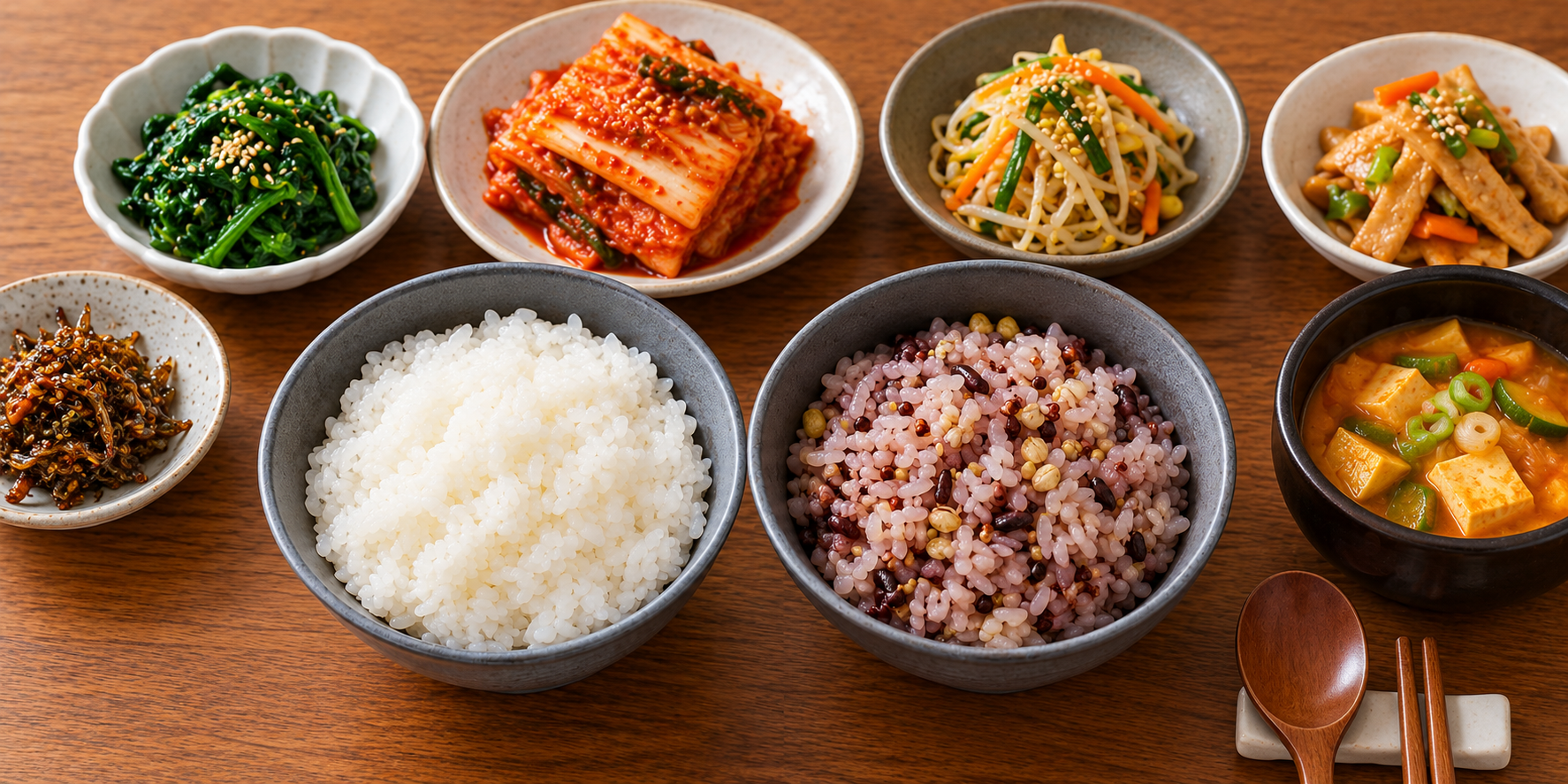
It’s a side dish. Koreans call side dishes banchan (반찬, “BAHN-chahn”), and a meal usually has a few of them around a bowl of rice. One bowl of gyeran jjim is often shared by the table.
What Does It Taste Like?
Think of very soft, lightly salted eggs. Green onion adds a fresh bite, and a drop of sesame oil gives a nutty smell. It isn’t sweet, sour, or fermented.
Texture changes with the cooking method. Restaurants often cook it in a small clay pot until it puffs up high, airy and spongy. Steamed or microwaved in a bowl, it turns smooth and wobbly. Made with milk, it’s even silkier, a bit like a savory pudding, with a mild dairy richness.
Is Gyeran Jjim Spicy?
No. Plain gyeran jjim is a 0 on this blog’s 0 to 3 scale. If you’d like some heat:
- 1 (mild): sprinkle a pinch of gochugaru (고춧가루), Korean chili flakes, on top.
- 2 (medium): stir 1 to 2 teaspoons of gochugaru or a chopped hot green chili into the eggs. Koreans call this maeun gyeran jjim (“MEH-oon”), or spicy steamed eggs.
To see how hot other Korean dishes are, check our Korean Spice Guide.
How Koreans Eat Gyeran Jjim
At home, it’s everyday food. It goes on the table with rice, soup or stew, and a few banchan. Everyone dips in with their own spoon, and some people put a spoonful right on their rice. Because it’s soft and mild, it’s a common pick for kids and older family members.
At restaurants, it often comes bubbling in a ttukbaegi (뚝배기, “TTOOK-bae-gee”), a thick clay pot that holds heat. Many Korean BBQ restaurants serve it. Some include it with the meal, while others list it as a side you order. The center gets very hot, so take the first bite slowly.

Gyeran Jjim Ingredients and Where to Buy Them
For the milk version, everything comes from a regular supermarket: large eggs, milk, fine salt, and green onions (scallions). Whole milk gives the richest, smoothest result. Toasted sesame oil is a nice optional finish.
Traditional versions use water or a light anchovy and kelp broth. Many cooks also season with saeujeot (새우젓, “SEH-oo-jut”), tiny salted fermented shrimp, for a briny depth. You’ll find saeujeot in small jars in the refrigerated section of Korean markets like H Mart, along with dried anchovies for broth. Online grocers such as Weee! carry them in many U.S. areas.
| If you don’t have | Use | What changes |
|---|---|---|
| Milk | Water or low-sodium broth | More traditional and lighter, a little less silky |
| Anchovy broth | Water or vegetable broth | Cleaner egg flavor, less savory depth |
| Saeujeot | ¼ teaspoon fish sauce, or salt | Fish sauce adds some brine. Salt alone tastes cleaner. |
More swaps for dried anchovies and fish sauce are in our Korean ingredient substitutes guide.
My Easy Gyeran Jjim: Microwave With Milk
This is how I make gyeran jjim at home. I use milk instead of water, and the microwave does the steaming. Using milk isn’t the traditional way, but some Korean home cooks do it too, and it makes the eggs noticeably softer.
The ratio is easy to remember: about ¼ cup (60 ml) of milk for each large egg. For a lighter taste, use half milk and half water.
A few tips before you start:
- Use a microwave-safe glass or ceramic bowl that holds at least 2 cups (500 ml). The eggs rise as they cook.
- Cover loosely with a plate or a vented lid, so steam can escape.
- Cook in short bursts. Milk can bubble up fast, and short bursts keep the eggs tender.
- It’s done when the center is set and no liquid shows on top. A spoon pressed into the middle should come up clean.
The full recipe is in the card below.

Easy Microwave Gyeran Jjim With Milk
Ingredients
Equipment
Method
- Crack the eggs into the bowl. Beat them until no streaks of white remain. Beat gently, so you don't make a lot of foam.
- Add the milk and salt, and stir until the mixture is an even pale yellow. For an extra-smooth texture, pour it through a fine strainer. Stir in most of the green onion.
- Cover the bowl loosely with a microwave-safe plate or a vented lid.
- Microwave on high for 1 minute. The edges will start to set. Stir gently, pulling the set edges toward the center.
- Cover again and microwave in 20 to 30 second bursts, until the eggs have puffed and the center is set with no liquid on top. In a 1,000-watt microwave, this takes about 2 to 3 minutes in total. Lower-wattage microwaves take longer.
- Let it rest, covered, for 1 minute. Lift the cover away from your face. Top with the rest of the green onion, sesame oil, and sesame seeds.
Notes
- Ratio: about ¼ cup (60 ml) milk per large egg. More liquid makes it softer, less makes it firmer.
- Lighter or more traditional: use half milk and half water, or all water or low-sodium broth.
- Spice level: 0 as written. For 1 (mild), sprinkle a pinch of gochugaru on top. For 2 (medium), stir in 1 to 2 teaspoons gochugaru or a chopped hot green chili.
- No dairy: use water or broth instead of milk.
- Bowl size: milk can bubble up fast. Use a bowl at least 2 cups (500 ml) and short bursts.
- Storage: best fresh. Refrigerate within 2 hours and eat within 3 to 4 days. Reheat covered until steaming hot.
- Food safety: cook until the center is set, with no runny egg (160°F / 71°C). The bowl gets hot, so use oven mitts.

Restaurant-Style Gyeran Jjim in a Small Pot
Want the tall, puffy version from Korean restaurants? Cook it right in a small ttukbaegi or a small, heavy saucepan that holds about 2½ cups (600 ml). This version uses water or broth, since that’s the classic way.
Serves 2 as a side. Prep 5 minutes, cook 10 minutes. You’ll need 3 large eggs, ¾ cup (180 ml) water or broth, ¼ teaspoon salt, and 1 chopped green onion.
- Beat the eggs until no streaks of white remain.
- Bring the water and salt to a boil in the pot over medium heat.
- Turn the heat to medium-low and pour in the eggs. Stir nonstop, scraping the bottom, for 1 to 1½ minutes. Stop when it looks like loose porridge.
- Stir in most of the green onion. Cover, leaving room for the eggs to rise. If your lid sits low, flip a small heatproof bowl over the pot.
- Cook on the lowest heat for 3 to 5 minutes, until it puffs above the rim and the center is set. Top with the rest of the green onion.
Clay pots can crack with sudden temperature changes. Heat a ttukbaegi gradually, and never put a hot one into cold water.
Is Gyeran Jjim Vegetarian or Vegan?
It can be vegetarian, but it isn’t vegan, since eggs are the whole dish. My milk version is vegetarian for people who eat eggs and dairy. So is a version made with water or vegetable broth and plain salt.
Restaurant versions often contain anchovy broth, saeujeot, or fish sauce, and you can’t see them in the bowl. If you avoid fish, ask before ordering. On Korean labels, look for 멸치 (anchovy) and 새우 (shrimp).
For a vegan version, you’d need an egg replacement such as silken tofu or a plant-based liquid egg. Vegan food blogs have tested recipes like this. Expect a different texture and flavor from real gyeran jjim.
If Something Goes Wrong
| Problem | Fix |
|---|---|
| Rubbery or full of holes | It cooked too long or too hot. Use shorter bursts and stop as soon as the center sets. |
| Runny center | Give it 15 more seconds in the microwave, or 1 more minute in the pot. |
| Milk bubbled over | The bowl was too small or the burst too long. Use a bigger bowl and 20 to 30 second bursts. |
| Watery liquid around the eggs | Overcooked eggs squeeze out liquid. Take it out a little sooner next time. |
| Burnt bottom (pot version) | Keep the heat at medium-low and keep scraping while you stir. |
What to Serve With Gyeran Jjim
Serve it with a bowl of white rice and one or two other dishes. It’s especially good next to something spicy, like sundubu jjigae, a red soft tofu stew, or tteokbokki, chewy rice cakes in chili sauce. A spoonful of soft egg between spicy bites cools your mouth.
For a meal with no heat at all, pair it with bulgogi and rice. Add some kimchi on the side if you like.
Storing and Reheating
Gyeran jjim tastes best fresh. Leftovers get a little denser, but they’re still good. Refrigerate them in a covered container within 2 hours, and eat them within 3 to 4 days. Reheat covered in the microwave, in 20 to 30 second bursts, until steaming hot all the way through. Freezing isn’t a good idea, since the texture turns watery.
Allergens: eggs, plus milk in the milk version. Saeujeot contains shellfish, and anchovy broth and fish sauce contain fish. Sesame oil contains sesame.
Food safety: cook until the center is set, with no runny egg. Egg dishes should reach 160°F (71°C). Bowls and clay pots get very hot, so use oven mitts, and lift the cover away from your face to avoid steam.
Gyeran Jjim FAQ
Can I use milk instead of water in gyeran jjim?
Yes. Milk makes it softer, smoother, and a little richer. It’s less traditional than water or broth, and it adds dairy, so skip it if anyone at the table avoids milk.
How much liquid do I use per egg?
About ¼ cup (60 ml) per large egg, for both milk and water. More liquid makes it softer. Less makes it firmer.
Is gyeran jjim the same as chawanmushi?
They’re related. Chawanmushi is a Japanese egg custard made with dashi broth and small fillings, steamed in cups. A bowl-steamed gyeran jjim is close to it. The restaurant pot style is fluffier and more rustic.
Easy gyeran jjim takes about 5 minutes and four ingredients. Try it my way, with milk in the microwave, for the softest result. When you want the restaurant look, use the pot method. Then serve it next to something spicy, the way it’s often eaten in Korea. For another mild dish to cook next, try our mushroom japchae.





Leave a Reply