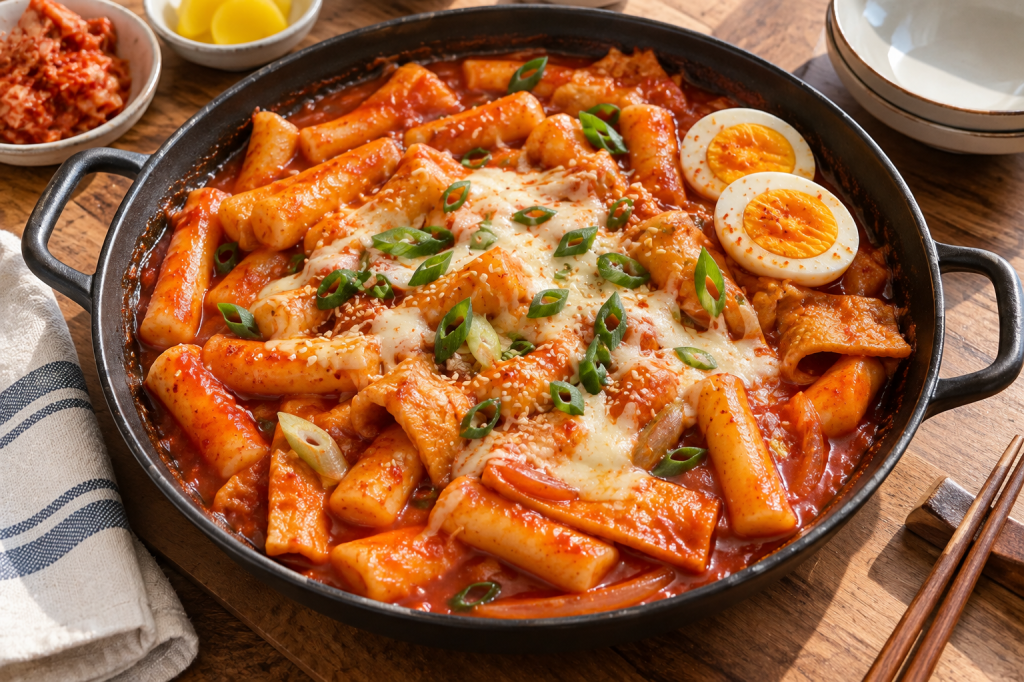
Tteokbokki is chewy rice cakes cooked in a thick red sauce that’s sweet and spicy. In Korea, people buy it from street stalls and small snack shops, and they make it at home too.
You don’t have to cook it from scratch to try it. Korean markets sell instant tteokbokki in cups and meal kits, from no heat at all to very hot. This guide shows you how to pick one and how to make it better with egg, cabbage, onion, and cheese. After that, there’s a very simple homemade recipe, plus a shortcut Korean cooks use for the sauce.
What Is Tteokbokki?
Tteokbokki (떡볶이, “TUHK-bo-kee”) is a dish of rice cakes simmered in sauce. You’ll also see it spelled “topokki” or “ddeokbokki.”
Don’t picture the crispy rice cakes sold as diet snacks. Korean rice cakes, called tteok, are a soft, dense dough made from rice flour. For this dish, the dough is rolled into short sticks, a little thicker than your finger.
The sauce is made with gochujang (고추장, “GO-choo-jahng”), a thick Korean chili paste made from red chili, rice, and fermented soybeans. Koreans eat tteokbokki as a snack, usually in the afternoon or late at night.
What Does It Taste Like?
Texture comes first. The rice cakes are soft outside and bouncy inside, so you have to chew them. If you’ve had mochi, it’s a similar chew, but firmer and not sweet.
The sauce hits your tongue sweet, then spicy, then salty. It’s thick and shiny, and it coats every piece. Gochujang also gives it a slightly funky, fermented depth, the way miso does in Japanese food.
Is Tteokbokki Spicy?
The classic red kind is spicy, but the sugar in the sauce takes the edge off. On a 0 to 3 scale, most people would call it a 2. Other flavors range from 0 to 3:
| Level | How it feels | Examples |
|---|---|---|
| 0 | No chili heat | Soy sauce or black bean (jjajang) flavor |
| 1 | Warm, more sweet than hot | Cheese, cream, or rosé |
| 2 | Clearly spicy, but easy to finish | Classic red sauce |
| 3 | Very hot. Your mouth will burn. | “Extra hot” and Buldak (fire chicken) flavors |
Spice-sensitive? Start at level 1. Cheese and boiled egg both calm the heat, and a glass of milk helps more than water.
How Koreans Eat Tteokbokki
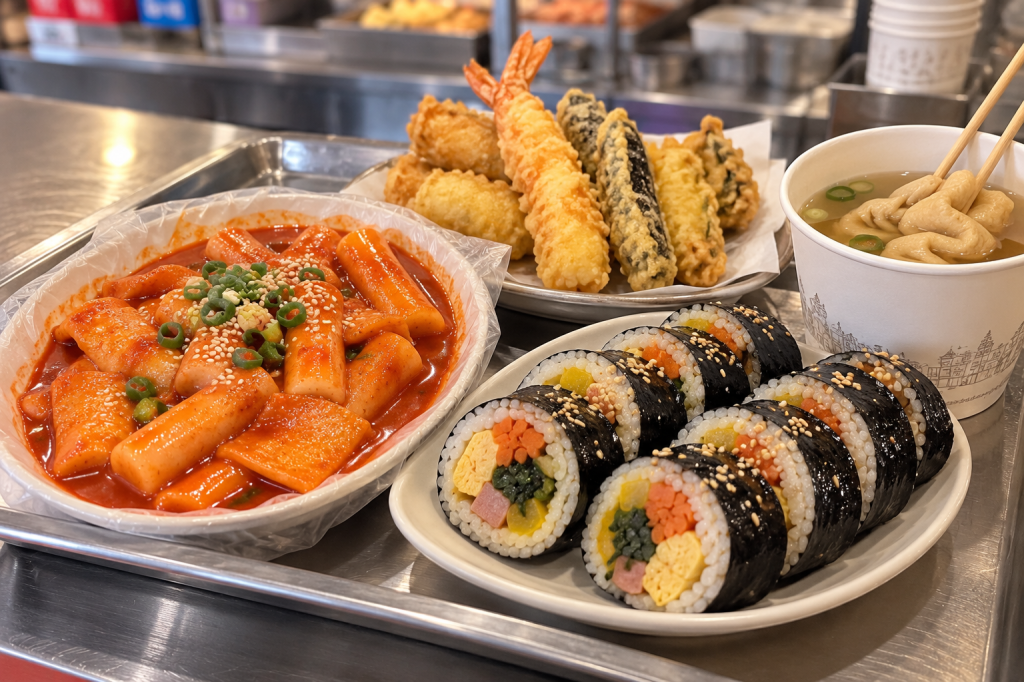
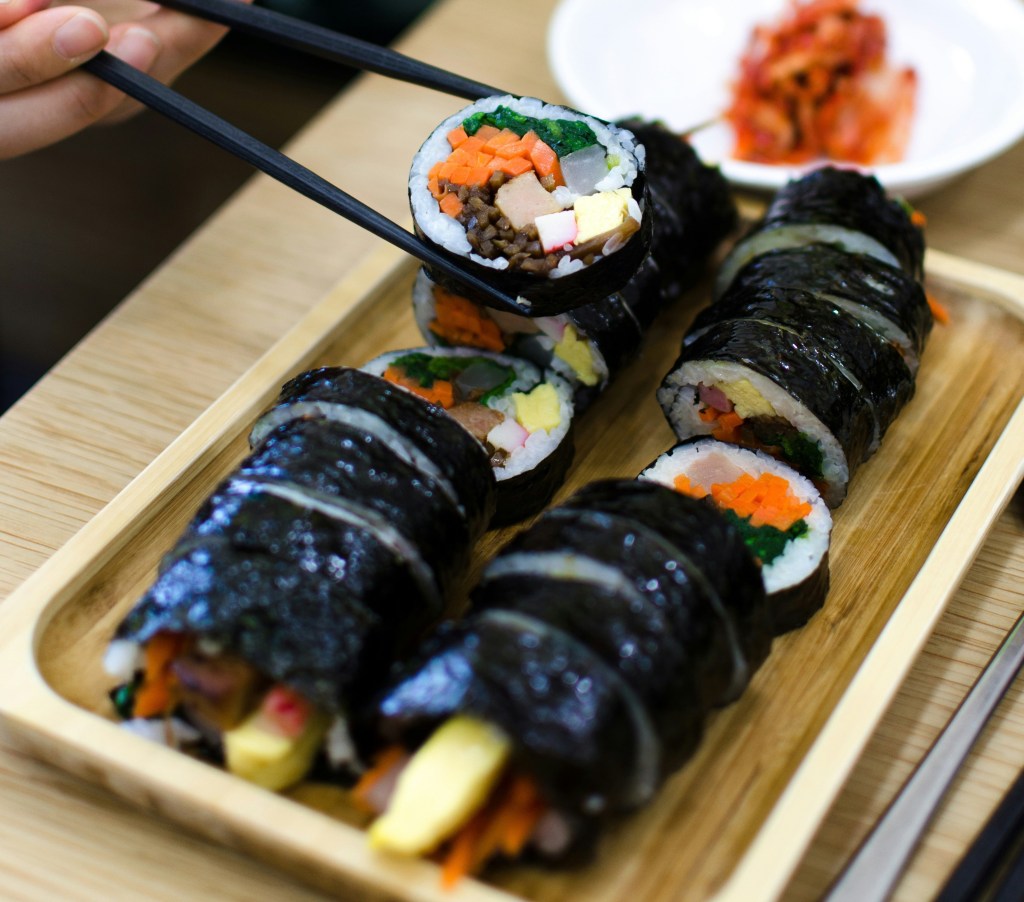
Tteokbokki belongs to a group of cheap, casual Korean foods called bunsik (분식). Bunsik shops serve it with kimbap (Korean rice rolls), fried snacks, and instant noodles.
A plate is usually shared. Everyone picks from the middle with a fork, toothpick, or chopsticks. Fried dumplings or tempura get dipped into the leftover sauce. At street stalls, you’ll often get a cup of hot fish cake broth to sip between spicy bites.
You’ll also see these popular versions:
- Rabokki (라볶이): tteokbokki with instant noodles cooked in the same sauce
- Cheese tteokbokki: topped with melted mozzarella
- Rosé tteokbokki: a creamy sauce made with milk or cream
- Soy sauce tteokbokki: an older, non-spicy style stir-fried with beef and vegetables
Instant Tteokbokki: Cups and Meal Kits
If you’ve never tasted tteokbokki, buy an instant one first. It’s cheap and fast, and it gives you a taste to aim for when you cook your own later.
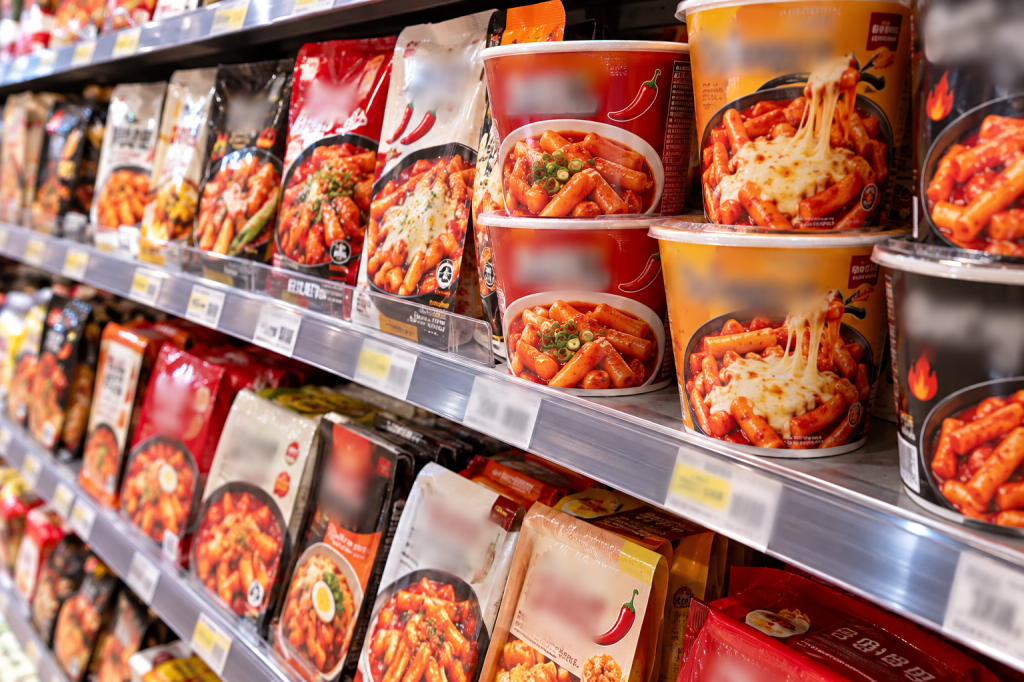
There are two main types. Cup tteokbokki is a single serving: rice cakes and a sauce packet in a cup. You add water up to a line inside the cup and microwave it for a few minutes. Meal kits come in a pouch or tray for 2 or 3 people and are cooked in a pan. You’ll find them on the shelf, in the fridge, or in the freezer.
Yopokki and Samyang’s Buldak line are two brands you may see, next to many Korean store brands. Flavor names tell you roughly how hot they are:
| Flavor on the label | Taste | Spice (0–3) |
|---|---|---|
| Jjajang (black bean) | Salty, savory, a bit sweet | 0 |
| Carbonara or cream | Creamy and buttery | 0–1 |
| Cheese or rosé | Sweet heat, softened by dairy | 1 |
| Original, sweet and spicy | The classic street-food taste | 1–2 |
| Hot, extra spicy, Buldak | Very hot, less sweet | 3 |
Every brand is a little different. Check the package for chili pepper icons: fewer peppers, less heat.
How to Make Instant Tteokbokki Better
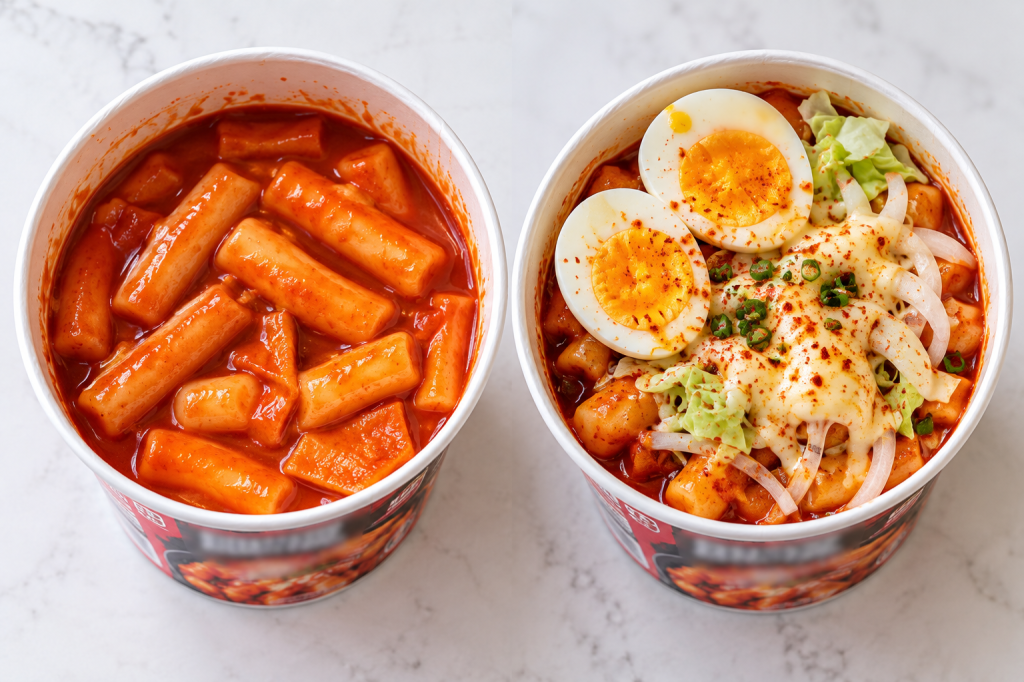
An instant cup is a snack. With four cheap extras, it becomes a small meal:
- Boiled egg: soaks up the sauce and makes the heat feel milder
- Cabbage: adds sweetness and a soft crunch
- Onion: more sweetness as it cooks
- Cheese: shredded mozzarella or a slice of American cheese, melted on top
Boil the egg ahead of time. Ten minutes in boiling water gives you a firm yolk. Green onion, fish cake, and frozen dumplings are good add-ons too.
How to Cook Instant Tteokbokki in the Microwave or on the Stove
Cup in the microwave
- Add the water and sauce as the package says. Put in a small handful of thinly sliced cabbage and a few slices of onion. More than that will water down the sauce.
- Microwave for the time on the package. If the cabbage still looks stiff, add 30 seconds. Stir.
- Now add the egg. Cut it in half and press it into the hot sauce. Don’t put a boiled egg in the microwave, peeled or not, because it can burst.
- Top with cheese and cover for 1 minute, or microwave for 20 more seconds, until it melts.
Meal kit on the stove
- Stir the water and sauce together in a small pan. Add about 1 cup (70 g) of cabbage, ¼ onion, sliced, and 2 to 3 extra tablespoons of water.
- Add the rice cakes and simmer for the time on the package, stirring so nothing sticks.
- In the last minute, add the halved egg and spoon sauce over it.
- Turn off the heat, add cheese, and cover for 1 minute.
Easy Homemade Tteokbokki Recipe
This is about as simple as tteokbokki gets: one pan, plain water, and five sauce ingredients. Many Korean recipes begin with a broth of dried anchovies and kelp. This one skips it, so the flavor is lighter than a snack-shop version. The shortcut after the recipe adds some of that depth back.
Prep time: 10 minutes (plus 10 to 20 minutes soaking if your rice cakes are hard)
Cook time: 15 minutes
Total time: 25 minutes
Servings: 2
Spice level: 2
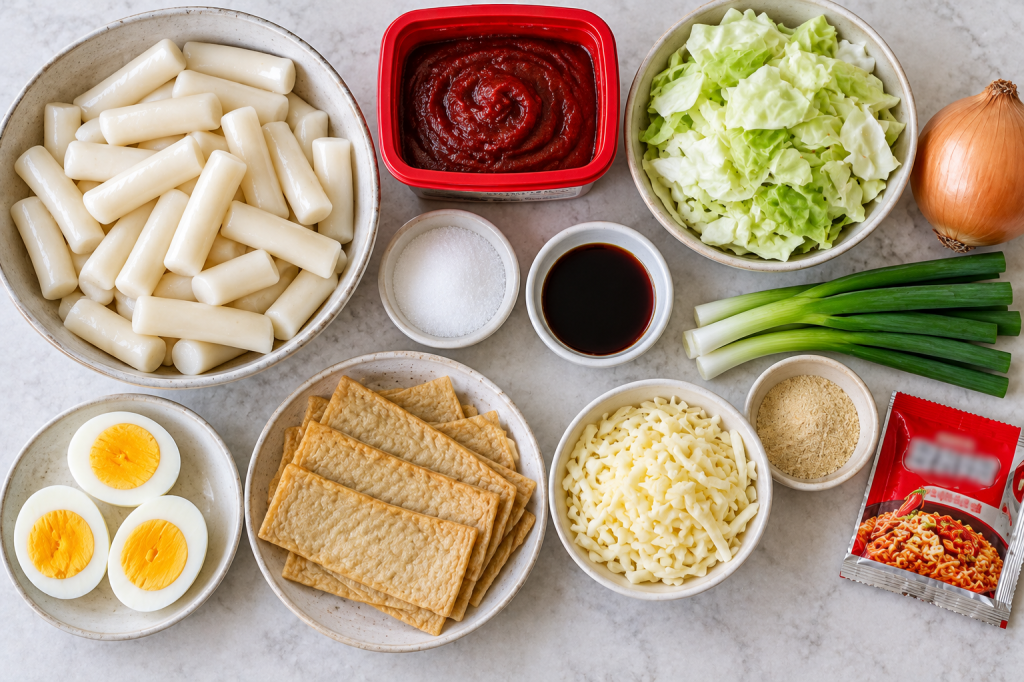
You’ll need
- 1 lb (450 g) stick-shaped rice cakes for tteokbokki
- 2 cups (480 ml) water
- 2 tablespoons gochujang
- 1½ tablespoons sugar
- 1 tablespoon soy sauce
Optional
- 1 to 2 teaspoons gochugaru (Korean chili flakes), for more heat
- 1 teaspoon Dasida, or ⅓ packet of ramen seasoning (see below)
- 2 cups (140 g) green cabbage, in bite-size pieces
- ½ onion, sliced
- 2 sheets Korean fish cake, cut into strips
- 2 boiled eggs, peeled
- 2 green onions, cut into 2-inch (5 cm) pieces
- ½ cup (50 g) shredded mozzarella
Instructions
- Rinse soft, fresh rice cakes. Hard ones from the fridge or freezer need 10 to 20 minutes in warm water. They’re ready when one bends a little. Separate any that stick together.
- In a wide pan, stir the water, gochujang, sugar, soy sauce, and gochugaru until the paste dissolves. If you’re using Dasida or ramen seasoning, add half now.
- Bring it to a boil over medium-high heat. Add the rice cakes, cabbage, and onion.
- Lower the heat to medium and simmer for 8 to 10 minutes. Stir often, since rice cakes like to stick to the bottom.
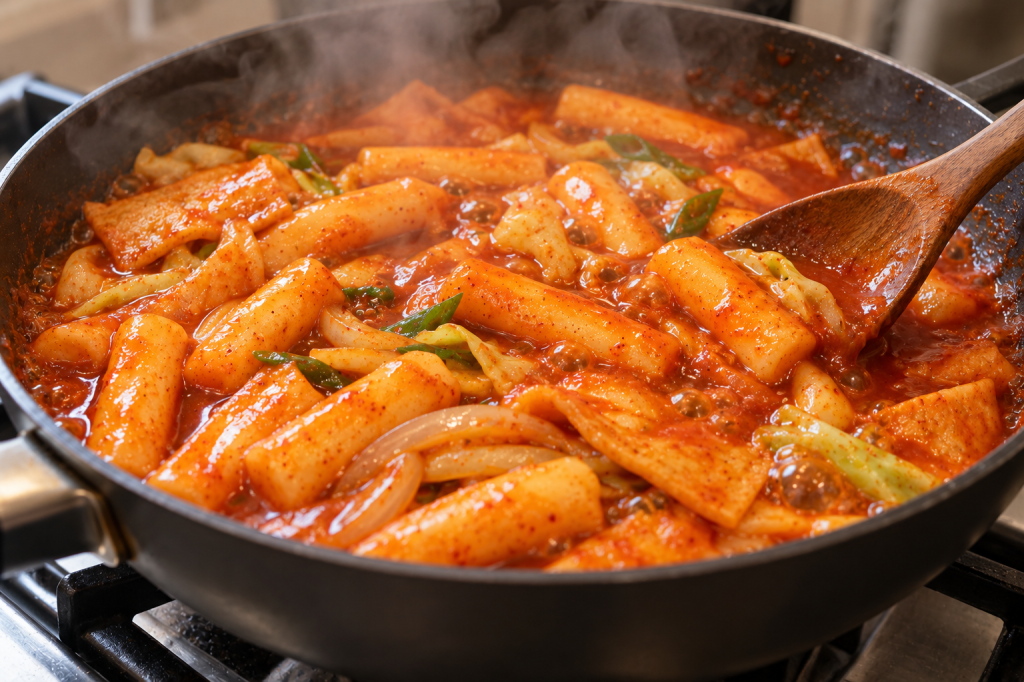
- Bite into one rice cake. It’s done when there’s no hard center left. The sauce should be glossy and thick enough to coat a spoon.
- Add the fish cake, eggs, and green onion, and cook 2 more minutes. Roll the eggs around so they turn red.
- Taste. Add water if it’s too thick, or the rest of the seasoning if it tastes flat.
- For cheese, turn off the heat, scatter it on top, and cover for 1 minute. Serve hot.
Want it milder? Use 1 tablespoon gochujang instead of 2, skip the gochugaru, and add an extra teaspoon of soy sauce and sugar.
The Secret Ingredient: Dasida or Ramen Seasoning
Korean home cooks often stir a spoonful of seasoning powder into tteokbokki. It adds the rich, savory taste of a slow-made broth in a few seconds.
The usual pick is Dasida (다시다, “DAH-shee-dah”), a beef-flavored soup powder sold at Korean markets. One teaspoon is plenty for this recipe.
No Dasida? Open a packet of Korean instant noodles and use the soup powder instead. It already has chili, garlic, and salt in it, so it fits right in. A spicy one, like the Shin Ramyun packet, raises the heat too. And the noodles don’t go to waste: drop them into the pan for the last 3 minutes and you’ve made rabokki.
Go easy, though. Ramen powder is very salty. Start with ⅓ of the packet and cut the soy sauce in half. Chicken or vegetable bouillon powder also works, with a less Korean taste.
These powders usually contain MSG and a lot of salt, so read the label if you’re watching sodium. Dasida contains beef, and most ramen packets contain meat or seafood.
Where to Buy Tteokbokki Ingredients
A Korean or other Asian grocery store has everything. Rice cakes are in the fridge or freezer section, sometimes labeled “topokki” or “rice cake stick.” Gochujang comes in a red tub on the sauce shelf. Dasida, gochugaru, and instant tteokbokki are in the dry goods aisles.
Some regular supermarkets carry gochujang in the international aisle, and a few carry instant tteokbokki cups. Online shops sell almost everything except fresh rice cakes, which need to stay cold.
You may see rice cakes made from rice and others made from wheat. Rice ones are chewier. Wheat ones are softer and soak up more sauce. Either works.
| If you can’t find | Use | What changes |
|---|---|---|
| Stick rice cakes | Oval sliced rice cakes (sold for soup) | Softer. Cook 2 to 3 minutes less. |
| Gochujang | No good substitute | Sriracha won’t taste like tteokbokki. Gochujang is worth buying. |
| Gochugaru | Leave it out, or a pinch of red pepper flakes | Pepper flakes are sharper. Use much less. |
| Korean fish cake | Skip it, or add frozen dumplings | Less seafood flavor |
Vegan Tteokbokki: What to Check
Tteokbokki is often not vegetarian. Street stalls tend to use anchovy broth and fish cake, and Dasida is made with beef.
Still, the base is plant-based in most cases. Rice cakes are usually rice or wheat, water, and salt. Most gochujang is chili, rice, soybeans, and salt. The recipe above uses plain water.
To make it vegan, leave out the fish cake, eggs, and cheese, and add fried tofu or mushrooms. Replace Dasida with vegetable bouillon, or simmer a piece of dried kelp in the water for 10 minutes.
Instant tteokbokki takes more care. Sauce packets can contain fish, anchovy, shrimp, or milk, especially the cheese and cream flavors. Read the full ingredient list, not only the front of the package.
Why Are My Rice Cakes Hard?
They needed more time or more soaking. Add a splash of water, cover the pan, and simmer a few more minutes.
A few other common problems:
- Mushy rice cakes: they cooked too long. Next time, start checking at 6 minutes.
- Thin sauce: simmer with the lid off. The rice cakes release starch and thicken it.
- Burned bottom: the heat was too high. Stay at medium and stir every minute or two.
- Too salty: this is usually the ramen powder. Add water, a pinch of sugar, and more cabbage.
Storing Leftover Tteokbokki
Tteokbokki is best eaten right away. As it cools, the rice cakes firm up.
Refrigerate leftovers within 2 hours (1 hour if it’s above 90°F / 32°C) and eat them within 2 days. Reheat in a pan with 2 to 3 tablespoons of water, covered, over medium-low heat until soft. Take the eggs out before microwaving leftovers.
Cooked tteokbokki doesn’t freeze well, but uncooked rice cakes do. Soak frozen ones in warm water before cooking.
Allergens: wheat (in wheat rice cakes, soy sauce, fish cake, and ramen powder), soy, fish, egg, and milk. Some sauces contain sesame.
Safety: the rice cakes are very chewy. Cut them small for young children and older adults. The sauce and cheese get very hot, so give it a minute before the first bite.
Tteokbokki FAQ
Is tteokbokki the same as mochi?
No. Both are chewy rice dough, but tteokbokki rice cakes are firmer, and they’re savory, not a dessert.
Can I put an egg in cup tteokbokki?
Yes. Use an egg you boiled earlier, and add it after microwaving.
Is tteokbokki gluten-free?
Not always. Wheat rice cakes, regular soy sauce, fish cake, and ramen powder all have wheat. Use rice-only rice cakes and gluten-free soy sauce, and check each label.
What goes well with tteokbokki?
Kimbap, fried dumplings, or plain rice to soak up the extra sauce. Milk or a cold soda helps with the heat.
For your first time, grab a mild cup at a Korean market and add a boiled egg and some cheese. If you like it, the homemade version is one pan and about 25 minutes away. Keep a ramen packet in the pantry for it.



Leave a comment