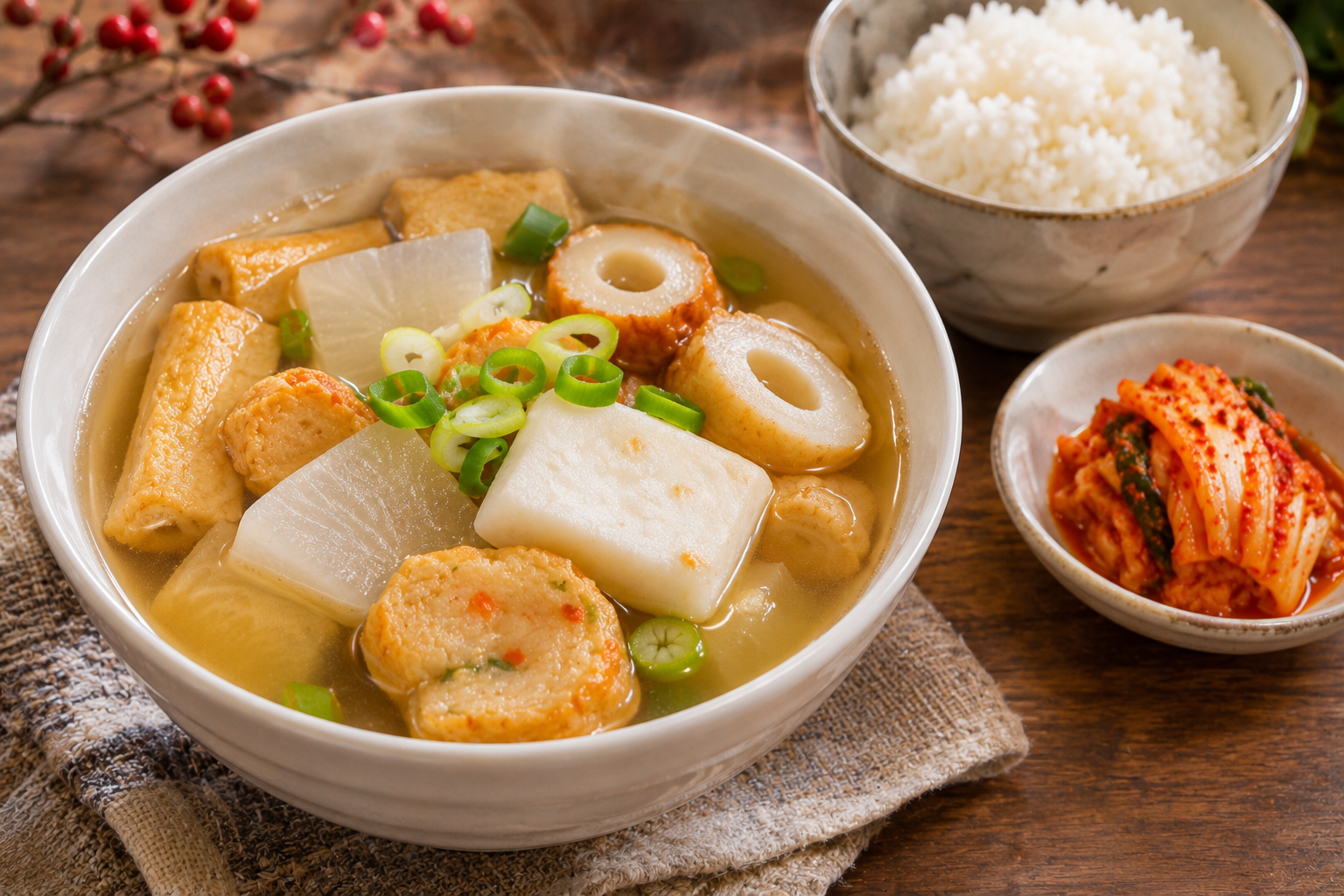
Eomuk-tang is Korean fish cake soup: bite-size fish cakes and soft radish in a light, clear broth. It tastes savory and a little sweet, and it isn’t spicy at all. In Korea, it’s a classic winter soup and a street food favorite.
Street carts serve fish cakes on long skewers, but at home I skip the skewers. I add plenty of radish and use Japanese fish cakes from the Korean market. I buy the Kibun brand. To me, these Japanese fish cakes taste cleaner than many others, with no fishy smell. For the broth, you don’t need to start from scratch. A broth tablet or a broth bag does the job, and the whole pot takes about 30 minutes.
Quick answer:
- What it is: a light soup of fish cakes and radish in anchovy broth
- Spice level: 0 (out of 3)
- Must-haves: fish cakes, radish, and anchovy broth tablets or broth bags
- Time: about 30 minutes
What Is Eomuk-tang (Korean Fish Cake Soup)?
Eomuk-tang (어묵탕, “UH-mook-tahng”) means fish cake soup. Eomuk (어묵) is the Korean word for fish cake, and tang is a word for soup. You’ll also see the names eomuk-guk and odeng-guk.
Fish cakes are made from ground white fish mixed with starch and seasonings. The paste is shaped, then fried, steamed, or grilled. They come fully cooked, so the soup only needs to heat them through. They’re chewy, springy, and mild.
Many Koreans still call fish cakes odeng. The word comes from oden, a Japanese winter dish of fish cakes, radish, and other items simmered in broth. The Korean soup is simpler and quicker. The broth is usually made with anchovy and kelp, then seasoned with soy sauce.
What Does Korean Fish Cake Soup Taste Like?
It’s a light, clean soup with a gentle taste of the sea. Anchovy brings a savory depth, and kelp adds a soft, rounded flavor. Radish makes the broth a little sweet as it cooks.
As they simmer, the fish cakes soak up broth and turn plump and tender. Fried ones have a slightly sweet, toasty flavor. The radish becomes soft and almost see-through. Overall, the soup tastes warm, simple, and comforting.
Is Eomuk-tang Spicy?
No. It’s a 0 on this blog’s 0 to 3 spice scale. Kids and spice-sensitive eaters can enjoy it.
Sometimes I add a sliced hot chili pepper to the pot. That gives the broth a light kick, about a 1. Leave it out for a fully mild soup. For more gentle dishes, see our guide to non-spicy Korean food.
How Koreans Eat Fish Cake Soup
In winter, Korean street carts keep skewers of fish cakes simmering in a big pot of broth. People eat a skewer or two standing at the cart. They often sip hot broth from a paper cup, too. Fish cakes are a common partner for tteokbokki, the spicy rice cake snack, because the mild broth cools your mouth.

At home, it’s an everyday soup. Families serve it with a bowl of rice, kimchi, and a few small side dishes called banchan. Each person gets a bowl, and the fish cakes are eaten with chopsticks. Some people dip them in soy sauce, but you don’t have to. They already taste good straight from the broth. I like to add a little black pepper to my bowl at the table.
Fish Cake Soup Ingredients and Where to Buy Them
A Korean or Japanese market will have everything. Online grocers like Weee! also sell fish cakes and broth tablets. Here’s what to look for:
- Fish cakes: find them in the freezer or fridge section. Korean fish cakes often come as flat, thin sheets. Japanese brands sell mixed packs labeled “oden” with several shapes. I use Kibun Japanese fish cakes. Any brand works, so choose one that smells fresh and clean.
- Radish: Korean radish is called mu (무). It’s short, round, and pale green at the top. Daikon from a regular supermarket works too.
- Broth tablets: Korean markets sell small, flat broth tablets called coin broth (코인육수). Most are made from anchovy and kelp. You drop one into water, and it dissolves in a few minutes.
- Broth bags: these look like big tea bags filled with dried anchovies and kelp. You simmer the bag in water, then lift it out.
- Guk-ganjang: soup soy sauce (국간장). It’s saltier and lighter in color than regular soy sauce, so the broth stays clear.
- Green onion: any grocery store has it.
Japanese or Korean fish cakes?
Both work in this soup. Korean fish cakes are mostly fried, and many come in thin sheets that you fold or cut. Japanese oden packs mix several types:
- Chikuwa: tube-shaped and grilled. Cut it into thick rings.
- Satsuma-age: fried rounds or bars, sometimes with vegetables inside.
- Hanpen: white, soft, and fluffy. It puffs up fast, so add it last.
I put the fish cakes straight into the pot without rinsing them first. Some oden packs come with a small soup base packet, but you won’t need it here. Ingredients vary by brand, so read the label if you avoid wheat, egg, or soy.

| If you can’t find | Use | What changes |
|---|---|---|
| Korean radish | Daikon | Daikon is a little more watery. Cook it a few minutes less. |
| Broth tablets or bags | Dashi powder, or dried anchovies and kelp simmered for 15 minutes | Dashi tastes more smoky. Homemade broth takes longer but tastes fuller. |
| Guk-ganjang | Salt and a splash of regular soy sauce | Regular soy sauce darkens the broth, so use just a little. |
| Fish cakes | Fried tofu puffs | No fish flavor. The tofu soaks up broth in a similar way. |
For more swaps, try our Korean Ingredient Substitutes Finder.
Easy Fish Cake Soup With Radish and Japanese Fish Cakes
This is the home version I make. No skewers, no homemade stock, and a generous amount of radish.

Easy Korean Fish Cake Soup With Radish
Ingredients
Equipment
Method
- Peel the radish and cut it into thin squares, about ¼ inch (5 mm) thick.
- Bring the water to a boil. Add the broth tablets, or drop in the broth bags.
- Add the radish and simmer for about 10 minutes, until slightly see-through and tender when poked with a chopstick. Lift out any broth bags.
- Cut the fish cakes into bite-size pieces. Slice chikuwa into rings and set any soft hanpen aside.
- Add the fish cakes (except hanpen). Simmer gently for 3 to 4 minutes, until plump and hot all the way through.
- Add the hanpen and the chili pepper, if using. Cook 1 more minute.
- Taste, then season with guk-ganjang and a pinch of salt if needed.
- Add the green onion, turn off the heat, and serve hot with rice. Add black pepper at the table if you like.
Notes
- Spice level: 0 on the blog’s 0 to 3 scale. A sliced hot chili brings it to about 1.
- No dipping sauce needed. The fish cakes taste good straight from the broth.
- Broth tablets vary by brand. Follow the package for how much water each tablet needs, and taste before adding soy sauce.
- Keep a gentle simmer after the fish cakes go in. A hard boil makes them swell and turn soft.
- Leftovers: refrigerate within 2 hours and use within 3 to 4 days. Reheat until steaming hot (165°F / 74°C). For make-ahead, cook the broth and radish, then add the fish cakes just before serving.
- Allergens: fish (fish cakes, broth tablets), wheat and soy (most fish cakes, soy sauce), sometimes egg. Check your labels.
- Safety: cut fish cakes small for young children.
- Vegan option: kelp and dried shiitake broth with fried tofu puffs, firm tofu, mushrooms, and radish.
Keep the soup at a gentle simmer once the fish cakes go in. A hard boil makes them swell too much and turn soft.

Is Fish Cake Soup Vegetarian or Vegan?
No. The fish cakes are made from fish, and most broth tablets and bags contain anchovy. Some fish cakes also contain egg white.
You can still make a vegan soup in the same style:
- Broth: simmer dried kelp and 3 or 4 dried shiitake mushrooms in water for 15 to 20 minutes. Some markets also sell vegetable broth tablets.
- Instead of fish cakes: use fried tofu puffs, firm tofu, and sliced mushrooms.
- Keep the radish: it adds natural sweetness to the broth.
- Check the labels: soup soy sauce, dashi powder, and “vegetable” tablets may still contain anchovy, bonito, or fish extract.
The vegan version tastes earthier and less savory, but it’s still warm and cozy.
Common Mistakes and Easy Fixes
Everything got big and mushy. The fish cakes simmered too long. Add them near the end and serve right away.
The radish is still hard. The pieces were too thick. Cut thinner squares, or give them a few more minutes before the fish cakes go in.
The soup is too salty. Broth tablets and fish cakes are already salty. Add hot water, and always taste before you season.
It tastes flat. Add a little more guk-ganjang or salt, one pinch at a time. A few extra minutes of simmering also helps the radish sweeten the broth.
The broth turned bitter. A broth bag stayed in too long. Take it out after about 10 to 15 minutes.
How to Store and Reheat Fish Cake Soup
This soup tastes best fresh. The fish cakes keep soaking up broth, so leftovers get softer.
- Cool it fast: refrigerate leftovers within 2 hours, or 1 hour if your kitchen is above 90°F (32°C).
- Fridge: keep it in a covered container for 3 to 4 days.
- Reheat: warm it in a pot until it’s steaming hot, or 165°F (74°C). Add a splash of water if it got salty.
- Make it ahead: cook the broth and radish ahead. Add the fish cakes just before you eat.
- Extra fish cakes: keep unopened packs frozen. Thaw them in the fridge, and use them by the date on the package.
Allergens: fish (fish cakes and broth tablets), wheat and soy (most fish cakes and soy sauce), and sometimes egg. Check your labels.
Safety: chewy fish cakes can be hard for small children to swallow. Cut them into small pieces.

Korean Fish Cake Soup FAQ
What’s the difference between eomuk and odeng?
They’re two names for the same fish cakes. Odeng comes from the Japanese word oden, and eomuk is the Korean word. Both names are still common in Korea.
Do I need to put fish cakes on skewers?
No. Skewers are a street-cart style. At home, bite-size pieces are easier to cook and eat.
Can I use daikon instead of Korean radish?
Yes. Daikon is a little more watery and less sweet, but it works well here.
Are fish cakes already cooked?
Yes. Store-bought fish cakes are fully cooked. You only need to heat them until they’re hot all the way through.
For your first pot of Korean fish cake soup, keep it simple. Use a broth tablet, lots of radish, and a pack of fish cakes you like. It’s a mild, cozy soup for a cold night. If you want something spicy on the side, try our tteokbokki guide.



Leave a Reply