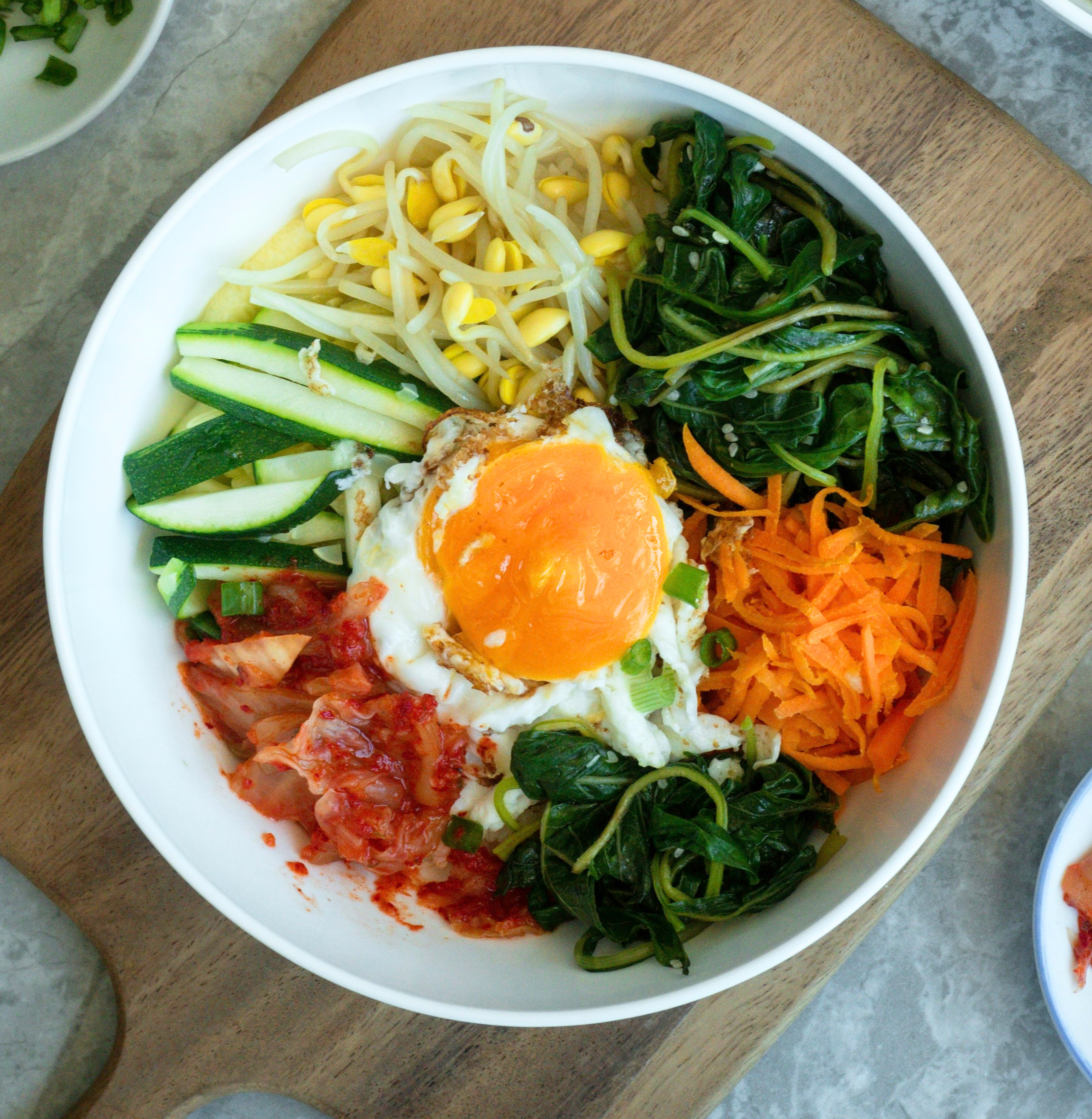
Bibimbap (비빔밥, “bee-bim-bahp”) is a bowl of warm rice topped with vegetables, meat or egg, and a spoonful of chili sauce. You stir it all together right before eating.
Below you’ll learn what bibimbap is, how spicy it gets, and how Koreans eat it. Then there are two ways to make it at home. Try the easy bibimbap recipe with pork and sweet onions, or a 10-minute microwave bowl for busy nights.
What Is Bibimbap?
The name means “mixed rice.” It’s a one-bowl main dish that Koreans eat for lunch or dinner.
A typical bowl starts with short-grain rice. On top go small piles of namul (나물), vegetables that are cooked and seasoned one at a time. Spinach, carrot, zucchini, mushrooms, and bean sprouts are common. Most bowls also get beef or pork, a fried egg, and a red chili sauce.
There’s no single fixed recipe. At home, Koreans often make it with whatever vegetables and leftover side dishes are in the fridge.

What Does Bibimbap Taste Like?
After mixing, each bite has a bit of everything. Soft rice, crisp-tender vegetables, and a sauce that’s sweet, salty, and gently spicy. Sesame oil adds a nutty smell, and a runny egg yolk makes the rice taste rich.
It isn’t sour or strongly fermented, so it’s an easy first taste of Korean food.
Is Bibimbap Spicy?
You decide, because you add the sauce yourself. Here’s how it fits on this blog’s 0 to 3 spice scale:
| Spice level | What to use |
|---|---|
| 0, not spicy | Soy sauce and sesame oil, no gochujang |
| 1, mild | About 1 tablespoon of the sauce below per bowl |
| 2, medium | 2 tablespoons of sauce per bowl |
| 3, hot | Straight gochujang, or extra gochugaru (Korean chili flakes) in the sauce |
Not sure? Start with less sauce, mix, and taste. Adding more is easy. Taking it out isn’t.
How Koreans Eat It
Bibimbap comes to the table with each topping in its own spot. Then you mix it all with a spoon before the first bite. Koreans don’t eat the parts one by one.
Add the sauce a little at a time as you mix. A small soup and a few banchan (반찬), Korean side dishes, often come with it. Kimchi is almost always one of them.
Some restaurants serve dolsot bibimbap (돌솥비빔밥) in a sizzling stone bowl. Mix it soon after it arrives. The rice touching the hot stone turns into a crispy golden crust called nurungji (누룽지).

What’s in Bibimbap Sauce?
The sauce is called yangnyeomjang (양념장), which means “seasoning sauce.” The base is gochujang (고추장), a thick, sweet, and spicy fermented chili paste. It’s also the main flavor in tteokbokki.
Gochujang is mixed with sugar, toasted sesame oil, sesame seeds, rice vinegar, and a little soy sauce. Some restaurants use ssamjang, the soybean and chili dip from Korean BBQ, which tastes saltier.

Bibimbap Ingredients and Where to Buy Them
Everything comes from a regular supermarket except gochujang. Look for red tubs or squeeze bottles in Asian grocery stores, the international aisle of larger supermarkets, or online. After opening, it keeps for months in the fridge.
For sesame oil, choose the dark, toasted kind. For rice, use short-grain rice, often sold as “sushi rice.”
| If you can’t find | Use | What changes |
|---|---|---|
| Korean zucchini (aehobak) | Regular zucchini | A little firmer. Works well. |
| Pork shoulder or loin | Thin-sliced beef or ground pork | Beef is the usual restaurant choice. |
| Short-grain rice | Medium-grain rice, like Calrose | Very close. Jasmine and basmati are too loose. |
| Rice vinegar | White vinegar plus a pinch of sugar | Sharper, but fine in small amounts |
| Gochujang | White miso, gochugaru, and a little sugar | Less sweet and sticky |
Need other swaps? Try the Korean ingredient substitutes finder.

Quick Microwave Bibimbap (10 Minutes, 1 Bowl)
No time to cook each vegetable? The microwave does most of the work here. It’s less layered than the skillet version, but it’s still a real bibimbap: warm rice, vegetables, egg, and sauce, all mixed together.
Total time: 10 minutes
Servings: 1
Spice level: 1
- 1 cup (about 185 g) cooked rice, warm (a microwave rice pouch works)
- ½ small carrot, cut into thin strips
- ¼ small zucchini, cut into thin strips
- 2 or 3 mushrooms, sliced
- 1 egg
- 1 teaspoon toasted sesame oil, plus a pinch of salt
- 1 tablespoon of the bibimbap sauce above, or 2 teaspoons gochujang
- Put the vegetables in a microwave-safe bowl with 1 tablespoon of water. Cover loosely with a lid or a plate.
- Microwave for 2 to 3 minutes, until the carrot bends easily. Drain any water.
- Toss the vegetables with the sesame oil and a pinch of salt.
- Fry the egg in a small pan while the vegetables cook.
- Put the rice in a bowl, then add the vegetables, egg, and sauce. Mix and eat.
Want it vegan? Skip the egg and add a few cubes of tofu, and use a plant-based gochujang.

Easy Bibimbap Recipe With Pork and Sweet Onions
This version uses just three vegetables, cooked one after another in the same pan. The onion cooks slowly with soy sauce until it’s soft and sweet, and that sweetness carries the whole bowl.
It’s a simple home-style bowl, not the restaurant version with six or seven vegetables. Add spinach, mushrooms, or bean sprouts once you’ve made it a few times.

Easy Bibimbap With Pork and Sweet Onions
Ingredients
Equipment
Method
- Cut the zucchini, onion, and carrot into thin strips. Keep them in separate piles.
- Stir the sauce ingredients together until the sugar dissolves. Taste it, and add more gochujang if it's too sweet.
- Heat 1 teaspoon of oil in a large skillet over medium heat. Cook the carrot with a pinch of salt for 1 to 2 minutes, until it's bright orange and bends easily. Set it aside on a plate.
- Cook the zucchini with a pinch of salt for 1 to 2 minutes, until it softens but still holds its shape. Add it to the plate.
- Add a little more oil, the onion, and 1 tablespoon of soy sauce. Cook for 8 to 10 minutes, stirring now and then, until it's soft, light brown, and sweet. Turn the heat down if it starts to burn.
- Move the onion to the plate. Season the pork with salt and pepper, then stir-fry it for 4 to 5 minutes, until no pink remains.
- Turn off the heat. Stir 2 tablespoons of the sauce into the pork.
- Fry the eggs over medium heat for 2 to 3 minutes. The whites should be set and the yolks still runny.
- Divide the rice between two bowls. Arrange the vegetables and pork on top, each in its own section. Add an egg and 1 tablespoon of sauce to each bowl.
- Mix everything together right before eating. Taste, and add more sauce if you like.
Notes
- Spice level: 1 on the blog’s 0 to 3 scale with 1 tablespoon of sauce per bowl. Add more sauce for a 2.
- Korean zucchini (aehobak) is sweeter and softer, but regular zucchini works well.
- Swap the pork for thin-sliced beef or ground pork. Cook ground pork until it reaches 160°F (71°C).
- Vegan: use pan-fried extra-firm tofu or mushrooms instead of pork, skip the egg, and check the gochujang label for fish sauce or anchovy.
- Leftover sauce: store it covered in the fridge.
- Allergens: soy, wheat (soy sauce, gochujang), sesame, and egg.
- Calories are an estimate per bowl, calculated from USDA data.
Is Bibimbap Vegetarian or Vegan?
Bibimbap is easy to make vegetarian. Most of the flavor comes from the vegetables and sauce, so just leave out the meat.
For a vegan bowl, check three things:
- Protein: use pan-fried extra-firm tofu or mushrooms instead of meat and egg.
- Gochujang: many brands are plant-based, but some add fish sauce or anchovy extract. Check the label every time you buy.
- Side dishes: store-bought kimchi and some banchan contain fish sauce or salted shrimp.

Common Bibimbap Mistakes
Soggy vegetables. Cook each one briefly in a single layer, and stop while it still has some bite.
Burned onion. Keep the heat at medium or lower. A splash of water helps if the pan looks dry.
Too salty. Use less sauce or add more rice. Next time, cut the soy sauce in the sauce a little.
Hard, cold rice. Warm it until steaming. Warm rice mixes much more easily.
What to Serve With It
Bibimbap is a full meal. For a Korean-style table, add kimchi and a light soup. For a bigger spread, serve japchae or kimbap too. Leftover bulgogi also works in place of the pork.

How to Store Bibimbap
Keep the rice, vegetables, pork, and sauce in separate containers, not mixed. Refrigerate within 2 hours of cooking and eat within 3 to 4 days. Reheat the rice, vegetables, and pork until steaming, then fry a fresh egg and add the sauce.
Allergens: soy and wheat (soy sauce and most gochujang), sesame, and egg.
Food safety: cook pork until no pink remains, at least 145°F (63°C), and ground pork to 160°F (71°C). For young children, older adults, or anyone pregnant, cook the egg until the yolk is firm.
Bibimbap FAQ
What’s the difference between bibimbap and a poke bowl?
Poke is a Hawaiian bowl of marinated raw fish. Bibimbap usually has cooked vegetables, meat or egg, and a gochujang sauce, and you mix it all before eating.
Is bibimbap gluten-free?
Not usually. Most gochujang and soy sauce contain wheat. Look for gluten-free gochujang and use tamari.
Can I make it with no spice?
Yes. Skip the gochujang and season the bowl with soy sauce and sesame oil.
Do I need a stone bowl?
No. A regular bowl works fine. The stone bowl only adds a crispy rice crust.
Short on time? Start with the microwave bowl. With 30 minutes to spare, try this easy bibimbap recipe with pork and sweet onions. Go easy on the sauce at first. After a bowl or two, you’ll know how spicy you like it.




Leave a Reply